Dual Earthquakes Devastate Caracas and La Guaira as Humanitarian
Following a series of devastating seismic events, Venezuelans are grappling with destroyed infrastructure and a perceived lack of government support as

World correspondent
Reports on international affairs, diplomacy, and humanitarian developments with an emphasis on official statements, multilateral institutions, and regional context.
Editorial responsibility: Lead reviewer for geopolitics, international institutions, and crisis coverage
Primary source: BBC World News. Full source links and update notes are below.
Fast summary
Start here
- Two major earthquakes have struck the northern coast of Venezuela, causing catastrophic damage in Caracas and the coastal town of La Guaira.
- Rescuers are working against time to find survivors trapped under collapsed buildings, including the Petunia building in the Chacao district.
- Public frustration is mounting against the administration of Interim President Delcy Rodriguez over the slow pace of official relief efforts.
What happened
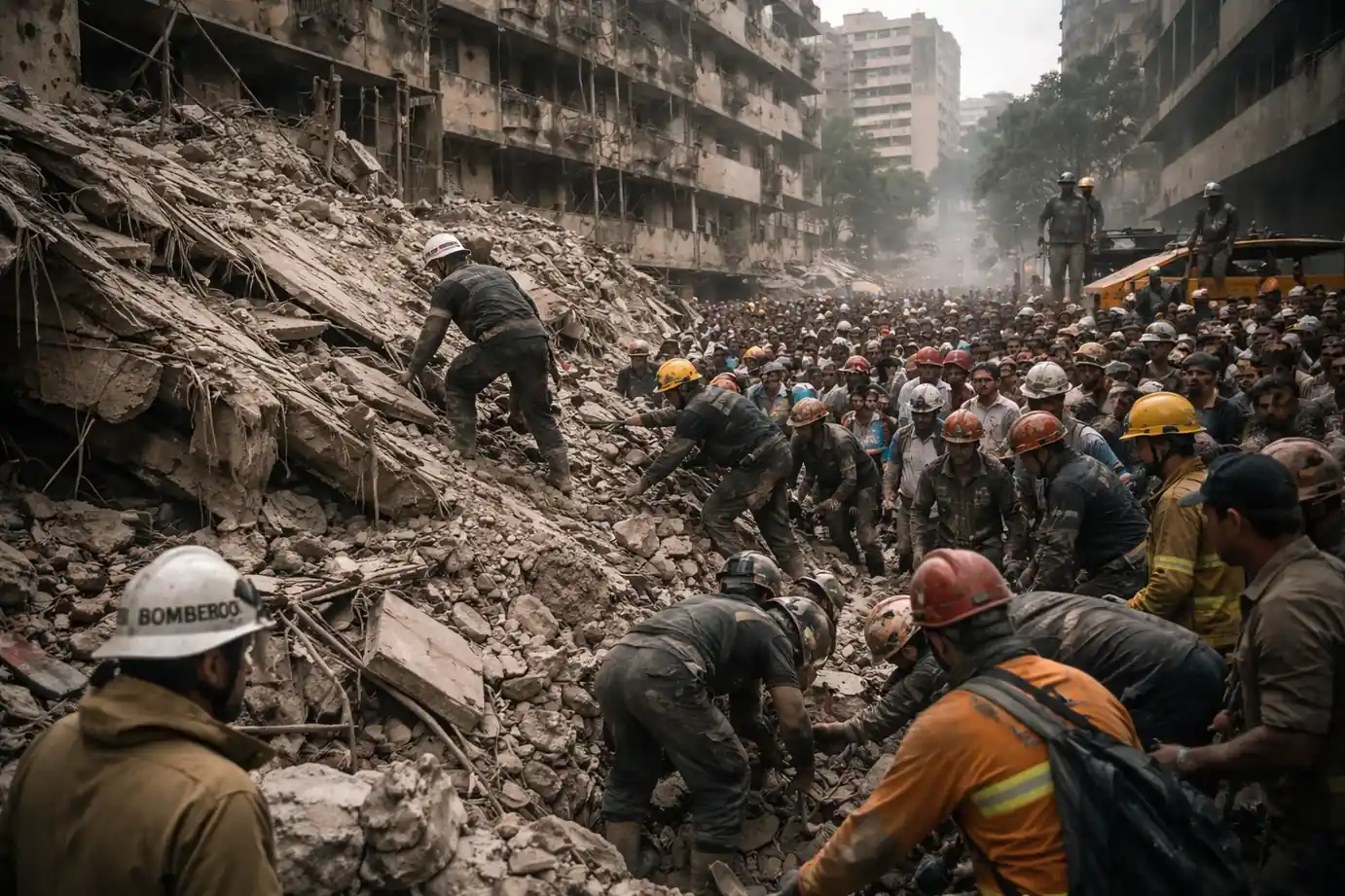
The Venezuelan capital of Caracas and the nearby coastal region are reeling from the aftermath of two powerful earthquakes that have left an apocalyptic scene in their wake. This disaster, described by long-time observers as the hardest moment in the nation's modern history, has resulted in the leveling of over 100 buildings in the coastal town of La Guaira alone. In Caracas, residential districts like Chacao and Los Palos Grandes have seen high-rise structures reduced to rubble, trapping an unknown number of residents beneath the debris. The scale of the destruction has displaced thousands, forcing families to sleep on the streets as they fear returning to structures that remain standing but are structurally compromised. The psychological toll is immense, with survivors reporting recurring nightmares of the collapse and constant fear of aftershocks.
What's new in this update
As the search for survivors enters a critical phase, rescue teams—comprising both local volunteers and international specialists—have worked through the night under grueling conditions. Recent social media footage has provided rare moments of hope, including the rescue of a newborn baby from the rubble, an event that has offered a brief reprieve from the prevailing sense of despair. However, the mood on the ground is increasingly tense. Interim President Delcy Rodriguez recently faced significant public anger during a tour of the Chacao district. Residents accused the government of using the tragedy for political campaigning while failing to provide tangible aid. This frustration is mirrored by survivors who claim that the current relief efforts are being driven more by community solidarity than by state intervention, highlighting a widening gap between the public and the authorities.
Key details
The human cost is exemplified by individuals like Jan Carlos Roa Garcia, a 50-year-old former policeman now sleeping on the streets with his family because their building is too dangerous to inhabit. He expresses a profound sense of uncertainty about how to rebuild his life, noting a complete lack of contact from authorities. In the Los Palos Grandes neighborhood, the Petunia building remains a focal point for rescue crews who are working around the clock to reach those trapped inside. While some buildings, such as the Alheli, remained intact, the surrounding area is a landscape of twisted metal and concrete. Meanwhile, hospitals along the northern coastline have reached a breaking point, struggling to manage the influx of injured citizens with medical infrastructure that has been severely underfunded for decades, leaving doctors to work in the most trying circumstances imaginable.
Background and context
Venezuela's ability to respond to a disaster of this magnitude is hampered by years of economic decline and political fragmentation. The healthcare system, once a point of pride, is now operating with minimal resources, leaving doctors and nurses to perform triage with insufficient supplies. This lack of institutional support has fostered a culture of self-reliance among Venezuelans. As musician Zaira Castro noted, the society has grown accustomed to helping itself because the government "doesn't exist" for many citizens anymore. This reliance on mutual aid is currently the primary lifeline for those in the worst-hit areas, where heavy machinery is desperately needed to move large slabs of concrete but has yet to arrive in sufficient quantities to meet the scale of the crisis.
What to watch next
The coming days will be decisive for the rescue operations as the golden hour for finding survivors fades. The arrival of more heavy machinery is critical for the efforts in La Guaira and Chacao, where residents like Eileen Lada are pleading for the equipment necessary to reach loved ones still missing under flattened buildings. On a political level, the administration of Delcy Rodriguez faces a significant test of its legitimacy and competence; how it manages the distribution of aid and the reconstruction process could have long-term implications for the country's political stability. Observers are also monitoring the role of international aid agencies and whether the Venezuelan government will allow for a more robust influx of foreign assistance to bolster its failing infrastructure and overstretched medical teams.
Why it matters
The disaster exposes the fragility of Venezuela's underfunded infrastructure and tests the resilience of a population already navigating prolonged economic and political instability.
Read next
Follow this story through the topic hub, more world coverage, and the latest updates.
Weekly briefing
Get the week's key developments in one concise email.
Get a fast catch-up on the biggest stories, the context behind them, and the links worth your time.
Cadence
Weekly, for a quick catch-up
Coverage
AI, business, world, security, sports
Format
Clear takeaways and useful context
Request the briefing
Leave your email to open a prepared request and get on the list for the weekly briefing.
About the byline
World correspondent
Leila Haddad covers world affairs, diplomacy, and humanitarian crises, with a focus on how fast-moving international developments affect public policy, conflict response, and cross-border institutions.
Sources and methodology