Inside the Makeshift Morgue: The Anguish of Identifying Venezuela’s
In the port city of La Guaira, grieving relatives must scroll through thousands of digital images to identify loved ones as the disaster's death toll

World correspondent
Reports on international affairs, diplomacy, and humanitarian developments with an emphasis on official statements, multilateral institutions, and regional context.
Editorial responsibility: Lead reviewer for geopolitics, international institutions, and crisis coverage
Primary source: BBC World News. Full source links and update notes are below.
Fast summary
Start here
- The death toll from Venezuela's twin earthquakes has officially surpassed 2,600 victims, overwhelming local infrastructure.
- A port storage facility in La Guaira, known as Los Silos, has been repurposed as a makeshift morgue managed by the Bolivarian Armed Forces.
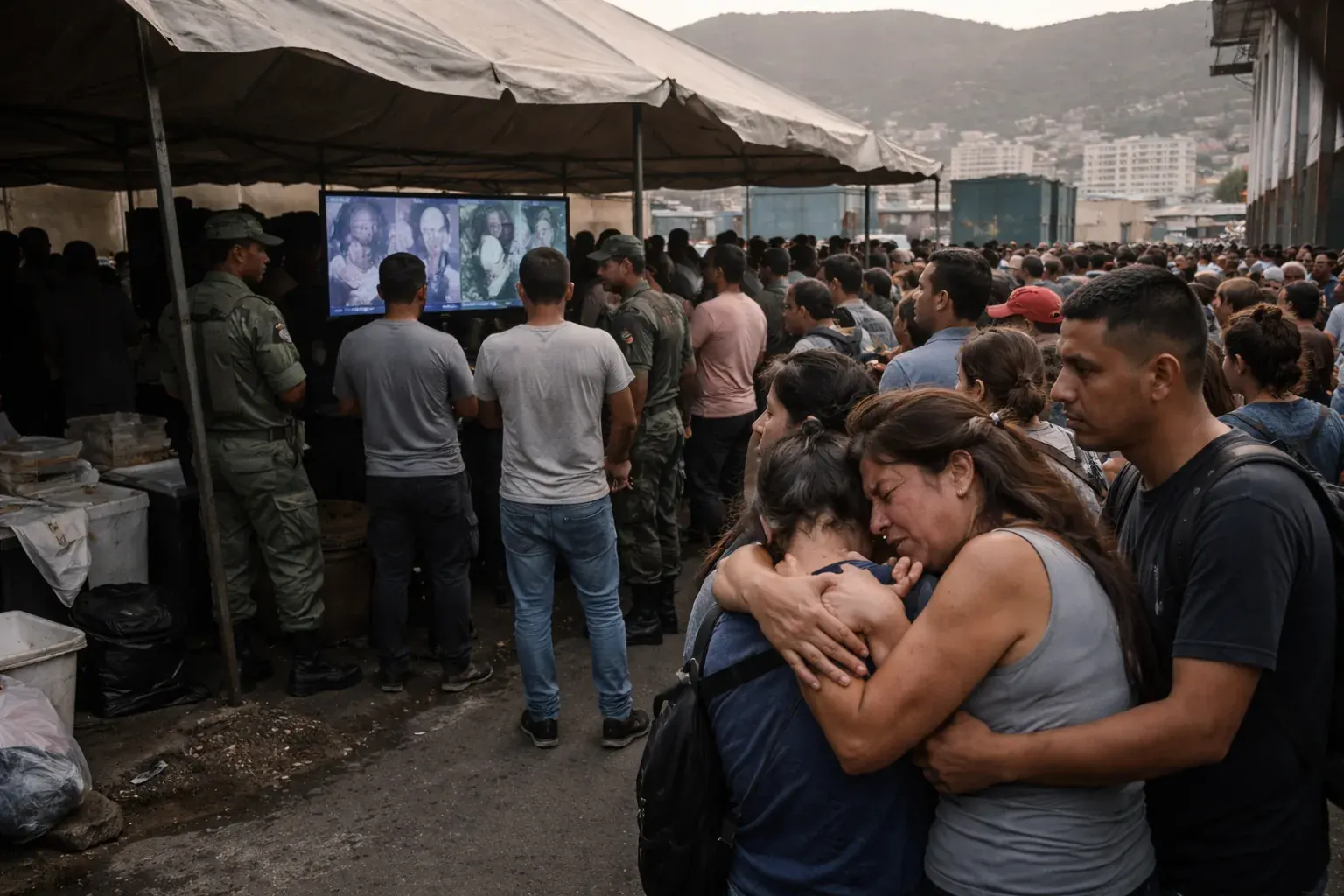
- Families are forced to identify deceased relatives by viewing graphic images on television screens due to the rapid decomposition caused by tropical heat.
What happened
Nine days after a pair of devastating twin earthquakes struck Venezuela, the nation is grappling with a humanitarian crisis of immense proportions as the death toll climbs past 2,600. In the coastal city of La Guaira, the local infrastructure has proven entirely insufficient to handle the volume of casualties, leading to the emergency conversion of a port storage facility into a central identification hub. Known as Los Silos, the site has become a focal point of grief for hundreds of families who have spent the last week searching through collapsed buildings and hospitals. The scene at the port is one of desperate silence, where rows of chairs accommodate relatives waiting under a sweltering sun for a chance to confirm their worst fears. The Bolivarian Armed Forces have established a perimeter to maintain order as the facility struggles to process the influx of victims recovered from the rubble across the region.
What's new in this update
The identification process has moved into a grueling digital phase as physical recognition of the bodies becomes increasingly difficult. Officials have set up two large television screens inside the makeshift morgue where more than 1,000 images of the deceased are cycled in a continuous loop. Relatives are guided through these graphic sequences, looking for specific markers such as tattoos, jewelry, or remnants of clothing. This method has become necessary as the tropical heat accelerates decomposition, making traditional viewing impossible for many. Forensic workers, operating from iPads, zoom in on identifying features like dental work or distinctive scars at the request of grieving family members. One resident, Liliana González, reported that she was only able to identify her 37-year-old nephew by a specific tattoo after finding that his name was missing from official government lists, illustrating the persistent gap between recovered remains and documented victims.
Key details
The conditions inside the Los Silos facility are described by witnesses as horrific, characterized by the heavy scent of decomposition that permeates the air despite the use of cloth masks by staff and visitors. Bodies are currently being stored in rows, wrapped in heavy plastic bags and placed in temporary tents or directly on the pavement due to a lack of refrigerated storage. Forensic specialists are working alongside military personnel to match victims with dental records when visual identification fails. To assist families in their final arrangements, a tent providing free cremation services has been established at one end of the port facility. The process is further complicated by the state of the remains; many victims were recovered with severe crush injuries or have become unrecognizable due to the nine-day interval since the initial tremors. Personnel from the Bolivarian Armed Forces continue to control all access points, managing a flow of people that shows no signs of slowing.
Background and context
The twin earthquakes have left a trail of destruction that has severely hampered the state's ability to respond to the disaster. In the days following the initial tremors, survivors focused their efforts on local shelters and hospitals, but as hope for finding living relatives faded, the search shifted toward morgues and recovery sites. Venezuela's existing forensic and medical infrastructure was already under significant strain prior to the disaster, and the sudden addition of thousands of casualties has forced institutions to improvise with makeshift solutions like the La Guaira port facility. The disaster has not only destroyed residential buildings but also damaged the very transport and utility networks required to manage a mass-casualty event. This has left many families in a state of 'agony,' as described by those waiting at the gates, caught between the hope of a miracle and the need for closure provided by a confirmed identification.
What to watch next
As recovery operations continue, the focus will likely shift toward the long-term challenge of identifying the remaining hundreds of bodies that remain unclaimed or unrecognizable. There is a growing concern regarding the discrepancy between official lists and the actual number of bodies recovered, as seen in cases where victims were not documented prior to their arrival at Los Silos. Public health officials will also be monitoring the situation closely, as the rapid decomposition of remains in an open-air port environment poses significant sanitary risks to both the workers and the surrounding community. Furthermore, the international community may look to provide forensic assistance or DNA sequencing technology to aid in the identification of victims whose features have been lost to the elements. The psychological impact on the survivors, who are currently enduring a 'horror movie' identification process, will likely necessitate a long-term humanitarian response that extends far beyond the immediate recovery of the deceased.
Why it matters
The scale of the disaster has completely overwhelmed Venezuela's fragile infrastructure, turning a humanitarian emergency into a logistical nightmare for forensic identification. This process highlights the profound human cost of the tremors and the state's struggle to provide dignity to the deceased and their survivors.
Read next
Follow this story through the topic hub, more world coverage, and the latest updates.
Weekly briefing
Get the week's key developments in one concise email.
Get a fast catch-up on the biggest stories, the context behind them, and the links worth your time.
Cadence
Weekly, for a quick catch-up
Coverage
AI, business, world, security, sports
Format
Clear takeaways and useful context
Request the briefing
Leave your email to open a prepared request and get on the list for the weekly briefing.
About the byline
World correspondent
Leila Haddad covers world affairs, diplomacy, and humanitarian crises, with a focus on how fast-moving international developments affect public policy, conflict response, and cross-border institutions.
Sources and methodology