Half of France Placed Under Red Heat Alert as National Festival
French authorities have restricted alcohol consumption and closed hundreds of schools as temperatures approach record highs across western and central

World correspondent
Reports on international affairs, diplomacy, and humanitarian developments with an emphasis on official statements, multilateral institutions, and regional context.
Editorial responsibility: Lead reviewer for geopolitics, international institutions, and crisis coverage
Primary source: BBC World News. Full source links and update notes are below.
Fast summary
Start here
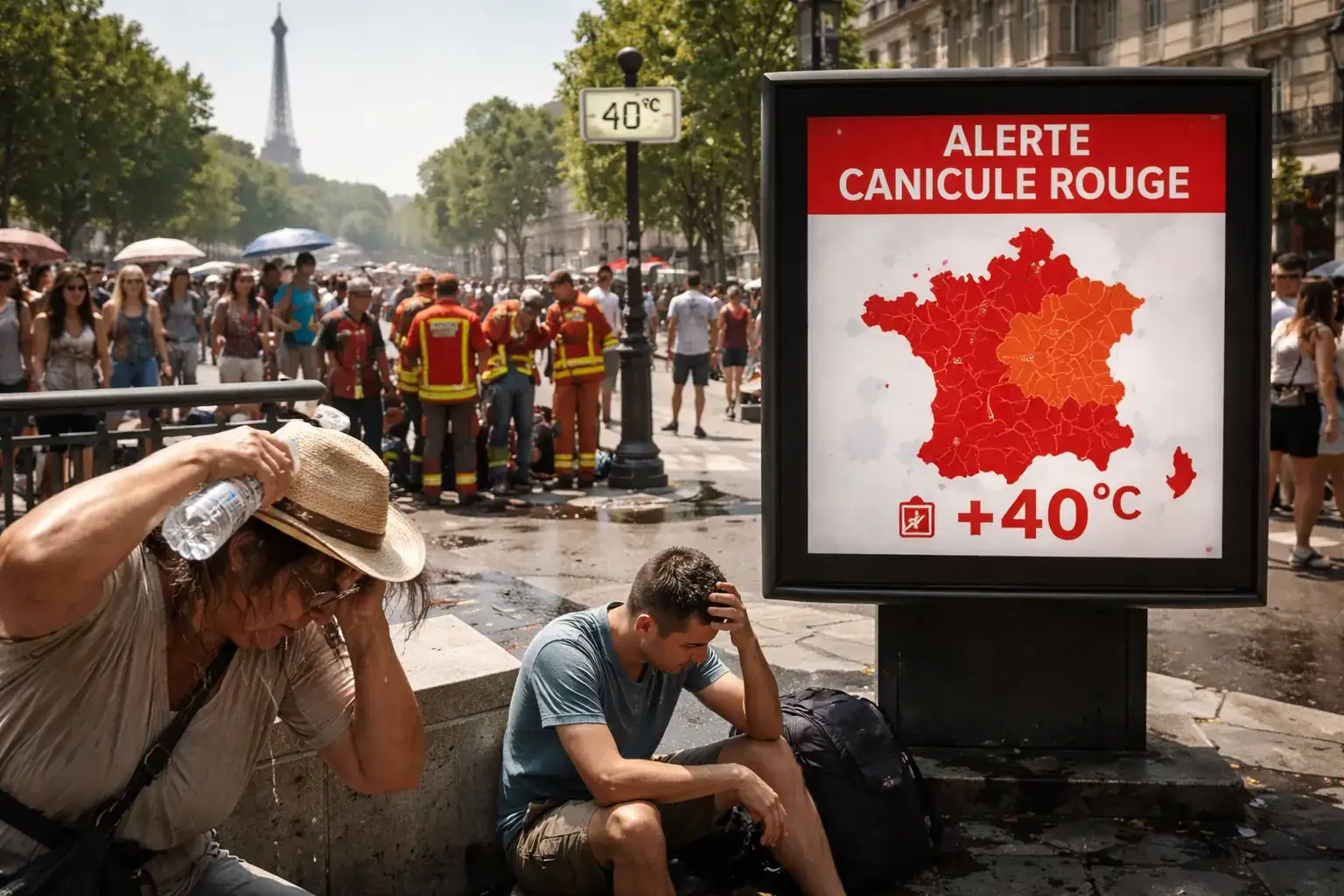
- Forty-nine French regions, including Paris, are under red heatwave alerts as temperatures hit 40C in Bordeaux.
- The government has banned alcohol consumption in public during the Fete de la Musique to ensure emergency services can prioritize heat-related medical calls.
- Impacts include the closure of 850 schools and the cancellation of dozens of trains as Sahara air traps heat across Europe.
What happened
France has placed 49 regions under red heat alerts as an extreme heatwave pushes temperatures toward record territory, forcing the government to take emergency measures that reach far beyond weather advice. Authorities have closed hundreds of schools, adjusted transport operations, opened nighttime cooling spaces, and even imposed an alcohol ban during the Fete de la Musique so emergency services can prioritize heat-related medical cases rather than festival intoxication.
That matters because this is no longer just a hot-weather story. It is a national infrastructure and public health stress test happening during one of France's biggest public celebrations.
Why the red heat alert matters
In France, the highest-level heat alert is not issued casually. A red alert signals that conditions pose serious danger to the wider population, especially older people, children, outdoor workers, and anyone without reliable cooling or shelter. When nearly half the country is under that designation, the issue becomes one of state capacity rather than personal comfort.
This is why the alert level matters so much. It tells the public that the threat has moved beyond inconvenience into a zone where routine daily life has to be reorganized.
The Fete de la Musique complication
The overlap with the Fete de la Musique gives the story a specifically French dimension. The festival is designed for mass public participation, with crowds gathering outdoors across cities and towns just as the heat is peaking. In that context, an alcohol ban is not merely symbolic. It is a practical attempt to limit preventable emergencies so paramedics and hospitals can stay focused on heatstroke, dehydration, and other urgent conditions.
That decision shows how climate-related disruption increasingly spills into cultural life rather than remaining confined to weather bulletins.
Why schools and transport are being hit
Heatwaves affect infrastructure in multiple ways at once. Schools become risky when classrooms cannot be cooled safely. Rail services face equipment strain, track stress, and staffing complications. Public spaces that normally function well can become physically dangerous if shade, airflow, and water access are limited. France's response reflects all of these pressures.
The school closures and transport disruptions therefore matter as signals of systemic strain. They show that the heat is not only challenging individuals, but the country's operating routines.
Why this heatwave is part of a larger European pattern
France is not facing this in isolation. Heat moving north from the Sahara and lingering over western and central Europe has created a broader continental episode, with warnings and emergency responses also appearing in Italy, Spain, and other countries. That wider pattern matters because it reinforces the idea that these are no longer rare, exceptional anomalies. They are becoming recurring governance problems for European states.
As a result, each heatwave is judged not only on temperature, but on how well institutions have adapted since the last one.
The public health lesson
Heatwaves often kill indirectly and unevenly. The most serious outcomes frequently hit vulnerable populations first, including elderly residents living alone, people with chronic illness, workers exposed outdoors, and people in dense urban areas where nights stay hot. This is one reason governments treat severe heat more seriously now than they once did. Public messaging, cooling access, and emergency preparedness can change outcomes materially.
France's decision to keep parks open overnight in some places reflects that more interventionist understanding of heat risk.
What comes next
The immediate next step is whether temperatures crest and begin to ease or whether the red alert period extends further. Authorities will also be watching hospitalization levels, public compliance with restrictions, and whether more transport and school disruptions become necessary if the heat lingers.
For now, France's red heat alerts across 49 regions show how extreme heat now collides with daily governance, infrastructure, and public culture all at once. The numbers on the thermometer matter, but the deeper story is how a modern state responds when weather conditions become disruptive enough to reshape education, transportation, healthcare, and even a national music festival on the same weekend.
Why it matters
The measures reflect the increasing strain extreme weather events place on national infrastructure and public health systems during major cultural milestones.
Read next
Follow this story through the topic hub, more world coverage, and the latest updates.
Weekly briefing
Get the week's key developments in one concise email.
Get a fast catch-up on the biggest stories, the context behind them, and the links worth your time.
Cadence
Weekly, for a quick catch-up
Coverage
AI, business, world, security, sports
Format
Clear takeaways and useful context
Request the briefing
Leave your email to open a prepared request and get on the list for the weekly briefing.
About the byline
World correspondent
Leila Haddad covers world affairs, diplomacy, and humanitarian crises, with a focus on how fast-moving international developments affect public policy, conflict response, and cross-border institutions.
Sources and methodology