Former Kenyan Justice Minister Denied Entry to Uganda Ahead of
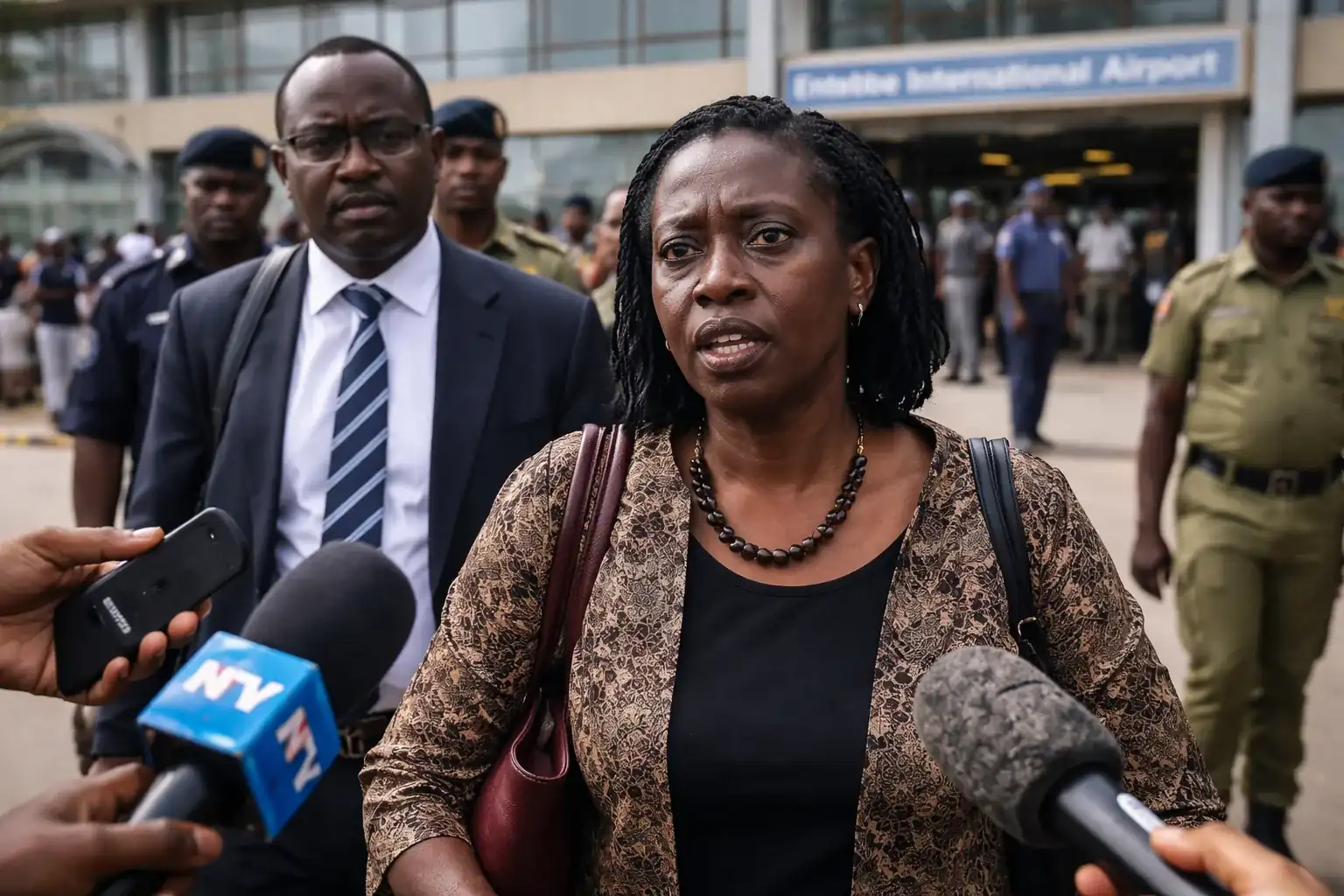
Ugandan authorities blocked Martha Karua at Entebbe airport, preventing her from joining the defense team for lawyer Erias Lukwago.

World correspondent
Reports on international affairs, diplomacy, and humanitarian developments with an emphasis on official statements, multilateral institutions, and regional context.
Editorial responsibility: Lead reviewer for geopolitics, international institutions, and crisis coverage
Primary source: BBC World News. Full source links and update notes are below.
Fast summary
Start here
- Martha Karua was stopped at Entebbe airport and ordered to return to Kenya without an official explanation.
- Karua was traveling to represent Erias Lukwago, a lawyer charged with failing to report treason in the Kizza Besigye case.
- Law Society of Kenya President Charles Kanjama, who traveled with Karua, was allowed into the country.
What happened
Former Kenyan justice minister and senior lawyer Martha Karua was denied entry to Uganda at Entebbe airport while traveling to take part in a politically sensitive legal matter. According to reports, Karua was turned back without a clear official explanation even though she had traveled to assist in the defense of Erias Lukwago, a prominent lawyer facing charges linked to an alleged treason-reporting failure in the broader Kizza Besigye case. The fact that Charles Kanjama, the president of the Law Society of Kenya, was allowed into Uganda while Karua was blocked immediately raised questions about selective treatment rather than routine immigration control.
That is why this incident matters beyond one airport refusal. It reaches into regional politics, legal independence, and the treatment of cross-border human rights advocacy in East Africa.
Why Martha Karua's exclusion matters
Karua is not an obscure visitor. She is one of Kenya's most prominent legal and political figures, with regional visibility that makes any refusal of entry politically legible even when authorities offer no formal explanation. Blocking a lawyer of her stature while she is traveling for legal defense work invites the interpretation that the decision was not administrative, but strategic.
That matters because it touches the principle that defendants in politically charged cases should be able to assemble legal representation without arbitrary interference.
The Kizza Besigye context
The case Karua was connected to is already sensitive because Kizza Besigye has long been one of Uganda's most significant opposition figures. Any prosecution orbiting Besigye is likely to be read not just as a legal matter, but as a test of the government's tolerance for dissent and the independence of the justice system. When another lawyer tied to that environment, Erias Lukwago, faces charges and foreign legal allies are blocked, the political optics intensify quickly.
This is why the Entebbe airport incident cannot be separated from Uganda's wider opposition and civil liberties climate.
Why the East African dimension matters
East Africa's legal and political communities are deeply interconnected. Lawyers, activists, and civil society figures often cross borders to support politically sensitive cases, monitor trials, or signal regional solidarity. When one state blocks that movement selectively, it sends a message beyond the immediate case. It suggests that even within a region that frequently speaks the language of cooperation and integration, political sensitivity still overrides openness when stakes are high.
That tension matters especially for the East African Community idea of easier regional movement and institutional collaboration.
A pattern of pressure on legal advocacy
Karua's previous difficulties in other East African legal contexts make this latest refusal feel less isolated. When the same advocate encounters repeated restrictions in politically sensitive matters, the pattern becomes difficult to dismiss as coincidence. It begins to look like a broader regional discomfort with internationally visible legal scrutiny in opposition-linked trials.
That does not prove a coordinated policy, but it does strengthen concerns that access to justice can be narrowed indirectly through travel controls rather than courtroom rulings.
What comes next
The immediate next step will be watching whether Ugandan authorities explain why Karua was excluded and whether the defense process for Erias Lukwago continues under added scrutiny. Regional legal bodies and rights advocates may also escalate criticism if they view the incident as an attack on professional independence rather than immigration discretion.
For now, Martha Karua's blocked entry into Uganda is more than a border incident. It is a politically charged signal about who is allowed to participate in sensitive legal proceedings, under what conditions, and how far governments in the region are prepared to go to manage the optics and structure of opposition-linked cases.
Why it matters
This incident highlights growing tensions regarding legal representation and cross-border human rights advocacy within the East African community.
Read next
Follow this story through the topic hub, more world coverage, and the latest updates.
Weekly briefing
Get the week's key developments in one concise email.
Get a fast catch-up on the biggest stories, the context behind them, and the links worth your time.
Cadence
Weekly, for a quick catch-up
Coverage
AI, business, world, security, sports
Format
Clear takeaways and useful context
Request the briefing
Leave your email to open a prepared request and get on the list for the weekly briefing.
About the byline
World correspondent
Leila Haddad covers world affairs, diplomacy, and humanitarian crises, with a focus on how fast-moving international developments affect public policy, conflict response, and cross-border institutions.
Sources and methodology