Ethiopia's Abiy Ahmed Secures Landslide Victory Amid Mounting
The Prosperity Party won 438 out of 501 contested seats, ensuring another term for the Prime Minister as internal and external tensions rise.

World correspondent
Reports on international affairs, diplomacy, and humanitarian developments with an emphasis on official statements, multilateral institutions, and regional context.
Editorial responsibility: Lead reviewer for geopolitics, international institutions, and crisis coverage
Primary source: BBC World News. Full source links and update notes are below.
Fast summary
Start here
- Prime Minister Abiy Ahmed's Prosperity Party retained its parliamentary majority with 438 out of 501 seats.
- The election was marred by the exclusion of the Tigray region and widespread insecurity in Amhara and Oromia.
- Deteriorating relations with Eritrea and alleged involvement in Sudan's civil war continue to heighten regional instability.
What happened
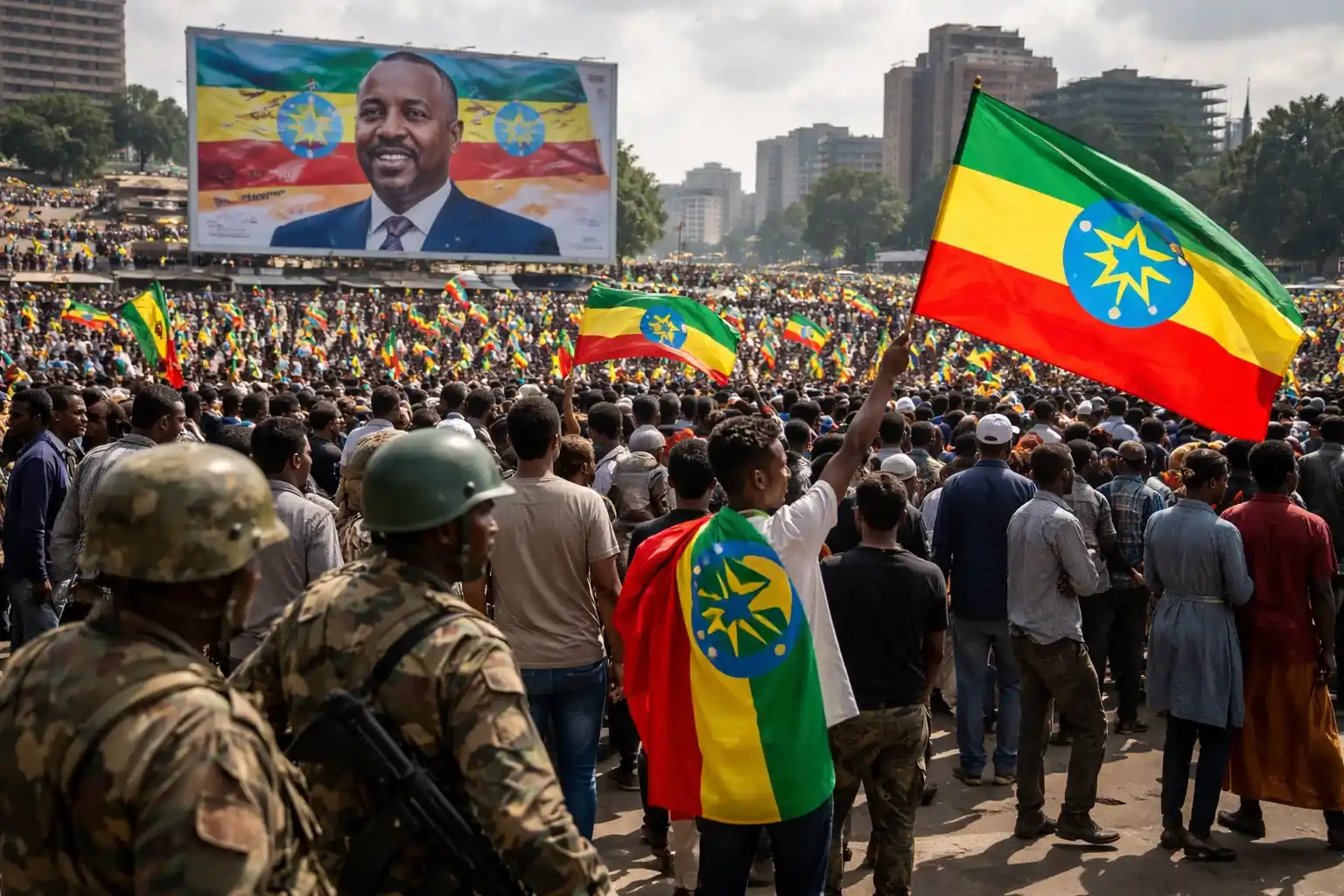
Ethiopia's Prosperity Party has won a landslide election victory, giving Prime Minister Abiy Ahmed another commanding parliamentary majority at a time when conflict fears continue to shadow the country. Official results showed the ruling party taking 438 of the 501 contested seats, a margin large enough to reinforce Abiy's grip on power even as important parts of Ethiopia remain politically fractured or too insecure for normal voting.
The Ethiopia election result is therefore not just a story about who won. It is a story about how a government can secure overwhelming institutional control while the broader national picture remains unsettled by war legacies, insurgencies, and deep mistrust between the center and several regions.
Why the scale of the win matters
A landslide on this scale gives the Prosperity Party clear legislative dominance, but it does not automatically translate into political stability. In countries facing active armed challenges, parliamentary numbers can look decisive on paper while the state still struggles to exercise authority evenly across territory. That is the tension at the core of this result.
For Abiy Ahmed, the victory offers continuity and room to push policy. For critics, it raises harder questions about representation, participation, and whether a national election can be fully credible when major constituencies are absent, intimidated, or effectively excluded by security conditions.
The missing regions are central to the story
One reason the Ethiopia Prosperity Party victory is being read cautiously is that the vote did not unfold under fully normal national conditions. The Tigray region, still marked by the devastation of civil war, was excluded from the election process. In Amhara and Oromia, insecurity disrupted voting operations and prevented hundreds of polling stations from functioning as planned.
That matters because these regions are not peripheral. They are politically important, populous, and central to the country's recent conflict history. When large sections of the electorate are unable to participate under ordinary conditions, even a technically decisive result leaves open the larger question of national legitimacy.
Conflict fears remain close to the surface
The election took place while Ethiopia continues to manage overlapping security pressures. The aftermath of the Tigray war has not fully settled. Armed tensions in Amhara remain serious. The Oromo Liberation Army continues to challenge the state in parts of Oromia. At the same time, analysts are watching deteriorating relations with Eritrea, which has its own history of involvement in Ethiopian conflict dynamics.
This is why the phrase conflict fears persist matters so much in coverage of the result. Ethiopia is not simply entering another routine governing cycle. It is entering a new mandate under conditions where military escalation, regional mistrust, and unresolved peace terms all remain live risks.
Abiy Ahmed's political trajectory shapes the reaction
Abiy Ahmed's rise once symbolized political renewal. He took office in 2018 promising reform, earned global praise for making peace with Eritrea, and received the Nobel Peace Prize in 2019. But the years that followed dramatically changed how his leadership is viewed. The Tigray war, mass displacement, allegations of atrocities, and repeated domestic security crises have complicated the image of a leader once celebrated as a peacemaker.
That history shapes how this Ethiopia election is interpreted internationally. Supporters may see the Prosperity Party's mandate as evidence that the government still has a strong governing center. Critics see a state that remains unable to convert electoral dominance into durable reconciliation.
What this means for governance
With another parliamentary majority secured, the Abiy Ahmed government will likely argue that it has a public mandate to continue its economic and political agenda. That could include administrative reforms, investment pitches, and attempts to present Ethiopia as a stable regional power despite internal pressure.
But the harder governing test is not parliamentary arithmetic. It is whether the government can reduce violence, rebuild trust in conflict-affected regions, and prevent the next round of crisis from overtaking the formal victory. In practice, that means the success of Abiy's new term will be judged less by seat totals than by whether the state can deliver security without worsening the grievances that feed rebellion.
What to watch next
The next phase begins with Abiy's swearing-in and the policy signals his government sends immediately afterward. Watch for any new outreach to Tigray, changes in security strategy in Amhara and Oromia, and whether rhetoric toward Eritrea hardens further. International observers will also look for signs that Ethiopia is moving toward national repair rather than simply consolidating central authority.
Why this matters
The Ethiopia election matters because the Prosperity Party landslide gives Abiy Ahmed stronger formal power at the exact moment the country still faces unresolved war damage, fragile peace arrangements, and persistent regional conflict. The result may secure control in parliament, but it does not by itself resolve the deeper crisis of cohesion facing one of Africa's most important states.
Why it matters
The election results solidify Abiy's grip on power but highlight deep ethnic and regional fractures that threaten the long-term stability of Africa's second most-populous nation.
Read next
Follow this story through the topic hub, more world coverage, and the latest updates.
Weekly briefing
Get the week's key developments in one concise email.
Get a fast catch-up on the biggest stories, the context behind them, and the links worth your time.
Cadence
Weekly, for a quick catch-up
Coverage
AI, business, world, security, sports
Format
Clear takeaways and useful context
Request the briefing
Leave your email to open a prepared request and get on the list for the weekly briefing.
About the byline
World correspondent
Leila Haddad covers world affairs, diplomacy, and humanitarian crises, with a focus on how fast-moving international developments affect public policy, conflict response, and cross-border institutions.
Sources and methodology