Ethiopia Holds General Election With Tigray Region Entirely Excluded
Prime Minister Abiy Ahmed seeks to consolidate power as opposition parties claim the vote is the least competitive in the nation's recent history.
Primary source: BBC World News. Full source links and update notes are below.
Fast summary
Start here
- The northern region of Tigray is completely excluded from the poll as it recovers from a civil war that ended in 2022.
- Opposition groups like the Oromo Federalist Congress are participating 'symbolically' to avoid deregistration while calling the election uncompetitive.
- The Ethiopian government has restricted media access, denying press accreditation to major international outlets including the BBC.
What happened
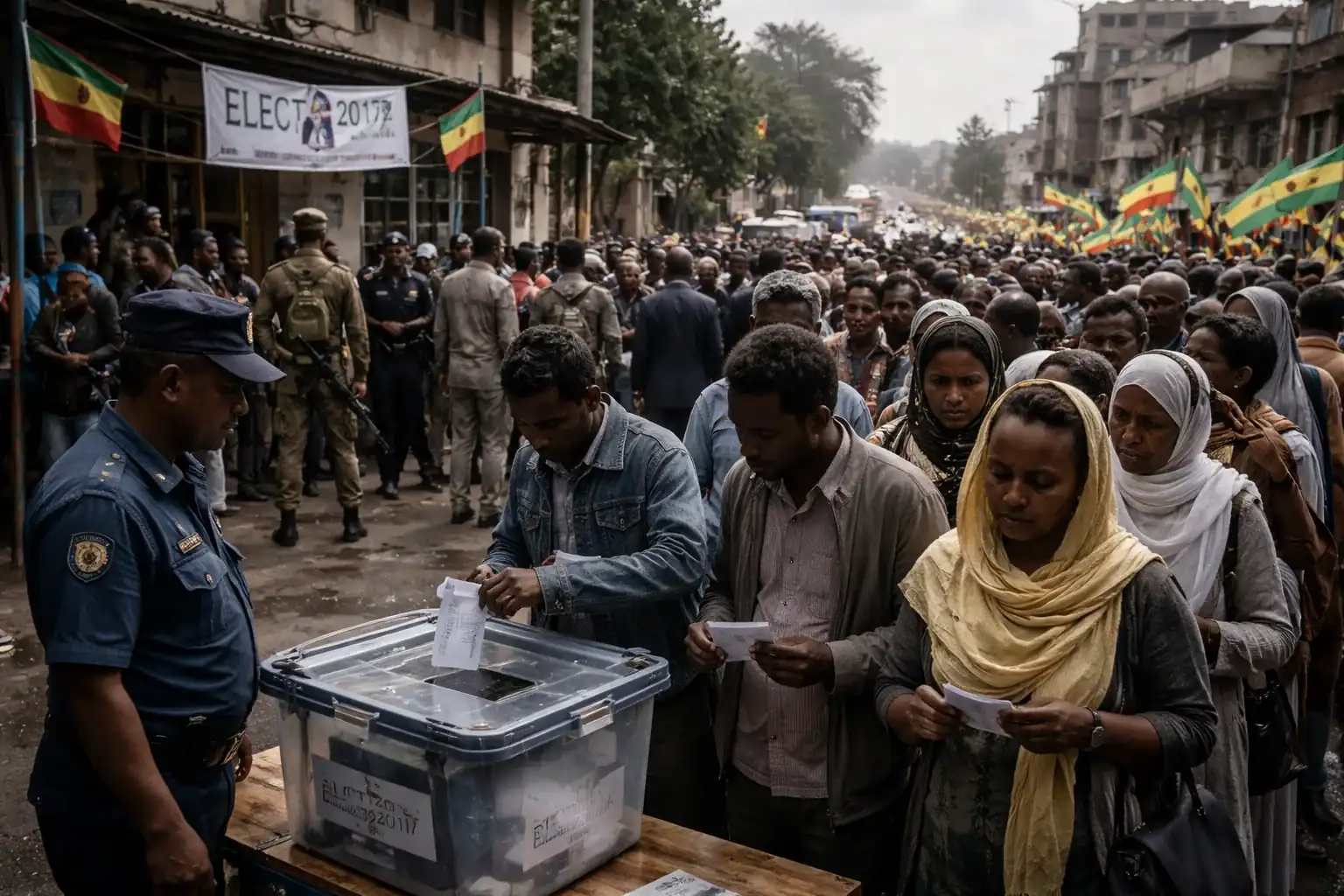
Polls have opened for Ethiopia's seventh general election since the fall of the military regime in 1991. However, the democratic process is being overshadowed by ongoing conflict and the total exclusion of the Tigray region, which is still struggling to recover from a brutal civil war that concluded in 2022. Prime Minister Abiy Ahmed's Prosperity Party is expected to maintain its grip on power as the nation elects 547 representatives to parliament.
What's new in this update
For this election cycle, the media environment has become increasingly restrictive. Many international news organizations, including the BBC, have been denied press accreditation. Additionally, opposition politicians like Professor Merera Gurdina of the Oromo Federalist Congress have stated that their participation is purely symbolic to prevent legal deregistration, rather than a genuine pursuit of a competitive seat.
Key details
Under the current system, voters elect representatives to the 547-member parliament. The party that secures a minimum of 274 seats earns the right to form a government for the next five years. While Abiy Ahmed's supporters point to urban transformation projects in Addis Ababa and economic reforms backed by the IMF and World Bank, critics highlight that these projects have displaced tens of thousands of residents and that national debt has reached $36.5 billion.
Background and context
Abiy Ahmed took office in 2018 as a reformer and was awarded the Nobel Peace Prize in 2019 for ending a 20-year stalemate with Eritrea. However, his tenure has been marked by a shift toward a more centralized government under the Prosperity Party and a devastating two-year war with Tigray's leaders. Human Rights Watch and Reporters Without Borders have recently condemned the government for arbitrary arrests of journalists and a decline in press freedom, ranking the country 148th out of 180 on the press freedom index.
What to watch next
Observers are monitoring whether the exclusion of Tigray and the symbolic participation of opposition parties will lead to further social unrest or challenges to the government's legitimacy. Additionally, the international community is watching how the government manages its $36.5 billion debt and whether it will comply with IMF requirements to liberalize its foreign currency exchange market following the election.
Why it matters
The election serves as a critical test for Prime Minister Abiy Ahmed's leadership and the country's stability following years of internal conflict and economic shifts.
Read next
Follow this story through the topic hub, more world coverage, and the latest updates.
Weekly briefing
Get the week's key developments in one concise email.
Get a fast catch-up on the biggest stories, the context behind them, and the links worth your time.
Cadence
Weekly, for a quick catch-up
Coverage
AI, business, world, security, sports
Format
Clear takeaways and useful context
Request the briefing
Leave your email to open a prepared request and get on the list for the weekly briefing.
Author
See who assembled this story and follow more of their work.
Sources and methodology