Ethiopia Holds General Election as Conflict Excludes Tigray Region
Prime Minister Abiy Ahmed faces a test of legitimacy as regional instability and opposition boycotts shadow the national vote.
Primary source: BBC World News. Full source links and update notes are below.
Fast summary
Start here
- The northern Tigray region is entirely excluded from the election as it continues to recover from a civil war that ended in 2022.
- Opposition figures, including Prof Merera Gurdina, have characterized the election as the least competitive in the country's recent history.
- International media access is heavily restricted, with the BBC and other outlets denied official press accreditation to cover the vote.
What happened
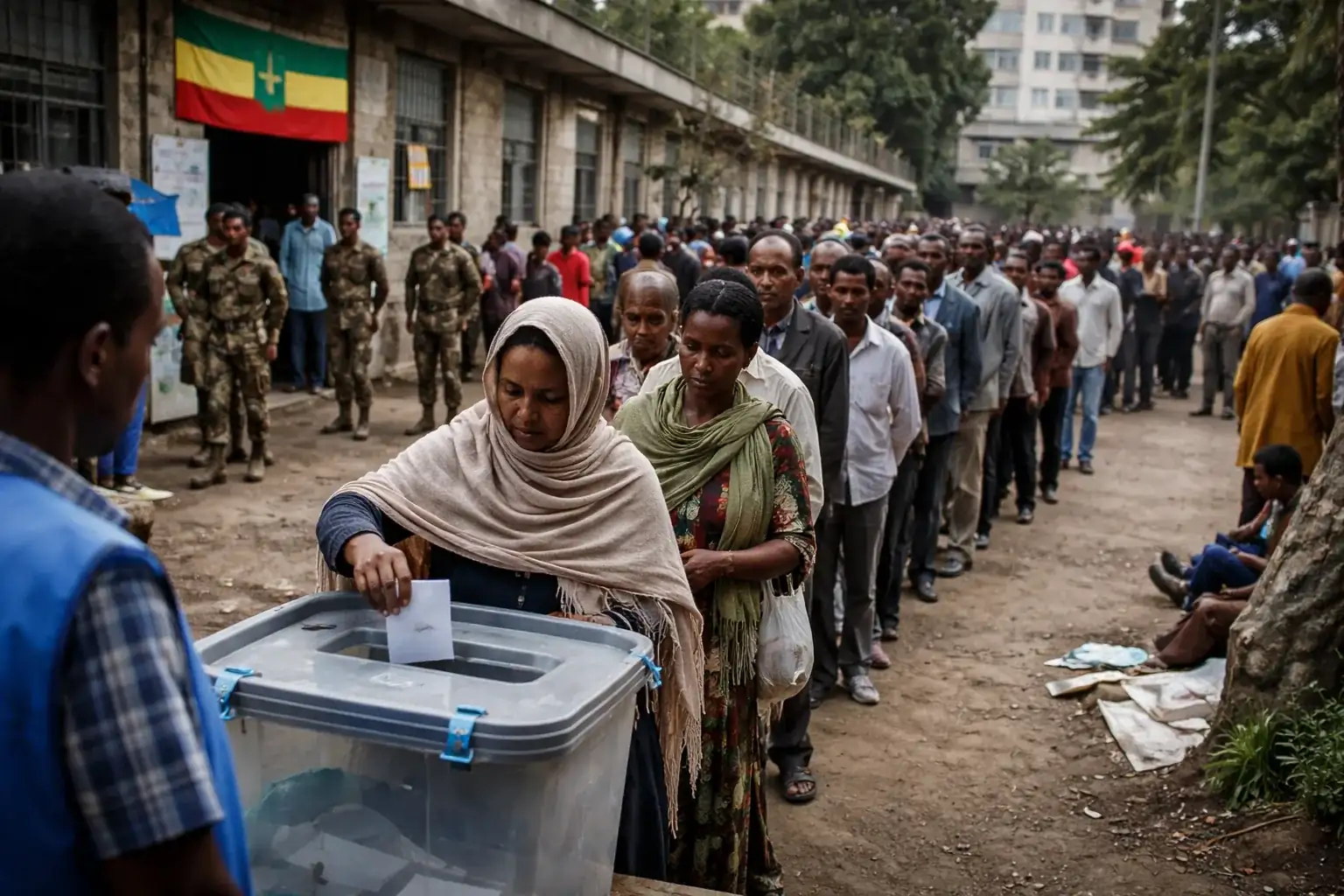
Polls have opened across Ethiopia for the country's seventh general election since 1991. The vote is taking place against a backdrop of active conflict in several regions and the total exclusion of the northern Tigray region, which remains in a fragile state of recovery following the brutal civil war that concluded in 2022. Prime Minister Abiy Ahmed is seeking to maintain his mandate through his Prosperity Party, which replaced the long-standing EPRDF coalition.
What's new in this update
The current election cycle is marked by significant friction with international media and human rights monitors. Reporters Without Borders recently ranked Ethiopia 148th out of 180 countries for press freedom, and several news organizations, including the BBC, have been denied accreditation for this poll. This follows a trend of increasing regulatory pressure, including the revocation of credentials for Reuters journalists earlier this year.
Key details
Voters are electing representatives to the 547-member parliament, where a majority of 274 seats is required to form a government. While the prime minister is not directly elected, the winning party will lead the country for the next five years. Opposition groups like the Oromo Federalist Congress have stated they are only participating symbolically to avoid legal deregistration, rather than as a robust challenge to the current administration.
Background and context
Prime Minister Abiy Ahmed, who took office in 2018 and won the Nobel Peace Prize in 2019, has seen his international reputation shift following the Tigray conflict. That war resulted in an estimated 600,000 deaths and brought the region to the brink of famine. While the government highlights urban development projects and IMF-backed economic reforms as signs of progress, critics point to a $36.5 billion national debt and the suppression of political dissent as ongoing crises.
What to watch next
The results of the vote will determine the trajectory of Ethiopia's economic liberalisation and its ability to manage external debt. However, the continued exclusion of Tigray and the lack of a competitive field may lead to further questions regarding the government's legitimacy and the prospect of long-term reconciliation within the federal system.
Why it matters
As Africa's second-most populous nation, Ethiopia's stability is central to Horn of Africa security, yet this election highlights deep internal divisions and a narrowing democratic space.
Read next
Follow this story through the topic hub, more world coverage, and the latest updates.
Weekly briefing
Get the week's key developments in one concise email.
Get a fast catch-up on the biggest stories, the context behind them, and the links worth your time.
Cadence
Weekly, for a quick catch-up
Coverage
AI, business, world, security, sports
Format
Clear takeaways and useful context
Request the briefing
Leave your email to open a prepared request and get on the list for the weekly briefing.
Author
See who assembled this story and follow more of their work.
Sources and methodology