Five Italians Killed in 'Worst Single Diving Accident' in the
A marine biology research team from the University of Genoa is among the dead following a deep-sea cave exploration attempt in rough weather.

World correspondent
Reports on international affairs, diplomacy, and humanitarian developments with an emphasis on official statements, multilateral institutions, and regional context.
Editorial responsibility: Lead reviewer for geopolitics, international institutions, and crisis coverage
Primary source: BBC World News. Full source links and update notes are below.
Fast summary
Start here
- Five Italian citizens died while attempting to explore underwater caves at a depth of approximately 50 meters in the Vaavu Atoll.
- Four of the victims were affiliated with the University of Genoa, including professor Monica Montefalcone, a student, and two research fellows.
- The Maldives military has characterized the ongoing search and recovery operation at a 60-meter depth as a very high-risk mission.
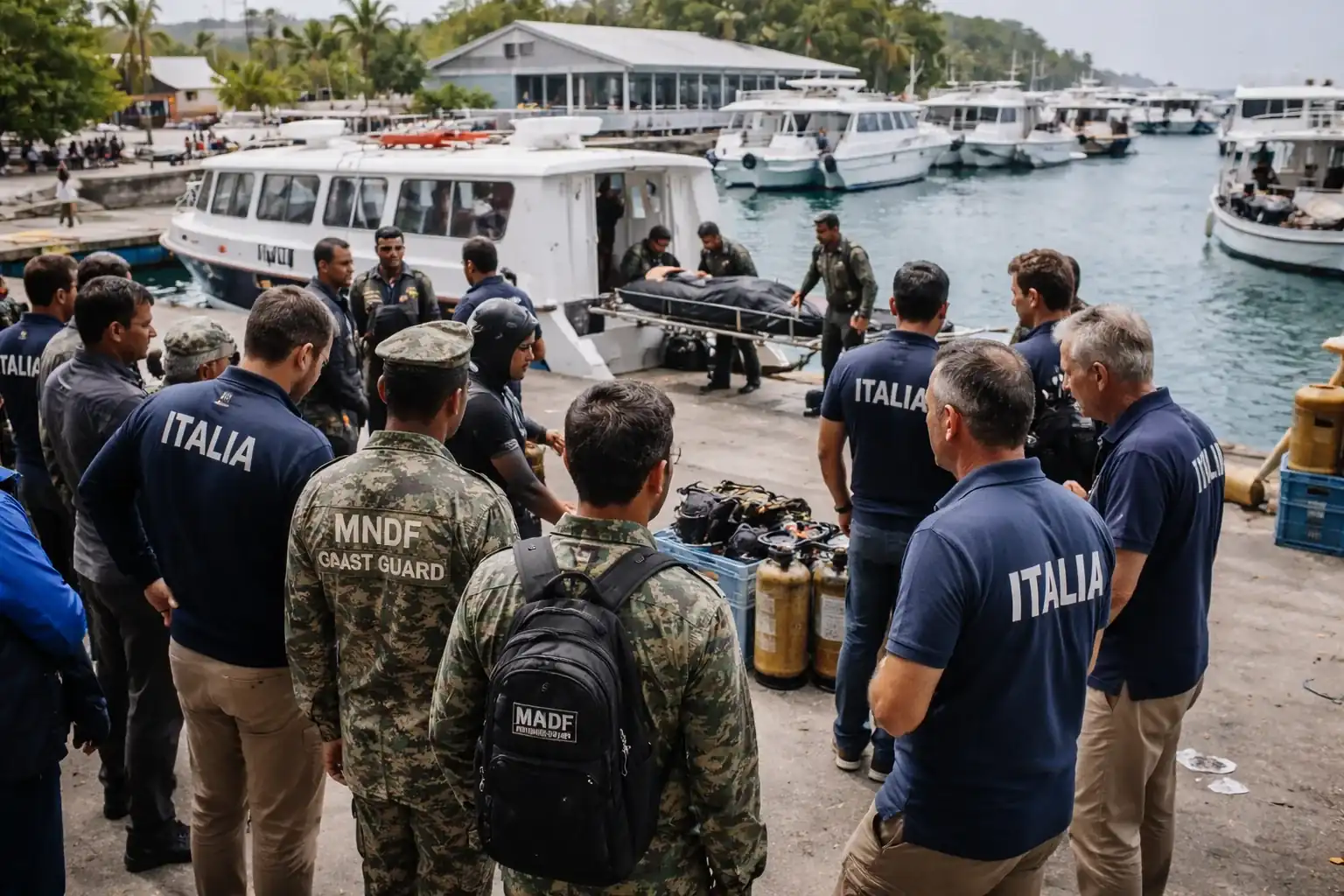
What happened
Five Italians died in a cave diving accident in the Maldives after failing to resurface from a deep underwater exploration in the Vaavu Atoll, in what local authorities have described as the deadliest single diving disaster in the country's history. The group entered the water to explore caves at roughly 50 meters depth, but harsh conditions, depth, and the technical difficulty of the dive appear to have combined into a fatal outcome. The victims included several people linked to the University of Genoa, turning the tragedy into both a national shock in Italy and a major blow to a scientific community.
This matters because the accident is not only a tourism or sport-diving story. It also involves a respected marine research network, a technically demanding environment, and serious questions about the role of weather warnings and dive risk assessment in one of the world's premier diving destinations.
Why cave diving accidents are especially dangerous
Cave diving is one of the riskiest forms of underwater activity because it removes the simplest emergency option available in open water: direct ascent to the surface. Once divers enter a cave at depth, they must manage visibility, orientation, gas supply, and exit distance with almost no room for error. At 50 meters, the risks intensify further. Depth affects air use, decompression, and response time, while rough weather outside can complicate both entry conditions and rescue.
That is why even highly experienced divers can face fatal situations when several risk factors line up at once.
The scientific loss
The deaths are especially striking because several of the victims were associated with the University of Genoa, including marine biology and ecology figures. That means the tragedy reaches beyond family grief and into academic loss. Researchers working in marine environments often operate close to risk, but accidents involving multiple members of one scientific or educational network are rare and deeply destabilizing.
When a field team or closely linked research group is lost, the impact is intellectual as well as personal. Expertise, projects, mentorship, and institutional continuity can all be affected at the same time.
Why the Maldives angle matters
The Maldives markets itself globally as a high-end diving destination, and for good reason: its reefs, currents, and marine ecosystems attract divers from around the world. But the same geography that makes it attractive can also be hazardous. Strong currents, remote atolls, and deep technical sites create conditions that demand judgment and preparation at a very high level.
That is one reason this accident will resonate locally as well. A fatal event of this scale can affect confidence in safety procedures, guide practices, and regulatory oversight in a tourism sector central to the country's economy.
The weather and operational questions
Reports that rough weather and warnings were in place at the time of the dive are likely to become central to any investigation. The question is not simply whether the sea was rough, but whether the conditions were already severe enough that a dive of this type should have been postponed. Investigators will likely examine vessel decisions, local guidance, diver planning, and whether the site conditions were consistent with a reasonable safety threshold.
That process matters because technical diving accidents often become lessons written in hindsight about go/no-go judgment.
What comes next
The immediate next steps involve recovery, repatriation, and the formal investigation into the circumstances of the dive. Italian authorities and the University of Genoa will likely conduct their own assessments alongside Maldivian inquiries. The findings may influence how future technical dives are authorized or supervised in similar environments.
For now, the deaths of five Italian divers in the Maldives mark a rare and devastating catastrophe in a country famous for marine beauty. The combination of depth, cave exploration, rough weather, and scientific affiliation makes this more than a tourism accident. It is a major loss of life that will likely shape safety discussions far beyond the Vaavu Atoll.
Why it matters
This incident is recorded as the deadliest single diving accident in the history of the Maldives and has resulted in the loss of prominent members of the Italian marine biology community.
Read next
Follow this story through the topic hub, more world coverage, and the latest updates.
Weekly briefing
Get the week's key developments in one concise email.
Get a fast catch-up on the biggest stories, the context behind them, and the links worth your time.
Cadence
Weekly, for a quick catch-up
Coverage
AI, business, world, security, sports
Format
Clear takeaways and useful context
Request the briefing
Leave your email to open a prepared request and get on the list for the weekly briefing.
About the byline
World correspondent
Leila Haddad covers world affairs, diplomacy, and humanitarian crises, with a focus on how fast-moving international developments affect public policy, conflict response, and cross-border institutions.
Sources and methodology