Airport Chiefs Sound Alarm Over Digital Border Chaos Ahead of Summer
Berlin Airport’s chief executive warns that two-hour queues for non-EU travelers are unsustainable as the bloc’s new biometric border system faces

World correspondent
Reports on international affairs, diplomacy, and humanitarian developments with an emphasis on official statements, multilateral institutions, and regional context.
Editorial responsibility: Lead reviewer for geopolitics, international institutions, and crisis coverage
Primary source: BBC World News. Full source links and update notes are below.
Fast summary
Start here
- Berlin Airport reports that non-EU nationals are facing wait times of up to two hours due to the complexity and fragmentation of the digital Entry-Exit System.
- Technical failures at major hubs like Rome and the Port of Dover have resulted in passengers missing flights and inactive processing kiosks.
- Aviation industry groups are calling for urgent contingency measures from the European Commission as peak summer travel threatens to overwhelm border infrastructure.
What happened
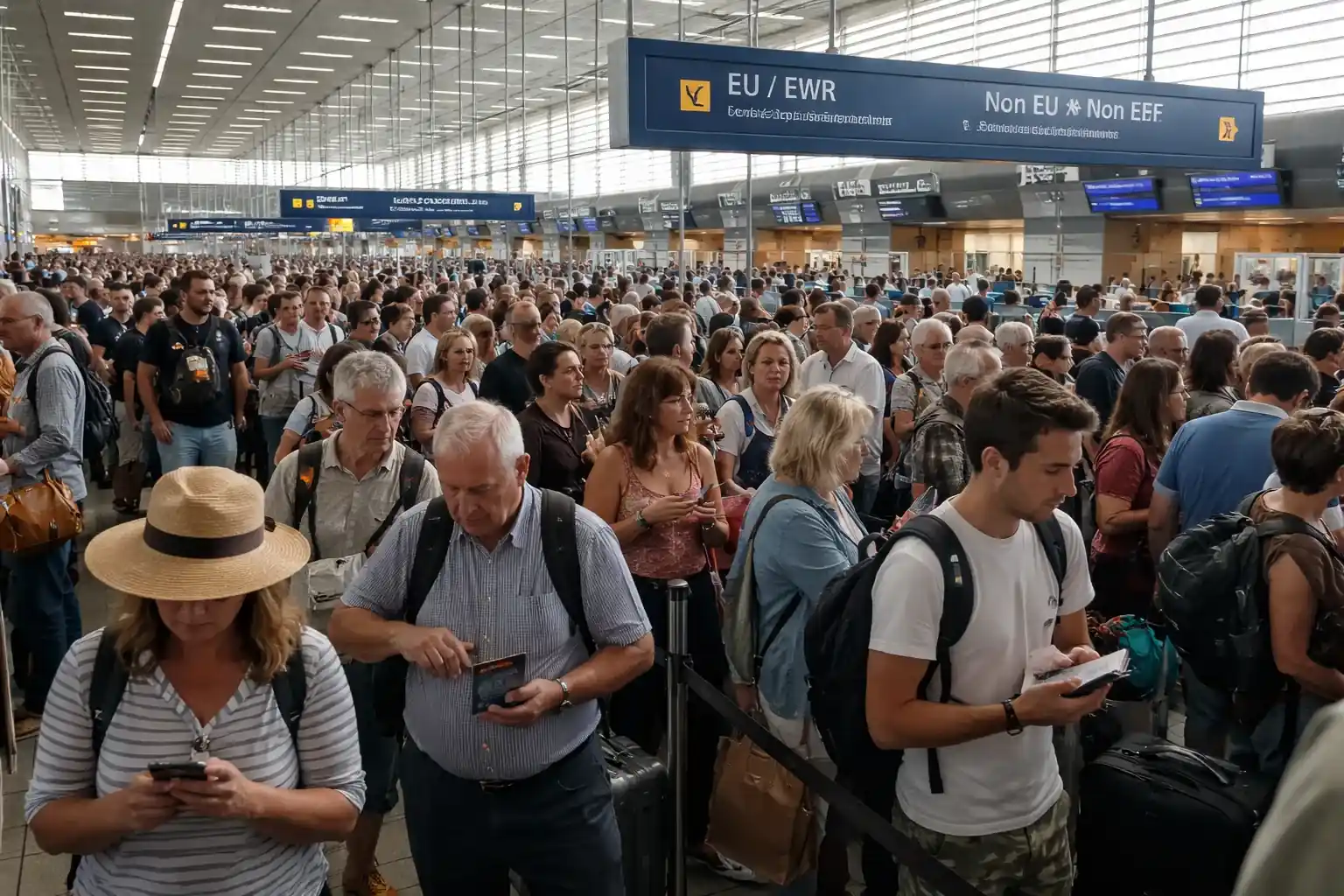
Aletta von Massenbach, the chief executive of Berlin Airport, has issued a stark warning regarding the deteriorating conditions at German border controls following the rollout of the European Union's new Entry-Exit System (EES). Non-EU nationals arriving in the German capital have faced queues lasting up to two hours, a situation von Massenbach described as "not bearable over the summer." The delays are particularly severe at terminals serving low-cost carriers like Ryanair and Wizz Air, where the volume of non-EU travelers is high. The warning underscores a growing crisis across European transport hubs, where the digital infrastructure intended to modernize and secure border crossings is instead creating significant bottlenecks that threaten the efficiency of international travel during the year's busiest period.
What's new in this update
The latest reports highlight the personal cost of these systemic failures as travelers share accounts of missed flights and non-functional infrastructure. In one instance, a traveler from Scotland reported missing a flight home from Rome after facing 90-minute queues just to enter Italy, followed by a total collapse of the EES infrastructure during her departure. Most biometric machines at the Rome airport were reportedly out of order, forcing passengers into grueling lines that ultimately caused missed connections and significant replacement travel expenses. This experience is becoming increasingly common, as passengers find themselves trapped in "unbearable" queues despite arriving hours ahead of their scheduled departures. The inconsistency of the rollout across different member states has meant that while some airports function adequately, others are seeing their operations crippled by hardware and software glitches.
Key details
The technical issues extend beyond airports to major maritime gateways like the Port of Dover. Despite having 84 kiosks installed to record fingerprints and photographs, the processing area remains inactive because the software—controlled by French authorities—cannot be activated. Port of Dover chief executive Doug Bannister informed MPs that time is "rapidly running out" to resolve these issues before the critical summer period begins. The lack of operational assurance at one of the UK’s busiest transit points suggests a potential for a "very challenging six weeks" ahead. Industry representatives from Airlines UK and Airlines for America have criticized the rollout as inconsistent, noting that the fragmentation of sub-systems across different EU member states has added unnecessary layers of complexity that current infrastructure is not equipped to handle.
Background and context
The Entry-Exit System (EES) was designed to replace the manual stamping of passports for non-EU "third country" nationals, including travelers from the United Kingdom and the United States. By recording biometric information—specifically fingerprints and facial scans—the system aims to create a more secure digital record of entry and exit within the 29-country Schengen free movement zone. While the European Commission intended for the EES to eventually make travel smoother and more secure, the transition has been marred by delays since it became fully operational in April. The system's complexity is exacerbated by the fact that each member state often utilizes different digital sub-systems, preventing a unified experience. This lack of interoperability has turned a project meant for modernization into a primary source of travel disruption.
What to watch next
As the peak summer travel season approaches, the focus shifts to whether the European Commission and individual member states can implement effective contingency measures. The EC has expressed a willingness to offer additional support, but airport operators and airline groups are demanding more immediate, concrete action to prevent a total collapse of border services during July and August. Travelers are being warned to anticipate continued delays and are encouraged to check for local updates at their specific points of departure. The potential for long-term damage to European tourism remains a concern, as some travelers have already expressed a reluctance to return to the continent until the border issues are resolved. Stakeholders will be watching closely for the activation of technology at the Port of Dover and any emergency modifications to registration requirements.
Why it matters
The failure of the EES rollout threatens to disrupt international tourism and trade during the busiest travel season of the year, undermining the EU's goal of a modernized, secure border.
Read next
Follow this story through the topic hub, more world coverage, and the latest updates.
Weekly briefing
Get the week's key developments in one concise email.
Get a fast catch-up on the biggest stories, the context behind them, and the links worth your time.
Cadence
Weekly, for a quick catch-up
Coverage
AI, business, world, security, sports
Format
Clear takeaways and useful context
Request the briefing
Leave your email to open a prepared request and get on the list for the weekly briefing.
About the byline
World correspondent
Leila Haddad covers world affairs, diplomacy, and humanitarian crises, with a focus on how fast-moving international developments affect public policy, conflict response, and cross-border institutions.
Sources and methodology