DR Congo Bans Mass Gatherings in Kinshasa Over Ebola Fears Amid
Authorities in the Democratic Republic of Congo have prohibited large public meetings in the capital to stop a growing Ebola outbreak, a move critics call

World correspondent
Reports on international affairs, diplomacy, and humanitarian developments with an emphasis on official statements, multilateral institutions, and regional context.
Editorial responsibility: Lead reviewer for geopolitics, international institutions, and crisis coverage
Primary source: BBC World News. Full source links and update notes are below.
Fast summary
Start here
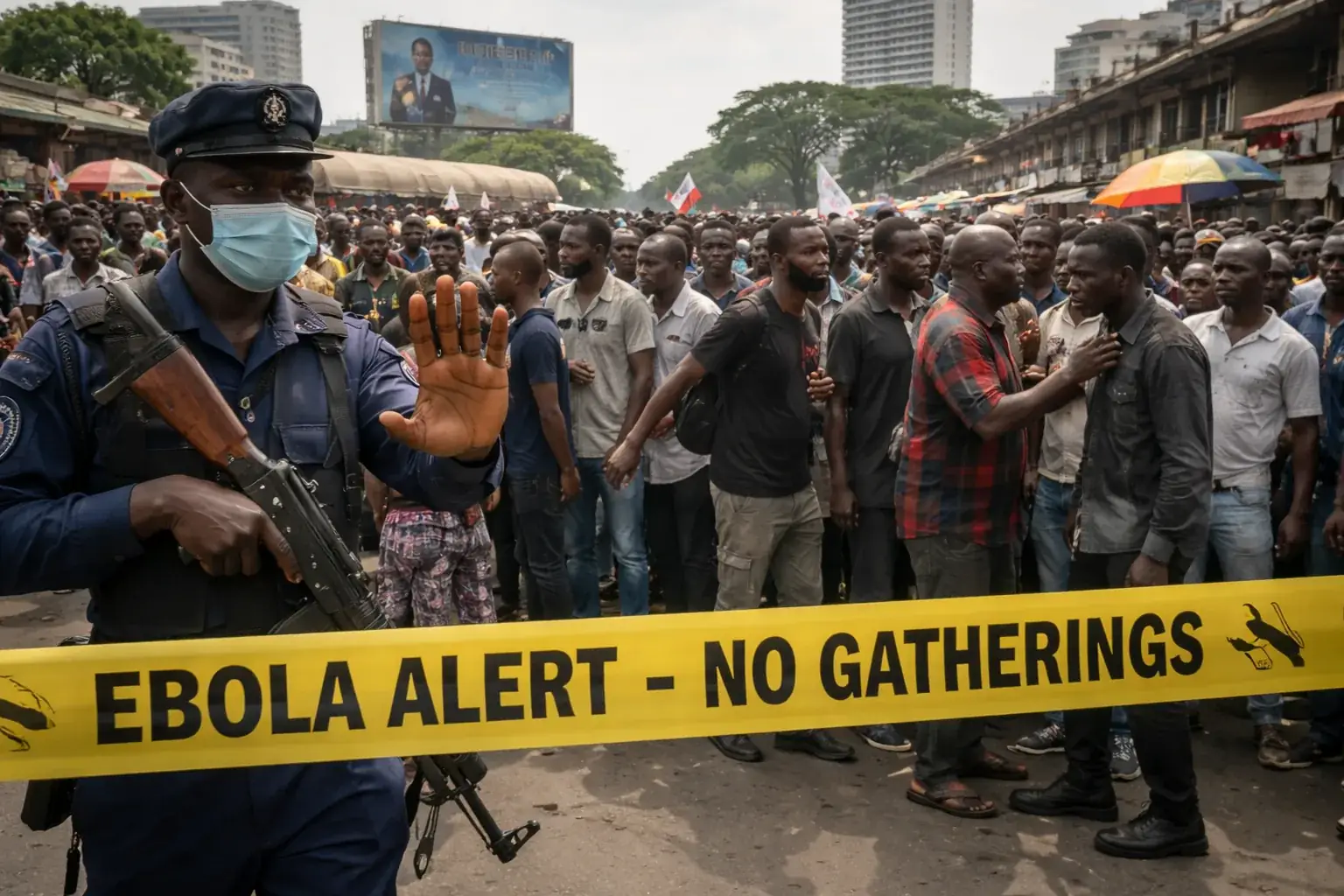
- Mass gatherings are now banned in Kinshasa and the provinces of Tshopo, Haut-Uele, and Bas-Uele to prevent the spread of the Bundibugyo Ebola virus.
- Political opposition leaders allege the health directive is a pretext to block a major protest scheduled for July 8 against President Felix Tshisekedi.
- The current outbreak has infected over 1,200 people and killed 360, with conflict in the eastern regions complicating medical interventions.
What happened
DR Congo's Interior Minister Jacquemain Shabani announced a sweeping ban on mass gatherings in the capital city of Kinshasa on Saturday. The directive also extends to the provinces of Tshopo, Haut-Uele, and Bas-Uele, which border regions where the virus has already been confirmed. While the epicenter of the current Ebola outbreak remains in the eastern provinces of Ituri, North Kivu, and South Kivu—located approximately 1,100 miles from the capital—officials expressed deep concern over the potential for the virus to enter the densely populated city of 18 million people. The decision follows a recent spike in confirmed cases, with 47 new infections reported in a single day, bringing the total count to 1,274 cases and 360 deaths. This measure represents an escalation in the government's efforts to isolate the virus before it takes hold in major urban hubs.
What's new in this update
The newest development in this crisis is the official confirmation of cases in neighboring Uganda, where the World Health Organization (WHO) reports 20 infections and two deaths. Additionally, the risk to Kinshasa became tangible after a doctor, who later tested positive for Ebola in France, was found to have traveled through the capital after working at a treatment center in the outbreak's epicenter. In response, the Congolese government has mandated a 21-day quarantine for any travelers moving from Ebola-affected eastern regions to other parts of the country. On the medical front, the head of the Africa Centres for Disease Control and Prevention (Africa CDC) has indicated that clinical trials for new antiviral drugs could begin as early as this week, offering a glimmer of hope as the current Bundibugyo strain lacks an approved vaccine.
Key details
The ban has sparked fierce backlash from DR Congo’s opposition parties, who claim the health crisis is being used as a tool for political suppression. The C64 coalition had organized a major demonstration for July 8 to protest a proposed law that might allow President Felix Tshisekedi to seek a third term. Opposition figures, including Prince Epenge and Rodrigue Ramazani, have labeled the directive a "political manoeuvre," pointing out that no Ebola cases have been officially confirmed within Kinshasa itself. They argue that the government is utilizing the threat of disease to dismantle the planned protest march. Despite the ban, some opposition leaders are urging citizens to ignore the decree and proceed with the demonstration, setting the stage for a potential confrontation between security forces and protesters who believe the public health measures are illegitimate.
Background and context
The current outbreak is primarily concentrated in the Ituri province, which accounts for more than 90% of all infections recorded so far. Containing the disease in the east has proven exceptionally difficult due to ongoing regional conflict and the presence of the M23 rebel group, which controls significant portions of North and South Kivu. The World Health Organization has warned that active warfare prevents health workers from reaching affected communities, conducting contact tracing, or implementing safe burial practices. Ebola is a highly infectious disease transmitted through contact with infected bodily fluids, such as blood or vomit. Because this outbreak involves the Bundibugyo species, traditional vaccines used in previous outbreaks are ineffective, leaving public health officials reliant on strict social distancing and quarantine measures to break the chain of transmission across the nation.
What to watch next
Health experts from the Africa CDC and US public health authorities have cautioned that this outbreak has the potential to become one of the largest in history. The delay in confirming the first cases meant the virus had already been spreading undetected for several weeks before intervention began. Moving forward, the international community will be monitoring the results of the upcoming antiviral drug trials and the effectiveness of the 21-day quarantine on domestic travel. Domestically, the July 8 protest remains a critical flashpoint. If the opposition proceeds with the march despite the ban, it will test both the government's resolve and the public's willingness to prioritize health directives over political expression. The situation remains fluid as health officials struggle to balance containment with the realities of a politically charged environment in a country of over 100 million people.
Why it matters
The intersection of a deadly disease outbreak with civil unrest creates a volatile situation where public health measures and democratic freedoms are at odds. With no existing vaccine for this specific Ebola strain, containment is critical to preventing a regional or global health crisis.
Read next
Follow this story through the topic hub, more world coverage, and the latest updates.
Weekly briefing
Get the week's key developments in one concise email.
Get a fast catch-up on the biggest stories, the context behind them, and the links worth your time.
Cadence
Weekly, for a quick catch-up
Coverage
AI, business, world, security, sports
Format
Clear takeaways and useful context
Request the briefing
Leave your email to open a prepared request and get on the list for the weekly briefing.
About the byline
World correspondent
Leila Haddad covers world affairs, diplomacy, and humanitarian crises, with a focus on how fast-moving international developments affect public policy, conflict response, and cross-border institutions.
Sources and methodology