Dissident Hong Kong Bookseller Lam Wing-kee, Who Defied Beijing
Lam Wing-kee, a central figure in the 2015 bookshop disappearances who later fled to Taiwan to escape extradition to mainland China, has passed away in

World correspondent
Reports on international affairs, diplomacy, and humanitarian developments with an emphasis on official statements, multilateral institutions, and regional context.
Editorial responsibility: Lead reviewer for geopolitics, international institutions, and crisis coverage
Primary source: BBC World News. Full source links and update notes are below.
Fast summary
Start here
- Lam Wing-kee died at Mackay Memorial Hospital in Taipei late Thursday following a battle with lung cancer.
- He was one of five booksellers linked to Causeway Bay Books who were detained by Chinese authorities in 2015 for selling political material.
- After fleeing to Taiwan in 2019, Lam became a symbol of democratic resistance by reopening his iconic bookstore in Taipei.
What happened
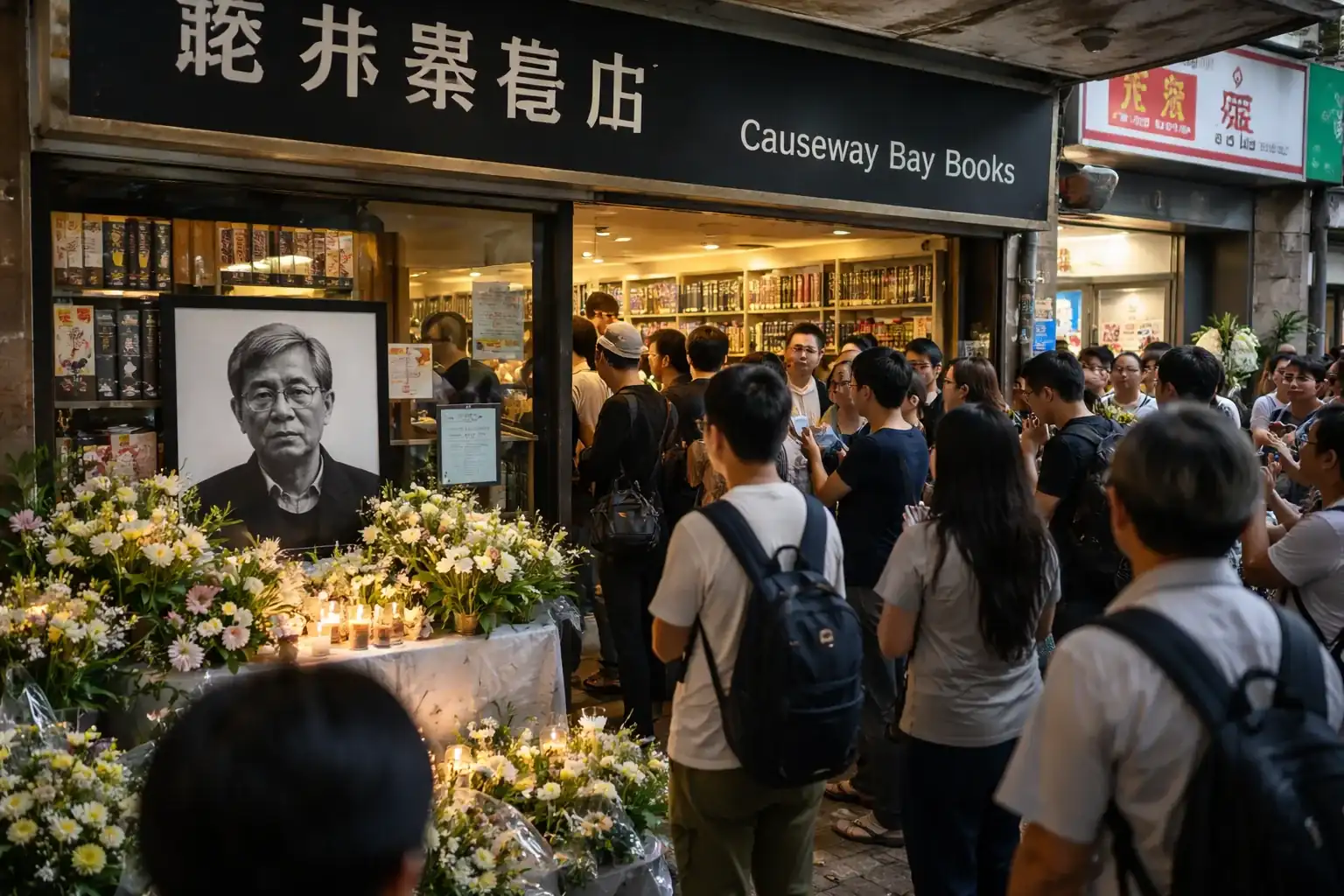
Lam Wing-kee, the prominent Hong Kong bookseller who became a global symbol of resistance against Chinese state repression, has died at the age of 70. He passed away late Thursday evening at Mackay Memorial Hospital in Taipei, Taiwan, after a period of declining health. Regional media reports indicate that Lam had been battling lung cancer, a condition that recently took a critical turn. His health deteriorated significantly earlier in the week when he was admitted to the hospital on Tuesday; he subsequently fell into a coma and remained unconscious until his passing. Lam’s death marks the end of a pivotal chapter for the Causeway Bay Books legacy, a small retail operation that once stood at the center of an international diplomatic storm. His life was defined by a commitment to the written word and a refusal to remain silent in the face of intense authoritarian pressure from Beijing.
What's new in this update
The news of Lam’s passing has prompted immediate and solemn reactions from high-level officials in Taiwan, where he lived in exile for the final five years of his life. Taiwan President Lai Ching-te expressed profound sadness over the bookseller's death, extending his deepest condolences to Lam's family and friends via a public statement. President Lai remarked that Lam’s life served as a direct testament to the inherent value of freedom of expression and highlighted the fear and suffering caused by authoritarian repression. Lai noted that instead of choosing silence after his ordeal in mainland China, Lam chose to rebuild his life and his business in Taiwan. By reopening Causeway Bay Books in Taipei, Lam created a vital sanctuary where members of the Hong Kong diaspora could gather, exchange ideas, and support one another in a safe, democratic environment.
Key details
Lam’s ordeal began in 2015 when he was one of several staff members and owners associated with Causeway Bay Books who disappeared under mysterious circumstances. Lam was arrested during a visit to mainland China and held in detention for more than 400 days. During this time, he was subjected to intense interrogation and was featured in a televised confession on Chinese state media, which he later revealed was entirely staged and acted out according to a script provided by his captors. His eventual release and subsequent decision to go public with the harrowing details of his detention provided a rare and chilling look into the extrajudicial methods used by Chinese security services. In his final interview with the BBC last year, Lam emphasized the importance of personal values, stating that if one believes something is right, they must continue to stick to it regardless of the personal cost.
Background and context
The disappearance of the booksellers in 2015 was a pivotal moment that signaled the beginning of a tightening grip by Beijing over Hong Kong’s autonomous status under the "one country, two systems" framework. At the time, Causeway Bay Books was known for selling gossipy and critical accounts of Chinese Communist Party leaders, books that were banned on the mainland but popular with tourists visiting from the PRC. Lam’s case specifically fueled widespread anxieties regarding the encroachment of mainland Chinese law into the former British colony. These fears eventually culminated in the 2019 mass protests against a proposed extradition bill, which would have allowed suspects to be sent to mainland China for trial. Fearing he would be among the first targeted by such a law, Lam fled to Taiwan in April 2019, where he was welcomed by authorities who viewed his bookstore's reopening as a symbol of the island's commitment to democracy.
What to watch next
As the Hong Kong diaspora continues to grow in places like Taiwan, the United Kingdom, and Canada, the legacy of figures like Lam Wing-kee will likely serve as a rallying point for those advocating for the preservation of Hong Kong's unique identity and civil rights. Observers will be watching how Beijing responds to the tributes pouring in for Lam, as the Chinese government has historically sought to erase the influence of those who challenge its official narrative. In Taiwan, the continued operation of Causeway Bay Books will remain a significant indicator of the island’s role as a haven for political dissidents and a bastion of free speech in the region. Meanwhile, the international community continues to monitor the ongoing crackdown on dissent within Hong Kong itself, where the implementation of the National Security Law in 2020 has largely silenced the kind of political publishing that Lam once championed.
Why it matters
Lam Wing-kee's life and public defiance highlighted the erosion of civil liberties in Hong Kong and the growing geopolitical divide between Beijing and democratic Taiwan.
Read next
Follow this story through the topic hub, more world coverage, and the latest updates.
Weekly briefing
Get the week's key developments in one concise email.
Get a fast catch-up on the biggest stories, the context behind them, and the links worth your time.
Cadence
Weekly, for a quick catch-up
Coverage
AI, business, world, security, sports
Format
Clear takeaways and useful context
Request the briefing
Leave your email to open a prepared request and get on the list for the weekly briefing.
About the byline
World correspondent
Leila Haddad covers world affairs, diplomacy, and humanitarian crises, with a focus on how fast-moving international developments affect public policy, conflict response, and cross-border institutions.
Sources and methodology