Brazil Monitors Two Patients for Suspected Ebola Infection
Health officials in Brazil's two largest cities activated safety protocols after travelers from the DR Congo and Uganda displayed viral symptoms.
Primary source: BBC World News. Full source links and update notes are below.
Fast summary
Start here
- Health authorities in São Paulo and Rio de Janeiro are monitoring two patients for possible Ebola after arrivals from the DR Congo and Uganda.
- While the patients have tested positive for meningitis and malaria respectively, doctors have not yet ruled out Ebola infection.
- The current outbreak is caused by the rare Bundibugyo strain, which lacks a proven vaccine and has a mortality rate of approximately 33%.
What happened
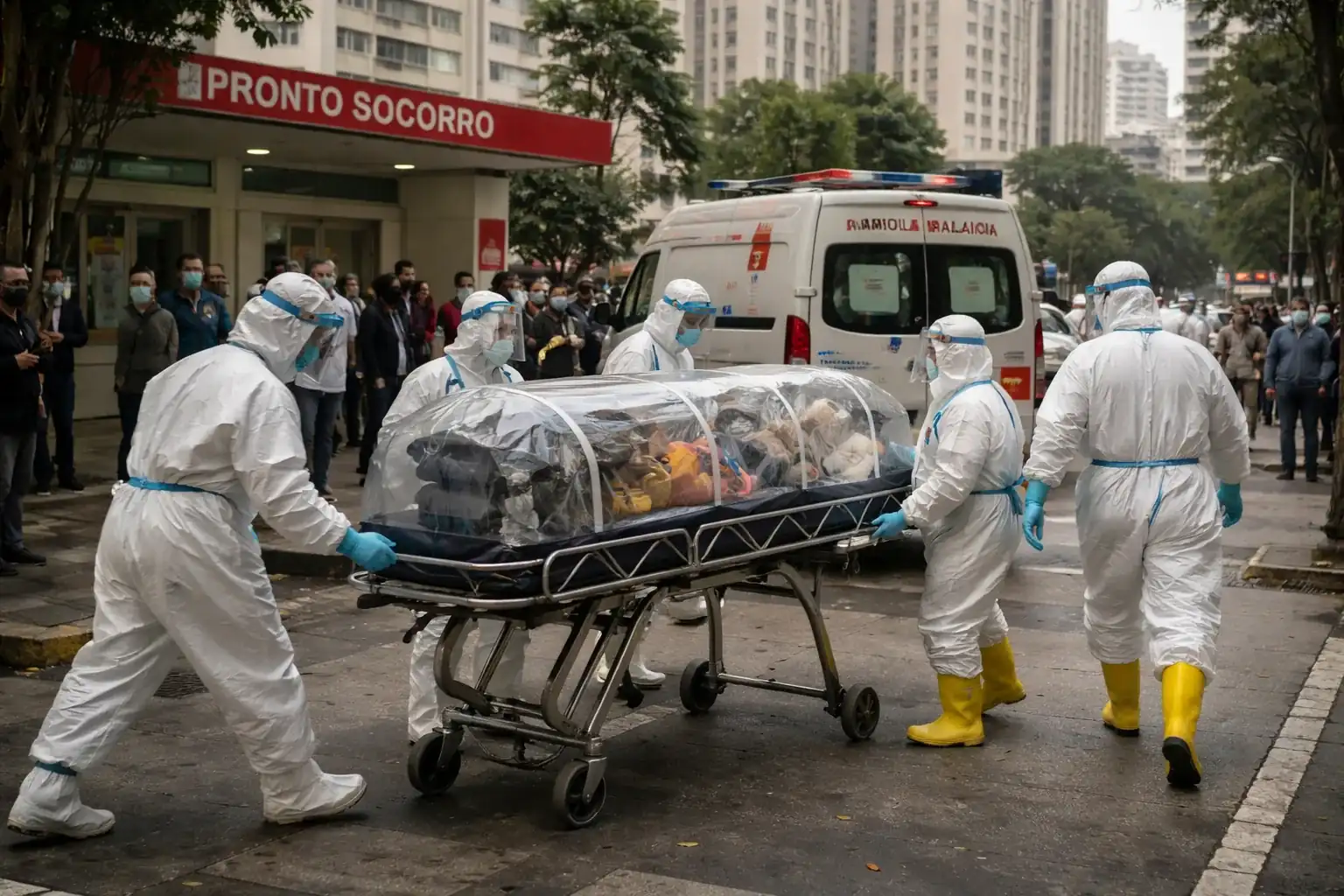
Health officials in Brazil have placed two patients under monitoring in São Paulo and Rio de Janeiro for potential Ebola virus infection. Both individuals recently arrived from countries currently experiencing an outbreak: the Democratic Republic of the Congo and Uganda. Safety protocols have been activated in both cities to manage the potential risk and isolate the patients until definitive testing is complete.
What's new in this update
While the patients remain under observation for Ebola, they have already received alternative primary diagnoses. A 37-year-old man in São Paulo has tested positive for meningitis and is reportedly in serious condition. Meanwhile, a Belgian patient in Rio de Janeiro has tested positive for malaria. Health officials emphasized that these findings do not yet exclude the possibility of Ebola, and final test results are expected next week.
Key details
The São Paulo patient arrived from the DR Congo showing fever symptoms, while the Rio patient arrived from Uganda with a cough, chills, and diarrhea. Brazil's monitoring comes as the DR Congo reports over 1,000 suspected cases and at least 246 deaths. In Uganda, there have been nine confirmed cases and one death related to the current outbreak, which health authorities are working to contain within the region.
Background and context
The current Ebola outbreak is linked to the Bundibugyo strain, which is considered rare compared to the more common Zaire strain. It is notably difficult to manage because there is currently no established vaccine, and the virus typically kills about one-third of those it infects. Transmission occurrs through direct contact with the bodily fluids of infected individuals or contact with infected animals, such as fruit bats.
What to watch next
The World Health Organization (WHO) and Brazilian authorities are awaiting laboratory confirmation from the tests, with results slated for release next week. While the WHO maintains that a global spread of the virus remains highly unlikely, the medical charity Médecins Sans Frontières has characterized the rapid spread in Africa as an alarming situation, highlighting the importance of strict monitoring for international travelers.
Why it matters
These cases, if confirmed, would represent the first time the current Ebola outbreak has spread beyond the African continent.
Read next
Follow this story through the topic hub, more world coverage, and the latest updates.
Weekly briefing
Get the week's key developments in one concise email.
Get a fast catch-up on the biggest stories, the context behind them, and the links worth your time.
Cadence
Weekly, for a quick catch-up
Coverage
AI, business, world, security, sports
Format
Clear takeaways and useful context
Request the briefing
Leave your email to open a prepared request and get on the list for the weekly briefing.
Author
See who assembled this story and follow more of their work.
Sources and methodology