Barney Frank, Pioneer of LGBT Rights and Financial Reform, Dies at
The former Massachusetts representative was one of the first openly gay members of Congress and co-authored the Dodd-Frank banking overhaul.

World correspondent
Reports on international affairs, diplomacy, and humanitarian developments with an emphasis on official statements, multilateral institutions, and regional context.
Editorial responsibility: Lead reviewer for geopolitics, international institutions, and crisis coverage
Primary source: BBC World News. Full source links and update notes are below.
Fast summary
Start here
- Barney Frank passed away Tuesday night at his home in Maine at the age of 86 after being in hospice care since April.
- He was a historic figure for LGBT representation, serving over three decades in the House and becoming the first member to enter a same-sex marriage while in office.
- Frank co-authored the 2010 Dodd-Frank Act, a landmark piece of legislation that overhauled US banking regulations following the 2008 financial crisis.
What happened
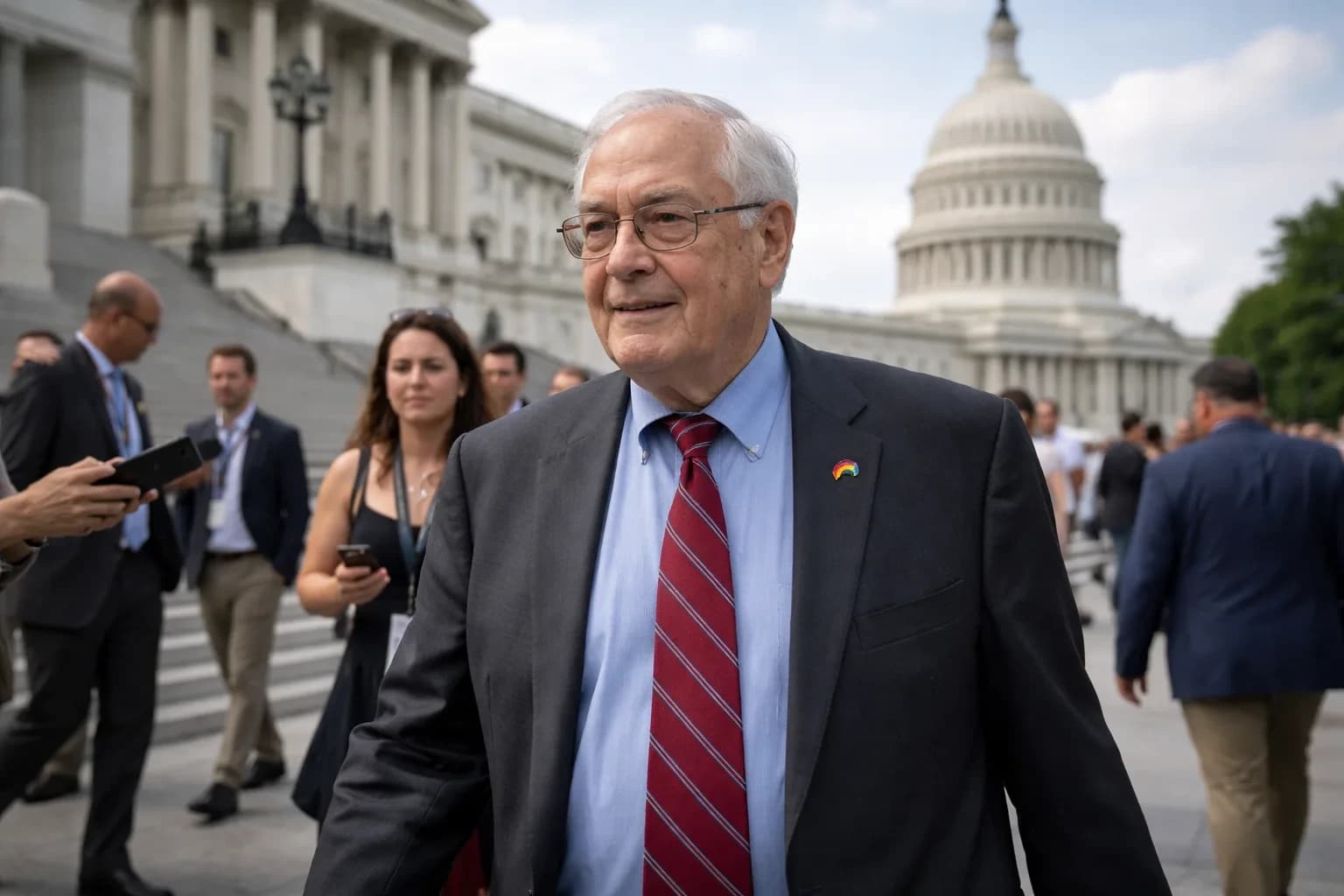
Barney Frank, the longtime Massachusetts congressman whose career reshaped both LGBT representation in American politics and federal financial regulation, has died at 86. His death closes the career of one of the most recognizable and consequential legislators of his era, a politician who moved between civil-rights battles and highly technical economic policymaking with unusual force and fluency. For many Americans, Frank will be remembered simultaneously as a trailblazing openly gay member of Congress and as a co-author of the Dodd-Frank financial reforms that followed the 2008 crisis.
What's new in this update
Family and close associates confirmed that Frank died after a period in hospice care at his home in Maine. The immediate public response has focused not only on his longevity in office, but on the range of his influence. He was not a symbolic breakthrough figure who happened to hold office. He was a powerful committee chairman, a skilled legislator, and an often combative political communicator whose work changed major parts of the American policy landscape.
That combination explains why tributes are likely to come from very different corners of public life: civil-rights advocates, financial-policy experts, Massachusetts Democrats, and even critics who still recognized how consequential he was.
Key details
Frank served in the U.S. House of Representatives for more than 30 years, representing Massachusetts and becoming one of the most visible openly gay elected officials in the country. His presence mattered historically because he did not merely exist in office quietly. He used his position to argue publicly for LGBT rights, challenge discriminatory policy, and push for broader social recognition at a time when representation at that level was far rarer.
He also played a central role in post-crisis banking reform. As chairman of the House Financial Services Committee, Frank helped author the Dodd-Frank Wall Street Reform and Consumer Protection Act with Senator Chris Dodd. The law created new regulatory structures and tighter oversight mechanisms after the financial crash exposed major weaknesses in the U.S. banking system.
Those two legacies are often discussed separately, but part of Frank's distinctiveness was that he inhabited both worlds fully. He was a social-progress figure and a technical legislative operator.
Background and context
Barney Frank's political career unfolded during periods of major change in both American cultural life and economic governance. On LGBT issues, he represented a generation of political transition in which public openness, legal recognition, and policy reform moved from marginal fights to national disputes with lasting institutional consequences.
On financial policy, he became one of the most important congressional figures in responding to the Great Recession. Dodd-Frank remains one of the defining pieces of post-2008 law, and its name alone permanently linked Frank to the federal attempt to prevent another system-wide banking collapse.
His rhetorical style also mattered. Frank was sharp-tongued, direct, and often delightfully impatient with euphemism. Even people who disagreed with him frequently acknowledged that he changed debates simply by refusing to speak in softened political clichés.
What to watch next
In the near term, the public response will likely center on tributes from political leaders, former colleagues, civil-rights groups, and economic policymakers. Those reactions will reveal how unusually broad Frank's influence was, stretching from symbolic representation to foundational regulation.
Longer term, his death is likely to prompt renewed debate over both of his major legacies. On one side is the history of openly gay political leadership in the United States. On the other is the continuing fight over financial oversight, banking regulation, and whether the Dodd-Frank framework remains adequate in a changing economy.
Barney Frank's importance was never confined to one movement or one committee. He helped alter what Congress looked like, what it regulated, and how bluntly power could be confronted in public. That combination is why his death marks more than the passing of a former representative. It marks the loss of a distinctly forceful political era embodied in one person.
Why it matters
Frank’s career bridged the gap between civil rights activism and high-level economic policy, leaving a lasting impact on both social progress and the American financial system.
Read next
Follow this story through the topic hub, more world coverage, and the latest updates.
Weekly briefing
Get the week's key developments in one concise email.
Get a fast catch-up on the biggest stories, the context behind them, and the links worth your time.
Cadence
Weekly, for a quick catch-up
Coverage
AI, business, world, security, sports
Format
Clear takeaways and useful context
Request the briefing
Leave your email to open a prepared request and get on the list for the weekly briefing.
About the byline
World correspondent
Leila Haddad covers world affairs, diplomacy, and humanitarian crises, with a focus on how fast-moving international developments affect public policy, conflict response, and cross-border institutions.
Sources and methodology