Selling Children to Survive: The Impossible Choice for Afghan Fathers
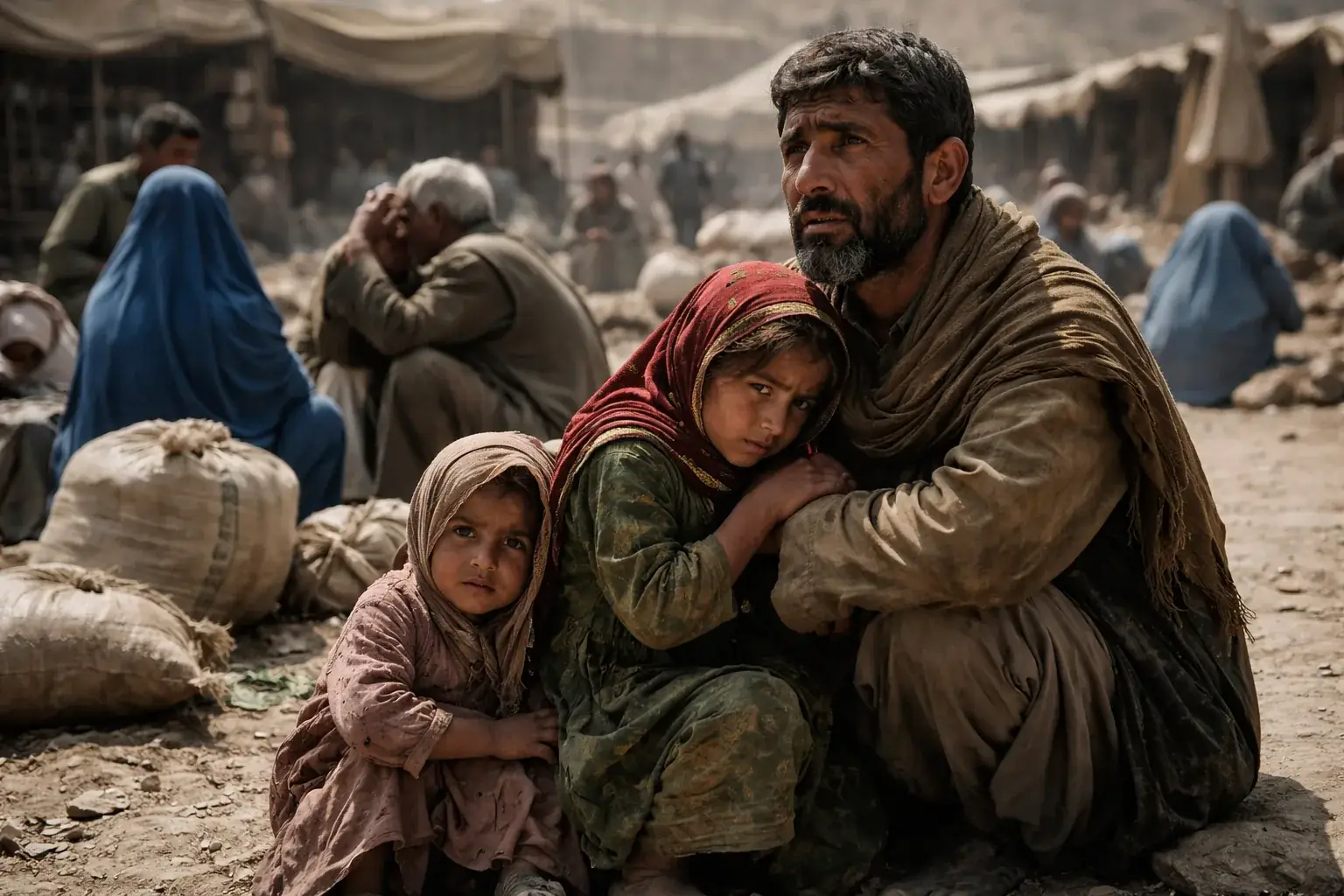
Record levels of hunger and a collapse in employment have pushed families in Ghor province to the brink of starvation.
Primary source: BBC World News. Full source links, newsroom standards, and correction details are below.
Fast summary
Start here
- Approximately 4.7 million Afghans are currently estimated to be one step away from famine.
- Unemployment and a sharp reduction in international aid have left three in four citizens unable to meet basic needs.
- Fathers in Ghor province are reporting desperate measures, including selling daughters into marriage or domestic work to buy food.
What happened
In the provincial capital of Ghor, hundreds of men gather daily at dawn in hopes of finding manual labor. The likelihood of success is minimal; some workers report finding only three days of employment over a six-week period. This economic paralysis has left families without the means to purchase basic staples like flour or bread, leading to widespread starvation in one of Afghanistan's worst-affected regions.
What's new in this update
New reports from the ground highlight the extreme measures fathers are taking to ensure family survival. Abdul Rashid Azimi, a resident of Ghor, disclosed his willingness to sell his seven-year-old twin daughters for marriage or domestic work. He stated that the proceeds from selling one child could potentially feed the rest of his family for four years, illustrating the depth of the local humanitarian crisis.
Key details
The United Nations reports that a staggering 75% of the Afghan population cannot meet their basic needs. In Ghor, the competition for work is so intense that dozens of men reportedly scramble for a single task, such as carrying bricks. Local bakeries have become points of desperation, where the distribution of stale bread leads to immediate scrums among hungry residents. For many families, daily meals have been reduced to bread and hot water.
Background and context
The decision to sell daughters over sons is influenced by both cultural and political factors. Under the Taliban's current restrictions on education and work for women, sons are viewed as the only viable future breadwinners. Additionally, the tradition of marital gifts—provided to a girl's family by the groom's family—serves as a primary, if tragic, source of emergency liquidity for households in debt or facing starvation.
What to watch next
International aid agencies continue to warn that without a significant increase in funding and a stabilization of the local economy, the number of people facing famine conditions will likely rise. The long-term impact of selling young girls into marriage also poses a severe threat to the country's social fabric and the future health of its youth population.
Why this matters
The humanitarian collapse in Afghanistan highlights the dire consequences of economic isolation and the sharp reduction in international aid following the Taliban's return to power.
Reader context
This story belongs to Northstar Herald's International Relations and Human Rights coverage, with related entities including Afghanistan, Taliban, Famine, Ghor Province. The report is based on BBC World News source material.
Related coverage
Why it matters
The humanitarian collapse in Afghanistan highlights the dire consequences of economic isolation and the sharp reduction in international aid following the Taliban's return to power.
Read next
Follow this story through the topic hub, more world coverage, and the latest updates.
Weekly briefing
Get the week's key developments in one concise email.
Get a fast catch-up on the biggest stories, the context behind them, and the links worth your time.
Cadence
Weekly, for a quick catch-up
Coverage
AI, business, world, security, sports
Format
Clear takeaways and useful context
Request the briefing
Leave your email to open a prepared request and get on the list for the weekly briefing.
Author

The world desk follows geopolitics, humanitarian crises, diplomacy, and major international developments with an emphasis on fast updates and public-interest context.
Sources and methodology