Pakistan Conducts Deadly Air Strikes in Afghanistan Following Border Attacks
Islamabad reports targeting militant hideouts after a fatal attack on security forces, while the Taliban government alleges civilian deaths including children.
Primary source: BBC World News. Full source links, newsroom standards, and correction details are below.
Fast summary
Start here
- Pakistan confirmed calibrated strikes on four targets, claiming to have killed 26 militants.
- Taliban officials reported 13 deaths, primarily children, across three Afghan provinces.
- The military action follows an attack on Pakistani security forces near Peshawar that killed six officers.
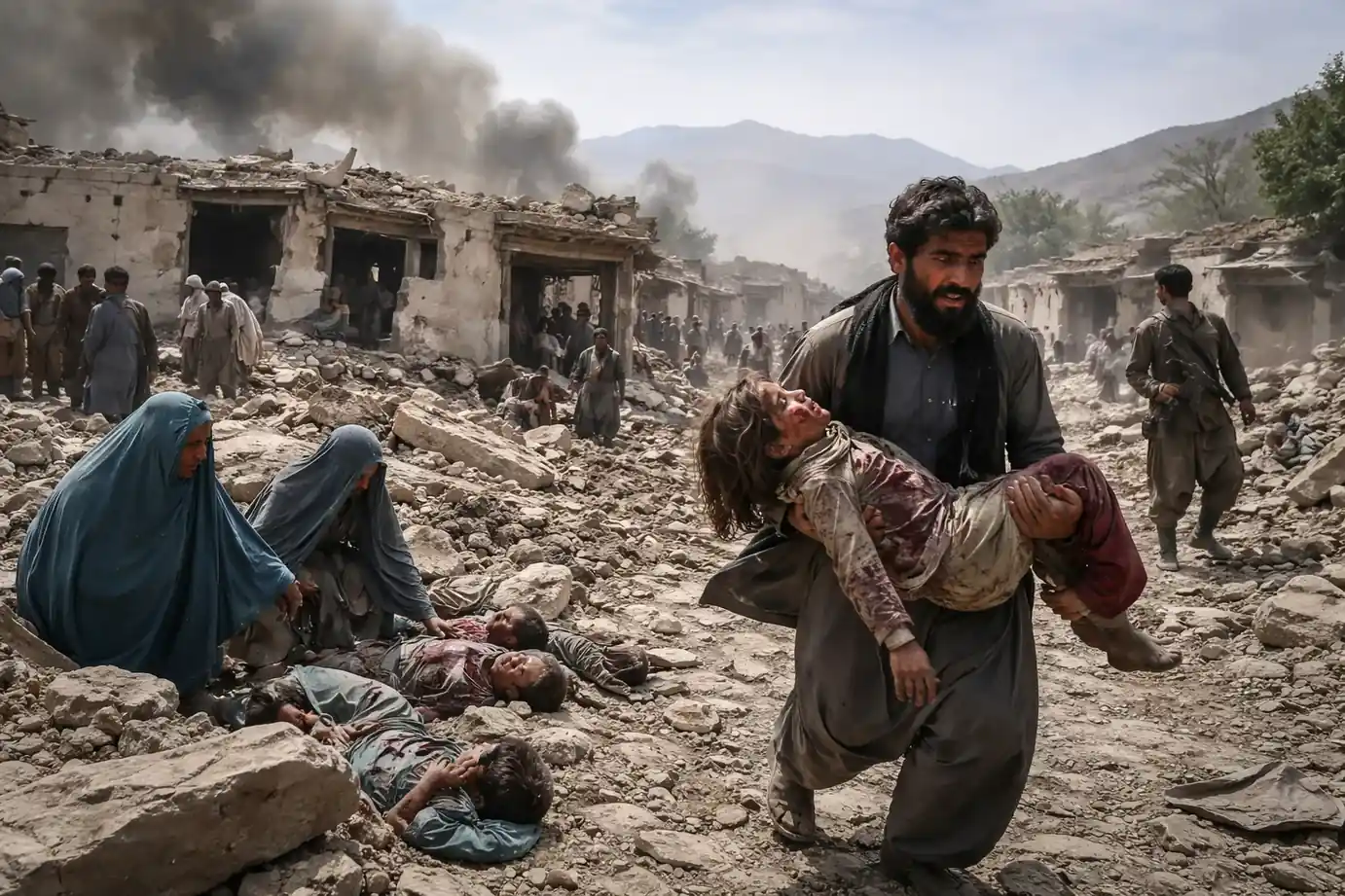
What happened
Pakistan launched a series of air strikes against targets in Afghanistan, reigniting cross-border hostilities. Information Minister Attaullah Tarar characterized the operation as a response to recent terrorist incidents, specifically citing the need to ensure the safety of Pakistani citizens. The strikes targeted what Pakistan described as hideouts and safe havens near the border.
What's new in this update
This latest military escalation follows a deadly ambush on Pakistani security forces near Peshawar that killed at least six officers. In response, Pakistani forces hit four distinct targets, including a training center and an ammunition cache. While Pakistan claims the deaths of 26 militants, the Taliban government asserts that the bombardment killed 11 children, one woman, and one elderly man.
Key details
The strikes focused on the provinces of Kunar, Khost, and Paktika. Taliban spokesman Zabihullah Mujahid reported that an additional 14 women and children were injured in the bombing. Pakistan maintains its stance that Afghan territory provides safe havens for militants who carry out attacks on Pakistani soil, a claim the Taliban continues to deny, stating their territory is not used to threaten other countries.
Background and context
Tensions have simmered for months along the 2,600km border. In March, a Pakistani strike on a drug rehabilitation center in Kabul resulted in the deaths of over 260 people, marking the deadliest single attack in the country's recent history. Despite a ceasefire agreement in October following previous clashes, both nations remain locked in a cycle of accusations regarding cross-border terrorism and territorial sovereignty.
What to watch next
Observers are monitoring for potential retaliatory strikes from the Taliban government, which has previously targeted Pakistani military bases following air raids. The escalation threatens the stability of the fragile October ceasefire and may lead to a further breakdown in diplomatic communications between the two neighboring governments.
Why it matters
These strikes break a period of relative calm and risk further destabilizing the volatile border region while deepening the diplomatic rift between Islamabad and Kabul.
Read next
Follow this story through the topic hub, more world coverage, and the latest updates.
Weekly briefing
Get the week's key developments in one concise email.
Get a fast catch-up on the biggest stories, the context behind them, and the links worth your time.
Cadence
Weekly, for a quick catch-up
Coverage
AI, business, world, security, sports
Format
Clear takeaways and useful context
Request the briefing
Leave your email to open a prepared request and get on the list for the weekly briefing.
Author

The Northstar Herald editorial desk assembles wire-driven and source-linked coverage, verifies core facts against published materials, and updates stories as new reporting becomes available.
Sources and methodology