Fatal Protests Erupt in Kenya Over Record-High Fuel Prices
Nationwide transport strikes have turned violent, leaving four dead and stranded thousands as the government defends a 20% spike in petroleum costs.
Primary source: BBC World News. Full source links, newsroom standards, and correction details are below.
Fast summary
Start here
- Four people were killed and 30 injured during clashes between protesters and security forces across Kenya.
- The interior minister confirmed 348 arrests as transport operators paralyzed Nairobi and other major regions.
- The strike follows a record 20% increase in fuel prices attributed to supply chain disruptions in the Middle East.
What happened
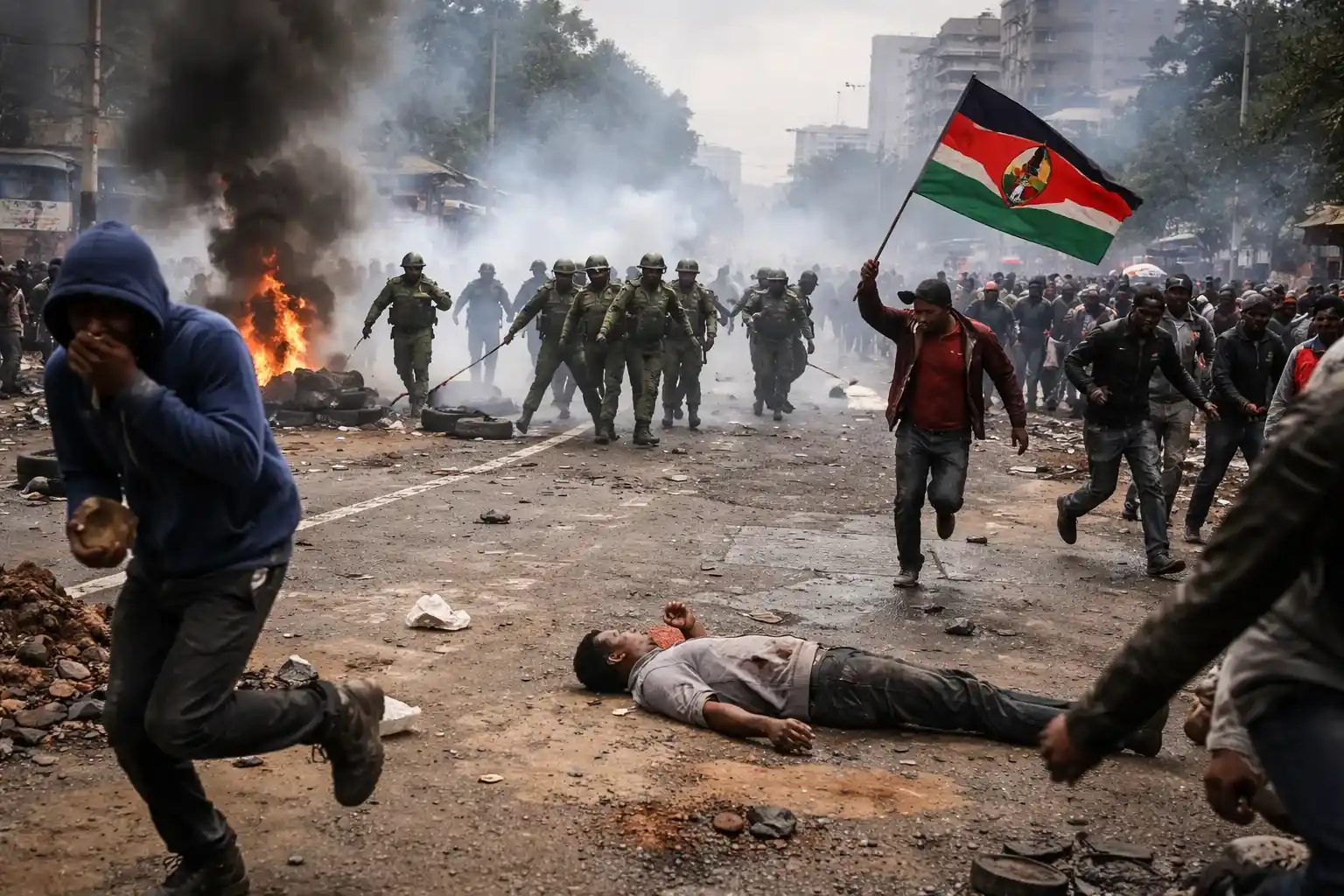
Violent protests against soaring fuel prices in Kenya have resulted in the deaths of four individuals and the injury of at least 30 others. The fatalities occurred during a nationwide transport strike that left thousands of commuters stranded and key arterial roads in Nairobi empty. Protesters erected burning barricades and blocked highways, leading to direct confrontations with security forces in several parts of the country.
What's new in this update
Interior Minister Kipchumba Murkomen confirmed that 348 people have been arrested in connection with the unrest. While authorities stated that most roads had been cleared by Monday evening, the transport shutdown remained effective in many areas. The Nairobi police commander reported that six officers were injured and multiple vehicles were damaged during the clashes as police used tear gas to disperse crowds.
Key details
The Transport Sector Alliance (TSA), which represents truckers and public transport operators known as matatus, coordinated the shutdown. The alliance has accused the government of failing to shield citizens from a 20% hike in petroleum prices. In the capital, businesses remained shuttered and schools advised students to stay home as transport costs for those few vehicles still operating reportedly doubled or tripled.
Background and context
Kenya's recent price hike is tied to its reliance on fuel imports from the Gulf. Officials pointed to the disruption of the Strait of Hormuz, a critical oil transit point, following a conflict involving the U.S., Israel, and Iran that began on February 28. Although a ceasefire was declared, local fuel prices have remained at record levels because the supply route remains partially obstructed.
What to watch next
The TSA has called for a total reversal of the fuel price increases, signaling that strikes could continue if their demands are not met. Interior Minister Murkomen has dismissed the protests as being hijacked by 'political actors' and maintains that vandalism will not lower oil prices. The government's ability to stabilize prices or offer subsidies will be critical in determining whether the civil unrest escalates.
Why this matters
The unrest reflects deepening economic instability in East Africa's largest economy and highlights the domestic impact of global energy supply chain disruptions. It poses a significant challenge to President William Ruto's administration amid a broader cost-of-living crisis.
Reader context
This story belongs to Northstar Herald's International Relations and Human Rights coverage, with related entities including Kenya, Fuel Prices, Nairobi, Kipchumba Murkomen. The report is based on BBC World News source material.
Related coverage
Why it matters
The unrest reflects deepening economic instability in East Africa's largest economy and highlights the domestic impact of global energy supply chain disruptions. It poses a significant challenge to President William Ruto's administration amid a broader cost-of-living crisis.
Read next
Follow this story through the topic hub, more world coverage, and the latest updates.
Weekly briefing
Get the week's key developments in one concise email.
Get a fast catch-up on the biggest stories, the context behind them, and the links worth your time.
Cadence
Weekly, for a quick catch-up
Coverage
AI, business, world, security, sports
Format
Clear takeaways and useful context
Request the briefing
Leave your email to open a prepared request and get on the list for the weekly briefing.
Author

The world desk follows geopolitics, humanitarian crises, diplomacy, and major international developments with an emphasis on fast updates and public-interest context.
Sources and methodology