Far-Right Israeli Minister Condemned for Taunting Handcuffed Gaza
National Security Minister Itamar Ben-Gvir filmed himself mocking kneeling detainees, drawing sharp rebukes from the U.S., UK, and Canada.

World correspondent
Reports on international affairs, diplomacy, and humanitarian developments with an emphasis on official statements, multilateral institutions, and regional context.
Editorial responsibility: Lead reviewer for geopolitics, international institutions, and crisis coverage
Primary source: BBC World News. Full source links and update notes are below.
Fast summary
Start here
- Israeli National Security Minister Itamar Ben-Gvir posted a video taunting pro-Palestinian activists kneeling with their hands tied.
- The U.S., UK, France, Italy, and Canada expressed outrage, with some summoning Israeli ambassadors for explanations.
- The activists were part of the Global Sumud Flotilla, which was intercepted by Israeli naval commandos in international waters.
What happened
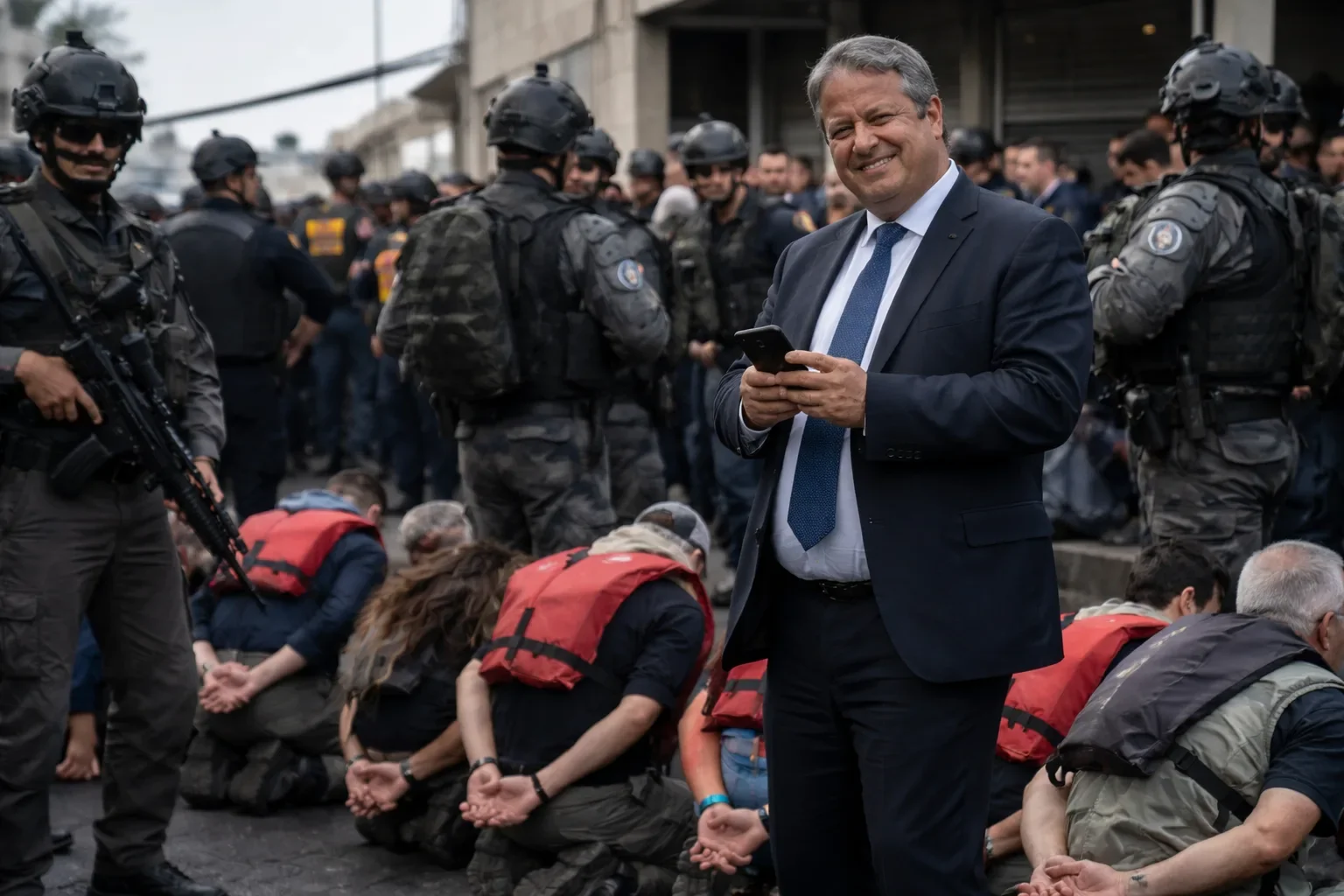
International condemnation has followed the release of a video showing Israeli National Security Minister Itamar Ben-Gvir taunting Gaza-bound flotilla activists who were detained after their boats were intercepted and taken to Ashdod port. In the footage, Ben-Gvir appears to mock kneeling detainees whose hands were tied, turning a sensitive detention scene into a performative political moment. The backlash was immediate because the video did not just raise questions about the treatment of activists. It also raised questions about the judgment of a senior Israeli minister choosing to publicly humiliate restrained foreign detainees.
That is why the reaction has been so sharp. The incident touches several volatile issues at once: Gaza, the legality of flotilla interceptions, the treatment of international activists, and the increasingly polarizing role of Ben-Gvir inside Israel's own government.
Why the video caused such outrage
Governments can often contain diplomatic fallout from interceptions or detentions by emphasizing legal process, security concerns, or operational necessity. Ben-Gvir's video made that far harder. Instead of presenting the detainees as subjects of a controlled security procedure, it turned them into props in a triumphalist political performance. For allies already uneasy about Israel's handling of Gaza-related issues, the optics were severe.
This is why countries such as the U.S., UK, Canada, and others responded publicly. The problem was not only the detention itself. It was the ministerial conduct on camera.
Ben-Gvir's role in Israel's image problem
Itamar Ben-Gvir has long been one of the most controversial figures in Israeli politics, especially among Western allies that are already strained by the tone and direction of parts of Israel's coalition government. His actions therefore carry a dual effect. They shape immediate events, but they also reinforce a broader international narrative that some senior Israeli officials are comfortable with provocation even when it damages diplomatic standing.
That matters because allies often distinguish between Israeli state policy and the conduct of specific ministers. When a minister becomes the story, the diplomatic damage can spread beyond the original incident.
The flotilla context
The activists were part of the Global Sumud Flotilla, an effort intended to challenge Israel's maritime blockade of Gaza and draw attention to humanitarian conditions in the territory. Israel regards such flotillas as security and propaganda challenges and has consistently defended interceptions as lawful enforcement. Activists and rights advocates, by contrast, describe them as high-seas aggression and efforts to suppress humanitarian solidarity missions.
The Ben-Gvir video lands inside that already contested context. It makes it harder for Israel to keep the focus on blockade legality when the most visible image becomes a minister mocking detainees.
Why allied criticism matters
The criticism from countries such as the United States and the United Kingdom is notable because these are among Israel's closest partners. Public condemnation from such governments is not routine over every episode. When allied diplomats summon ambassadors or openly describe conduct as disgraceful, it signals that the episode has crossed from uncomfortable optics into a reputational problem with real bilateral implications.
Even if the practical fallout is limited, the symbolic significance is real. It shows that treatment of foreign activists can become a point of friction even among states that broadly support Israel's security position.
What comes next
The legal fate of the flotilla activists, possible challenges by rights groups, and the responses of governments whose citizens were detained will shape the next phase of the story. But the political damage from the video is already done. Ben-Gvir has turned a contested maritime interception into a broader diplomatic embarrassment.
For now, the international condemnation following the video of Itamar Ben-Gvir taunting flotilla activists illustrates how individual ministerial behavior can amplify a crisis far beyond its original frame. What might have remained a dispute over blockade enforcement is now also a story about humiliation, detainee treatment, and the widening gap between Israel's far-right political figures and the expectations of its closest allies.
Why it matters
The incident has sparked rare public friction between Israel and its closest allies over the treatment of international activists and the conduct of high-ranking government officials.
Read next
Follow this story through the topic hub, more world coverage, and the latest updates.
Weekly briefing
Get the week's key developments in one concise email.
Get a fast catch-up on the biggest stories, the context behind them, and the links worth your time.
Cadence
Weekly, for a quick catch-up
Coverage
AI, business, world, security, sports
Format
Clear takeaways and useful context
Request the briefing
Leave your email to open a prepared request and get on the list for the weekly briefing.
About the byline
World correspondent
Leila Haddad covers world affairs, diplomacy, and humanitarian crises, with a focus on how fast-moving international developments affect public policy, conflict response, and cross-border institutions.
Sources and methodology