'No One Move': The Agonizing Silence as Venezuela Rescuers Listen
Four days after devastating earthquakes struck Venezuela, rescuers and families in La Guaira cling to hope while frustration grows over the slow pace of

World correspondent
Reports on international affairs, diplomacy, and humanitarian developments with an emphasis on official statements, multilateral institutions, and regional context.
Editorial responsibility: Lead reviewer for geopolitics, international institutions, and crisis coverage
Primary source: BBC World News. Full source links and update notes are below.
Fast summary
Start here
- Rescue teams at the Mariola and Maribel Residences enforce total silence to detect sounds from survivors trapped under tons of concrete.
- Local residents and relatives are taking search efforts into their own hands, accusing government authorities of neglect and insufficient support.
- A false alarm at one residential complex underscores the dwindling optimism as the search for survivors enters its fifth day.
What happened
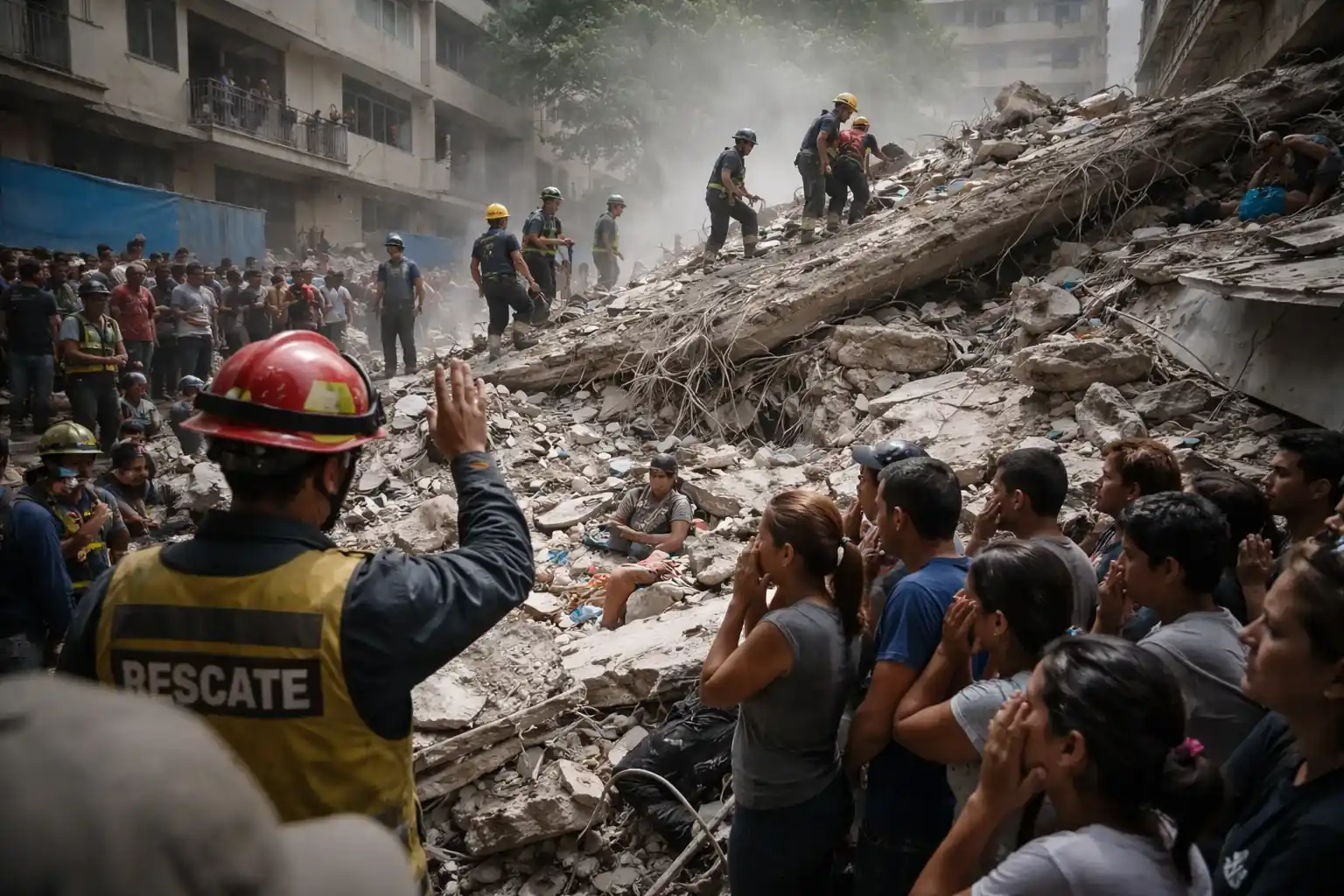
In the coastal city of La Guaira, the sound of heavy machinery occasionally gives way to a profound, desperate silence. Rescuers at the Mariola and Maribel Residences, an apartment complex once popular with beachgoers, have established a protocol of total stillness to listen for the voices of those trapped beneath concrete and iron. During these windows of silence, engines are cut, drills are silenced, and even breathing seems to pause as professionals kneel atop the unstable mountain of debris. The command "No one move!" echoes through the site, followed by a chain of whispers urging onlookers to keep quiet. This technique represents the last hope for finding survivors four days after a series of devastating earthquakes leveled parts of the region, leaving families to wait in agonizing anticipation for any sign of life from the rubble.
What's new in this update
The latest reports from the disaster site indicate a shift in the local mood from quiet hope to mounting frustration and anger. While 33 people were successfully pulled alive from the rubble as recently as Saturday, the frequency of successful rescues has plummeted as time passes. A recent incident at the residences saw a burst of optimism when a rescuer thought he heard a voice, leading to a ten-minute period of sacred silence. However, after no further sounds were detected, the moment was declared a false alarm. This emotional roller coaster is taking a heavy toll on family members like Ronnie Navarro, who traveled 350km from Puerto La Cruz to assist in the search for his uncle. Navarro and others are now openly criticizing the government’s response, claiming that authorities are doing little more than observing the site briefly before departing.
Key details
Key factual details emphasize the scale of the destruction within the residential complex located near the beach. Of the two original towers at the site, one has been completely swallowed by the earth, while the second stands at a precarious lean, threatening to collapse at any moment. For residents like 66-year-old biologist Zuly Marín, the disaster is deeply personal; she lost her niece and brother-in-law in the collapse and only survived herself because she was out shopping at the time. Survivors and relatives argue that the official rescue process has suffered from significant delays, suggesting that a more rapid deployment of specialized teams in the immediate aftermath of the earthquake could have saved more lives. The area is currently a chaotic mix of professional search teams, grieving relatives, and heavy machinery operators.
Background and context
The context of the disaster is rooted in the suddenness of the seismic activity that struck the coastal region of Venezuela. Prior to the earthquake, the Mariola and Maribel Residences were vibrant locations near the beach, often filled with residents and visitors enjoying the sun. The transition from a vacation destination to a disaster zone occurred in minutes, leaving hundreds of people buried under layers of iron and dust. Search efforts have utilized a variety of methods, including drones, sound detectors, and search dogs, but the sheer volume of concrete in modern high-rise structures makes these efforts grueling and slow. The current situation in La Guaira reflects a broader national crisis as the country struggles to mobilize sufficient disaster relief resources and equipment to its coastal regions during a major emergency.
What to watch next
Moving forward, the focus is expected to shift toward the controversial use of heavy machinery in the recovery phase. Families like Belkys Valecillo, whose brother and sister-in-law remain buried on the first floor of a collapsed tower, are expressing deep concern over reports that heavy equipment may be used to clear debris before all search efforts are exhausted. Standard protocol typically dictates that such machinery should only be deployed once there is no longer a reasonable expectation of finding survivors, yet the pressure to clear roads and stabilize leaning structures is growing. Observers will also be watching the structural integrity of the remaining leaning tower at the Mariola complex, which remains a constant hazard to the rescue workers and volunteers operating at its base.
Why it matters
The response to the earthquake highlights significant gaps in Venezuela's disaster management capabilities and the extreme measures civilians must take to find missing loved ones.
Read next
Follow this story through the topic hub, more world coverage, and the latest updates.
Weekly briefing
Get the week's key developments in one concise email.
Get a fast catch-up on the biggest stories, the context behind them, and the links worth your time.
Cadence
Weekly, for a quick catch-up
Coverage
AI, business, world, security, sports
Format
Clear takeaways and useful context
Request the briefing
Leave your email to open a prepared request and get on the list for the weekly briefing.
About the byline
World correspondent
Leila Haddad covers world affairs, diplomacy, and humanitarian crises, with a focus on how fast-moving international developments affect public policy, conflict response, and cross-border institutions.
Sources and methodology