NFL to Unveil Full 2026 Regular-Season Schedule This Thursday
The league will release the complete 18-week slate, including international games and marquee prime-time matchups for all 32 teams.

Sports reporter
Reports on leagues, tournaments, and athlete developments with an emphasis on verified event details, official announcements, and commercial context.
Editorial responsibility: Lead reviewer for match reporting, tournament context, and league governance coverage
Primary source: ESPN Top Headlines. Full source links and update notes are below.
Fast summary
Start here
- The NFL will officially release the full 2026 regular-season schedule on Thursday evening.
- While opponents were previously determined by formula, this release confirms specific dates, times, and broadcast partners.
- The 2026 schedule includes 17 regular-season games per team and a rotation of international fixtures.
What happened
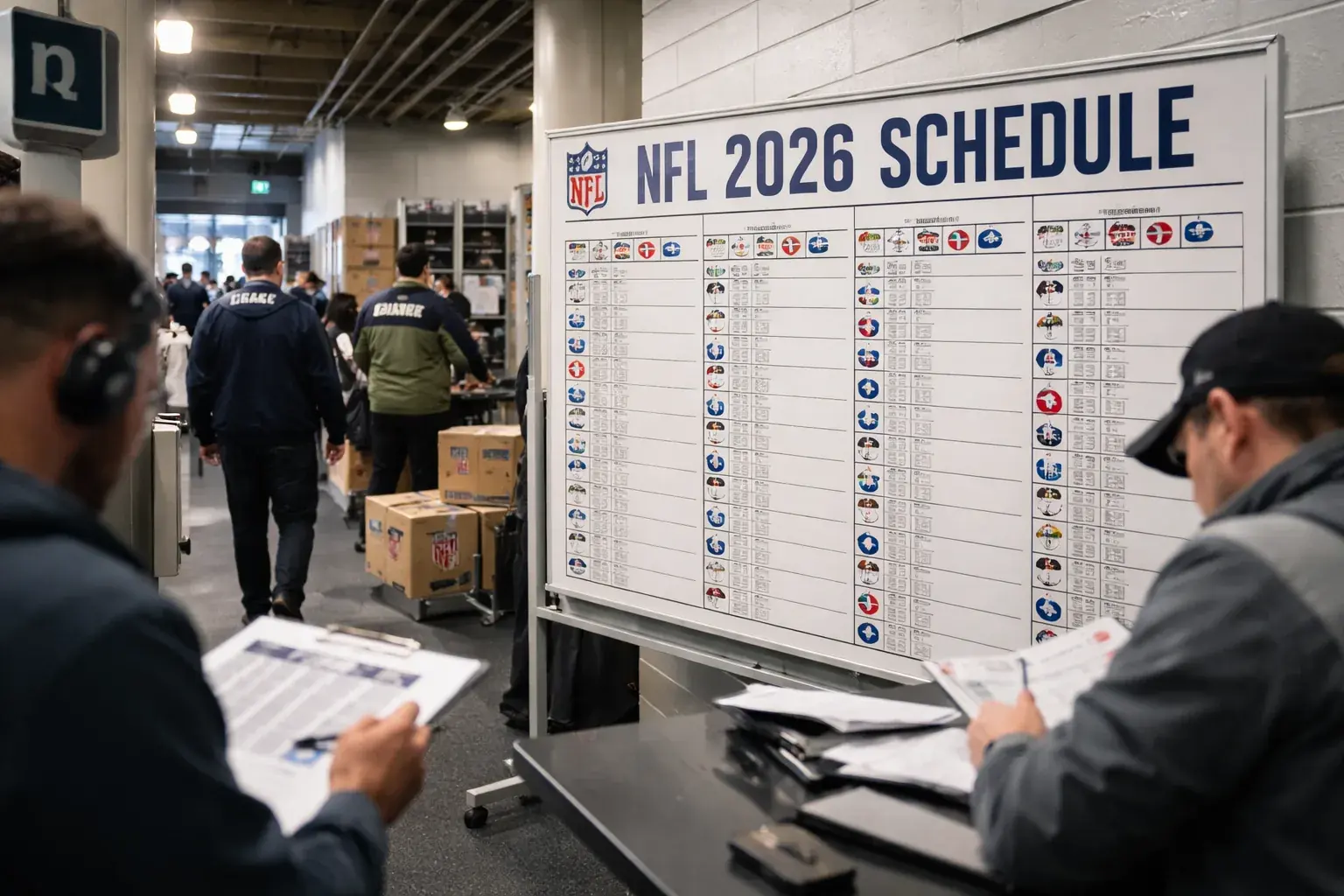
The NFL is preparing to release the full 2026 regular-season schedule, the annual event that turns a list of known opponents into an actual league calendar with dates, kickoff times, broadcast windows, bye weeks, and travel sequences. That matters because once the schedule becomes official, the entire shape of the season changes from abstract to concrete. Fans stop asking who their team plays and start asking when, where, and under what circumstances those games land.
The 2026 NFL schedule release is therefore more than a media event. It is the point at which business planning, football planning, and fan planning all begin to lock into place at the same time.
Why the schedule release matters so much
The NFL schedule is not random ordering. The opponents are determined by formula, but the actual placement of games creates advantages, disadvantages, storylines, and market opportunities. A team may know it faces a rival on the road, but it does not yet know whether that trip comes on a short week, after international travel, or during a brutal late-season stretch.
That is why the full NFL schedule release always draws outsized attention. It affects coaching preparation, medical planning, broadcast value, stadium operations, and ticket strategy all at once. The league has effectively turned the reveal into an offseason tentpole because the calendar itself influences competitive perception before a snap is ever played.
What fans and teams will be looking for
The obvious items are prime-time games, holiday slots, and marquee openers. But the most important schedule details are often structural rather than glamorous. Teams immediately study rest disparities, cross-country travel runs, back-to-back road games, divisional game clustering, and when the bye week falls. A good roster can still be stressed by a bad calendar.
Fans look at the same information through a different lens. Which games become destination weekends? When do major rivals visit? How quickly are single-game tickets likely to spike? The NFL has built a year-round business partly because even logistics carry emotional value once the opponents become dates.
The broadcast and business angle
The schedule release is also a television and streaming allocation event. Each prime-time slot, holiday showcase, or stand-alone game reflects a judgment about what the league believes will draw the most attention. Broadcast partners care about this intensely because national windows help define audience peaks, ad value, and brand positioning for the season.
That makes the 2026 NFL schedule release a financial map as much as a football one. Major matchups are not only chosen for competitive logic. They are positioned to maximize reach, drama, and programming rhythm across multiple platforms, including legacy TV and streaming partners.
International games and wider strategy
The continued emphasis on the NFL International Series gives the schedule added relevance beyond the United States. Once those games are assigned to cities, windows, and participating teams, the league's global strategy becomes more visible. International travel is not just a branding exercise. It affects recovery, fan access, and competitive flow for the clubs involved.
That matters because every extra layer added to the schedule increases complexity. The NFL wants to expand globally without making the competitive calendar feel distorted, which is one reason the release receives so much scrutiny from teams and analysts.
Background and context
The schedule release has grown from a procedural announcement into a cultural event because the NFL understands that anticipation itself is a product. Opponents may already be known, but uncertainty around timing keeps fans engaged. It also gives analysts a chance to start constructing narratives about revenge games, rookie debuts, coaching reunions, and late-season playoff pressure weeks before training camp opens.
That storytelling layer is part of why the league leans into it so heavily. The calendar does not merely organize the season. It launches it.
What to watch next
Once the schedule is released, watch for three immediate reactions: strength-of-schedule analysis, single-game ticket movement, and public focus on revenge matchups or prime-time snubs. Teams will also start shaping internal preparation around the calendar, particularly if they draw difficult travel sequences or awkward rest patterns early.
Why this matters
The 2026 NFL schedule release matters because it defines the logistical reality of the season, shapes how the league sells its most important broadcast windows, and determines how every team, fan base, and partner begins preparing for the year ahead.
Reader context
This story belongs to Northstar Herald's NFL coverage, with related entities including NFL Schedule, 2026 Season, International Series, Regular Season. The report is based on ESPN Top Headlines source material.
Related coverage
Why it matters
The schedule release is a critical milestone in the NFL calendar that dictates team travel logistics, broadcast revenue windows, and fan attendance planning.
Read next
Follow this story through the topic hub, more sports coverage, and the latest updates.
Weekly briefing
Get the week's key developments in one concise email.
Get a fast catch-up on the biggest stories, the context behind them, and the links worth your time.
Cadence
Weekly, for a quick catch-up
Coverage
AI, business, world, security, sports
Format
Clear takeaways and useful context
Request the briefing
Leave your email to open a prepared request and get on the list for the weekly briefing.
About the byline
Sports reporter
Olivia Park covers sports with an emphasis on competition, governance, and the business forces shaping global leagues, major events, and athlete decision-making.
Sources and methodology