Serena Williams Withdraws From Wimbledon Doubles Due to Knee Injury
The legendary 23-time Grand Slam singles champion cited a knee problem following her opening-round defeat, ending hopes of a historic reunion at the All

Sports reporter
Reports on leagues, tournaments, and athlete developments with an emphasis on verified event details, official announcements, and commercial context.
Editorial responsibility: Lead reviewer for match reporting, tournament context, and league governance coverage
Primary source: BBC World News. Full source links and update notes are below.
Fast summary
Start here
- Serena Williams withdrew from her scheduled doubles match with Venus Williams just 15 minutes before a planned practice session at the All England Club.
- The withdrawal stems from a persistent knee injury sustained during her grueling three-set singles loss to Australia's Maya Joint earlier in the week.
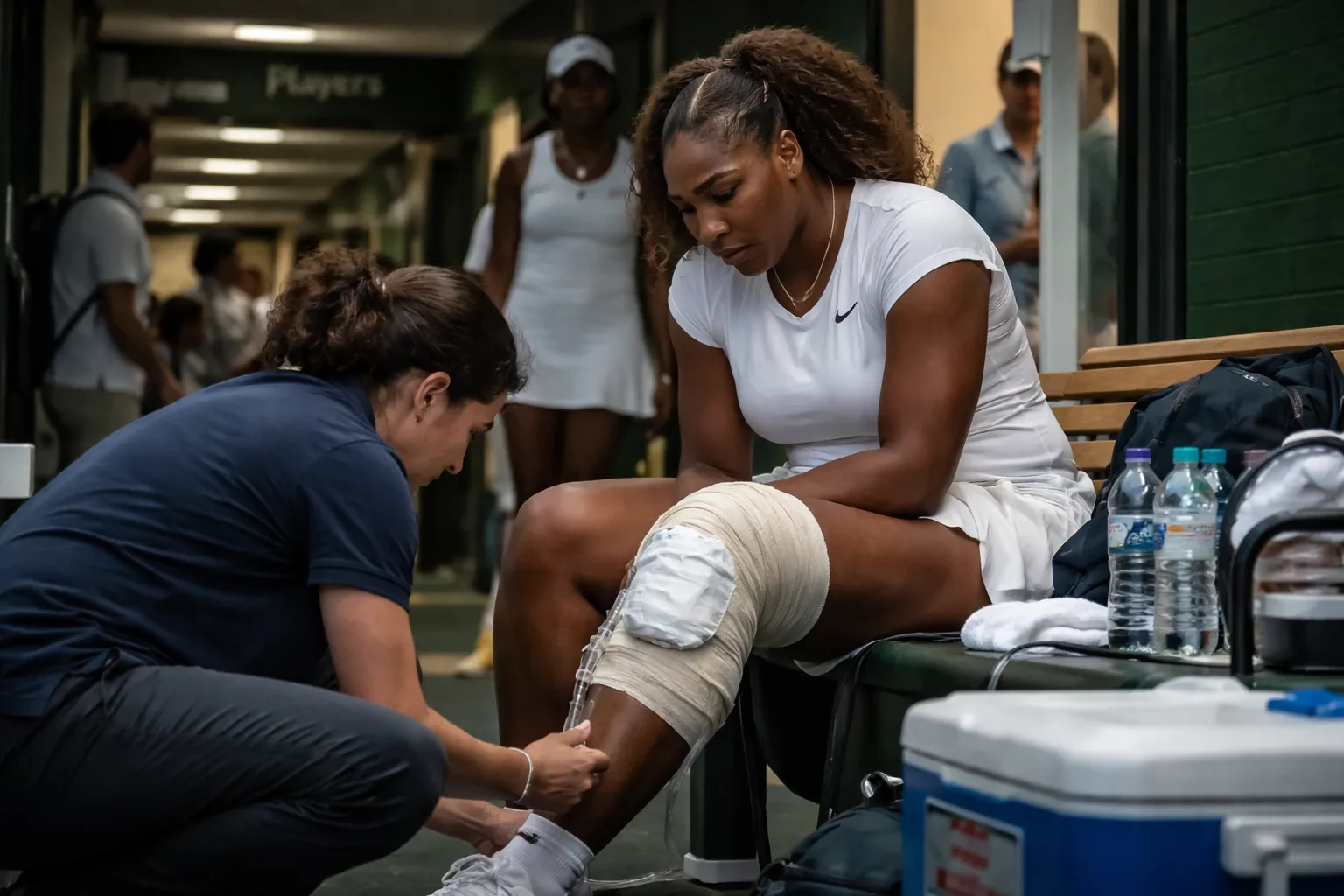
- Williams shared images of medical treatment, including heavy bandaging and fluid drainage, while hinting at future appearances during the North American season.
What happened
Serena Williams has officially withdrawn from her highly anticipated Wimbledon doubles appearance alongside her sister, Venus Williams, citing a persistent knee injury. The American duo, who are six-time doubles champions at the All England Club and have collectively redefined the sport over three decades, were scheduled to reunite on a Grand Slam court for the first time since the 2022 US Open. The news broke late Saturday afternoon, just as fans were preparing to head to the grounds for the scheduled match. The withdrawal marks a disappointing end to what many had hoped would be a triumphant return for Serena, who had not played at Wimbledon since her first-round singles exit in 2022. The decision was confirmed via social media and relayed by tournament officials, effectively ending the Williams sisters' presence in this year's doubles draw and leaving the tournament without one of its biggest storylines.
What's new in this update
The latest development provides a candid look at the physical toll the comeback attempt has taken on the 23-time Grand Slam singles champion. Following her three-set defeat by Australia’s Maya Joint on Tuesday, Williams was notably absent from the mandatory post-match press conferences, with organizers explaining that she was physically unable to undertake her duties. On Saturday, Serena shared photos on Instagram showing her left knee heavily bandaged, alongside images of medical equipment used to drain fluid from the swelling. She expressed her profound disappointment, stating that while the opportunity to play with Venus 'meant the world' to her, her knee was simply not ready to compete at the high intensity required for professional tennis. This level of transparency offers fans a rare glimpse into the rigorous recovery process veteran athletes must endure to remain competitive on the world stage.
Key details
Technical details surrounding the scheduling highlight how much the All England Club hoped to accommodate the legendary pair. Their first-round match against Colombia’s Camila Osorio and Argentina’s Solana Sierra had been added to Saturday’s order of play but notably was not assigned a specific court or a start time before 16:30 BST. This flexible scheduling was a deliberate attempt by tournament director Jamie Baker and the organizing team to grant Serena the maximum possible time to declare her fitness and recover from the inflammation. Williams had even scheduled a practice block at 16:00, but the announcement of her withdrawal arrived only 15 minutes before she was expected on the practice courts. The fluid buildup in her knee followed a gallant, three-set battle earlier in the week where she pushed the 20-year-old Joint to the limit, highlighting the lingering vulnerability of her joints after such intense physical exertion.
Background and context
To understand the significance of this withdrawal, one must look at the unparalleled legacy the Williams sisters have built on the grass courts of SW19. Between them, they have dominated the singles tournament for much of the 21st century and have been nearly invincible as a doubles team. Their last Grand Slam appearance as a pair was a sentimental highlight of the 2022 US Open, which coincided with Serena’s initial evolution away from the sport. Her decision to return to Wimbledon this year was characterized as a gift to herself and her fans, aiming to recapture the magic of their partnership. However, the physical demands of modern tennis present a steep challenge for a player who is 44 years old, particularly when returning from long layoffs. This context underscores the difficulty of late-career comebacks in an era of increasingly younger, faster, and more powerful opponents who dominate the baseline.
What to watch next
Looking ahead, the focus shifts to whether Serena Williams can recover in time for the lucrative and high-profile North American hard-court season. In her withdrawal announcement, she notably included the phrase 'stay tuned to a city near you,' which strongly implies that she does not view this injury as a career-ending setback but rather a temporary hurdle. The primary goal for many veteran American players is the US Open, held in New York from late August through mid-September. Between now and then, there are several key lead-up tournaments in cities like Toronto, Cincinnati, and Washington D.C. where Williams could potentially test her knee if the swelling subsides and her rehabilitation progresses as planned. Fans and analysts will be closely monitoring her participation in the upcoming hard-court events, as her performance there will be the ultimate indicator of whether her comeback can extend into the final Major of the year.
Why it matters
The withdrawal denies fans a rare opportunity to see the legendary Williams sisters compete together and raises significant questions about Serena's physical longevity.
Read next
Follow this story through the topic hub, more sports coverage, and the latest updates.
Weekly briefing
Get the week's key developments in one concise email.
Get a fast catch-up on the biggest stories, the context behind them, and the links worth your time.
Cadence
Weekly, for a quick catch-up
Coverage
AI, business, world, security, sports
Format
Clear takeaways and useful context
Request the briefing
Leave your email to open a prepared request and get on the list for the weekly briefing.
About the byline
Sports reporter
Olivia Park covers sports with an emphasis on competition, governance, and the business forces shaping global leagues, major events, and athlete decision-making.
Sources and methodology