Finch Says Timberwolves 'Got Punked' in Massive 38-Point Defeat
Head coach Chris Finch criticized the team's lack of intensity following a blowout loss that validated recent concerns from star Anthony Edwards.

Sports reporter
Reports on leagues, tournaments, and athlete developments with an emphasis on verified event details, official announcements, and commercial context.
Editorial responsibility: Lead reviewer for match reporting, tournament context, and league governance coverage
Primary source: ESPN Top Headlines. Full source links and update notes are below.
Fast summary
Start here
- The Minnesota Timberwolves suffered a 38-point blowout loss, one of their most lopsided results of the season.
- Coach Chris Finch used the phrase 'got punked' to describe the team's lack of physical and mental readiness.
- The performance followed internal warnings from Anthony Edwards regarding the team's recent lack of focus.
What happened
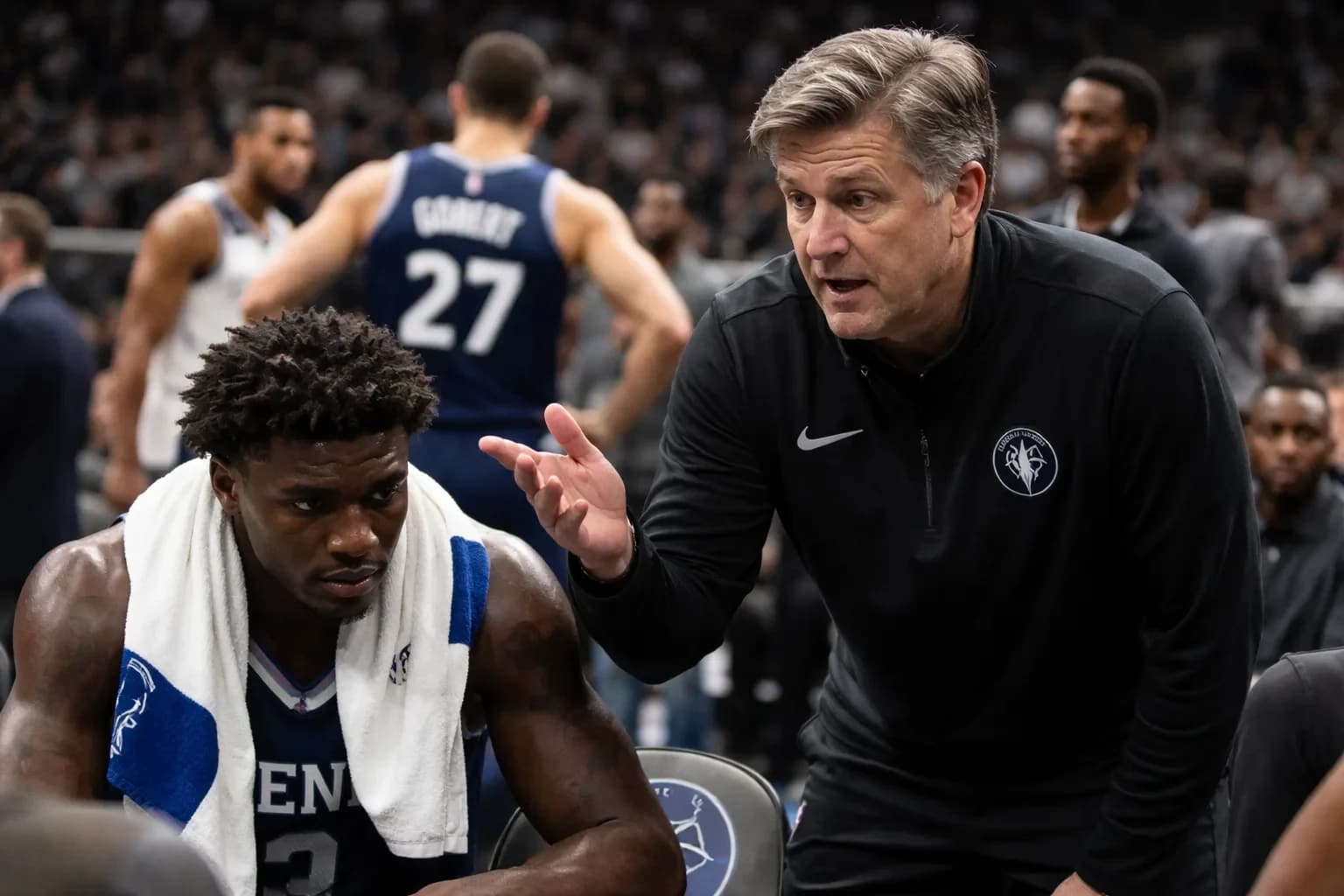
The Minnesota Timberwolves were blown out by 38 points in a loss severe enough that head coach Chris Finch publicly said his team "got punked." The language was blunt because the performance was blunt. This was not framed as a night where shots simply failed to fall or where a hot opponent created a statistical outlier. Finch's message was that the Timberwolves were beaten in focus, force, and readiness from the start.
That makes the Timberwolves blowout more than a bad box score. When a coach chooses a phrase like that after a 38-point defeat, he is describing a competitive failure, not just a tactical one. He is saying the team did not meet the emotional and physical standard required to compete.
Why Finch's criticism stands out
NBA coaches often protect players publicly after ugly losses, especially in long seasons where overreaction can make things worse. Finch took the opposite route. By saying Minnesota got punked, he turned the postgame conversation into a challenge to the team's identity. That suggests the Timberwolves' internal concern runs deeper than one rough shooting night.
Public criticism of this kind usually serves two purposes. First, it forces accountability into the open. Second, it signals that the staff believes the roster is capable of far more than what it showed. Coaches do not speak this way when they think the problem is talent shortage alone. They speak this way when they think a team failed to honor its own standard.
Anthony Edwards' warning matters
The reporting is even more telling because Anthony Edwards had already warned about the team's mentality. If Edwards saw a lack of urgency coming and the Timberwolves still delivered a 38-point loss, then the performance validates concerns that the issue was developing before tipoff. That is what makes this result feel more serious than a simple stumble.
In competitive teams, internal warnings are supposed to sharpen response. When they do not, the problem becomes cultural as much as tactical. Minnesota now has to ask why a team with high-end talent and high-end expectations could be told exactly what risk was coming and still walk into it.
What a 38-point loss says about the Wolves
A margin that large usually points to multiple simultaneous failures. Offensive execution likely broke down, defensive resistance disappeared, and emotional stability never returned once the game tilted. Great teams can survive one weak area on a bad night. They rarely survive all of them collapsing at once.
That is why this Timberwolves loss raises bigger questions about consistency. Teams with real postseason ambitions are judged less by their best games than by how rarely they disappear entirely. A blowout this large suggests the floor may still be lower than a contender should accept.
Background and context
Minnesota has spent recent seasons trying to establish itself as a serious Western Conference threat rather than a talented but volatile team. Progress in the standings or postseason matters, but so does the credibility of the team's habits. Blowout losses become especially damaging when they contradict the identity a club is trying to build around defense, toughness, and competitive edge.
Finch's frustration makes sense in that context. The Timberwolves do not want to be discussed as a team that needs emotional emergency measures every time adversity hits. They want to look structurally reliable. A night like this pushes the narrative in the opposite direction.
What to watch next
The next game matters less for the standings than for the response. Watch whether Finch changes rotations, whether the starters play with more force early, and whether the team reestablishes its defensive discipline. Also watch Anthony Edwards' tone. When a star warns about focus and is proved right, the follow-up response from the locker room can reveal a great deal about leadership alignment.
Why this matters
The Timberwolves' 38-point defeat matters because it exposed a gap between the team's stated ambition and its competitive readiness, raising legitimate questions about consistency, leadership response, and whether Minnesota can sustain contender-level habits.
Reader context
This story belongs to Northstar Herald's NBA and Minnesota Timberwolves coverage, with related entities including Chris Finch, Anthony Edwards, NBA News, Timberwolves. The report is based on ESPN Top Headlines source material.
Related coverage
Why it matters
This loss highlights significant consistency issues for a Timberwolves team expected to compete at the highest level of the Western Conference.
Read next
Follow this story through the topic hub, more sports coverage, and the latest updates.
Weekly briefing
Get the week's key developments in one concise email.
Get a fast catch-up on the biggest stories, the context behind them, and the links worth your time.
Cadence
Weekly, for a quick catch-up
Coverage
AI, business, world, security, sports
Format
Clear takeaways and useful context
Request the briefing
Leave your email to open a prepared request and get on the list for the weekly briefing.
About the byline
Sports reporter
Olivia Park covers sports with an emphasis on competition, governance, and the business forces shaping global leagues, major events, and athlete decision-making.
Sources and methodology