Timberwolves Power Into Second Round: Key Takeaways from the West's
Minnesota secures a convincing series win to advance, signaling a shift in the Western Conference hierarchy through elite defense and star power.

Sports reporter
Reports on leagues, tournaments, and athlete developments with an emphasis on verified event details, official announcements, and commercial context.
Editorial responsibility: Lead reviewer for match reporting, tournament context, and league governance coverage
Primary source: ESPN Top Headlines. Full source links and update notes are below.
Fast summary
Start here
- The Timberwolves' stifling defense held their first-round opponent to under 100 points in three of the series games.
- Anthony Edwards solidified his MVP-caliber status by averaging over 32 points per game throughout the opening round.
- Minnesota's bench depth provided a significant scoring margin, outproducing the opponent's second unit in every victory.
What happened
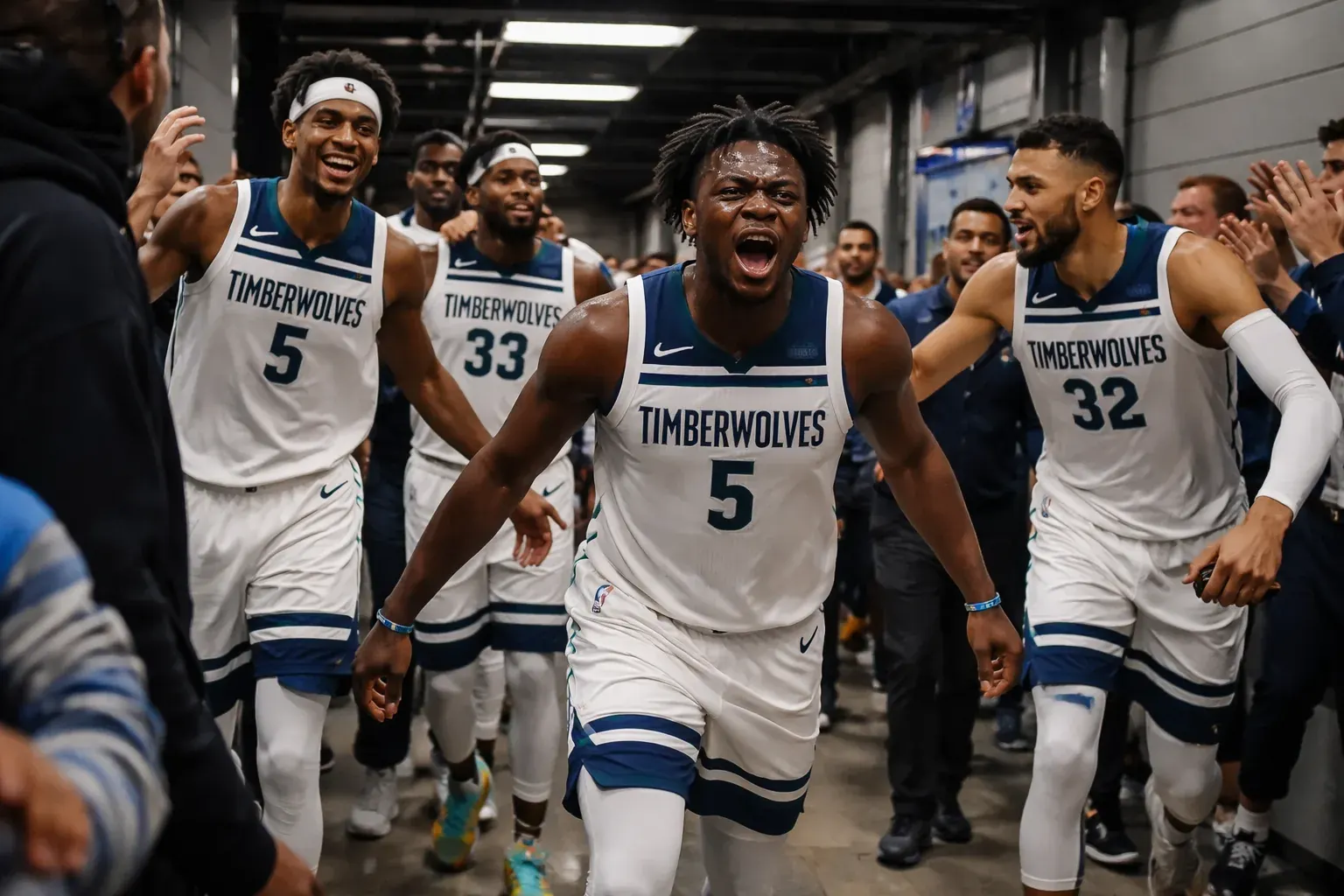
The Minnesota Timberwolves have advanced to the 2026 Western Conference Semifinals, and they did it in a way that strengthens the case that this is no longer just an intriguing young team. It is a real contender with enough defensive structure, star power, and lineup versatility to pressure anyone left in the bracket.
Minnesota's first-round performance was convincing because it was not built on one hot shooting night or a single unsustainable matchup quirk. It was built on repeatable traits: physical defense, transition conversion, bench support, and the ability to let Anthony Edwards take over without collapsing into predictable offense.
Why this series win matters
In the NBA playoffs, advancing is one thing. Advancing while looking organized, confident, and adaptable is another. The Timberwolves did not merely survive the first round. They imposed a style. That is a strong signal in the West, where teams are usually forced into narrow margins by the second or third game of a series.
Minnesota's defensive identity remains the headline. Holding an opponent under 100 points in multiple playoff games is not an accident. It reflects a roster built to shrink space, contest cleanly, and recover without breaking structure. That sort of defense travels, which is why the Timberwolves are now being treated as a legitimate title threat rather than a team with regular-season credentials only.
Anthony Edwards remains the force multiplier
The Anthony Edwards piece of the story matters because playoff basketball eventually requires a star who can create under pressure when the system starts to tighten. Edwards provided that. Scoring volume alone does not explain his value. What matters is how his shot creation changes the geometry of the floor for everyone else.
When Minnesota defends at a high level and Edwards also controls scoring stretches, the team becomes difficult to solve. Opponents are forced to choose between loading up on him and giving away cleaner looks elsewhere, or staying home and letting him dictate tempo one-on-one.
Why Minnesota looks deeper than before
The Timberwolves playoffs story is also about depth. Bench units matter more than people admit, especially early in a series when rotation patterns are still fluid. Minnesota reportedly won those second-unit minutes consistently, which is often where first-round series get separated. Depth is not just extra scoring. It is the ability to survive foul trouble, maintain defensive intensity, and avoid exhausting star players too early.
That makes this version of the Timberwolves more dangerous than earlier iterations. They are not relying solely on top-end talent. They are getting useful contributions across the rotation, which gives the coaching staff more flexibility when matchups change.
What advancement says about the Western Conference
Minnesota's progression also says something about the conference hierarchy. The West remains deep, but the Timberwolves are starting to look like one of the few teams with both a postseason identity and enough counters to sustain it. A lot of teams can win when their offense is flowing. Fewer can win ugly, defend through slumps, and still create enough late-clock offense to close games.
That balance is what turns a good playoff team into a dangerous one.
What to watch in the semifinals
The next round will test whether Minnesota can maintain the same defensive discipline against an opponent with more preparation time and more offensive counters. Health will matter, especially in the backcourt, and half-court efficiency always becomes a bigger issue deeper into the postseason.
Still, the Timberwolves enter the semifinals with something important: evidence. They have already shown that their roster construction can hold up under playoff pressure rather than merely looking good on paper.
Why this matters
The Minnesota Timberwolves Western Conference Semifinals berth matters because it confirms the franchise is operating on a higher tier than before. This is no longer only a development story or a promising-core story. It is a contender story, and the rest of the West now has to deal with that reality.
Related coverage
Why it matters
This victory cements Minnesota as a legitimate title favorite and demonstrates that their defensive-first roster construction can withstand the intensity of playoff adjustments.
Read next
Follow this story through the topic hub, more sports coverage, and the latest updates.
Weekly briefing
Get the week's key developments in one concise email.
Get a fast catch-up on the biggest stories, the context behind them, and the links worth your time.
Cadence
Weekly, for a quick catch-up
Coverage
AI, business, world, security, sports
Format
Clear takeaways and useful context
Request the briefing
Leave your email to open a prepared request and get on the list for the weekly briefing.
About the byline
Sports reporter
Olivia Park covers sports with an emphasis on competition, governance, and the business forces shaping global leagues, major events, and athlete decision-making.
Sources and methodology