NBA Playoffs Second Round Delayed as Multiple Series Head to Game 7
High-stakes matchups between Eastern Conference rivals will determine the final bracket for the conference semifinals.

Sports reporter
Reports on leagues, tournaments, and athlete developments with an emphasis on verified event details, official announcements, and commercial context.
Editorial responsibility: Lead reviewer for match reporting, tournament context, and league governance coverage
Primary source: ESPN Top Headlines. Full source links and update notes are below.
Fast summary
Start here
- Several first-round series have reached a decisive seventh game, stalling the start of the second round.
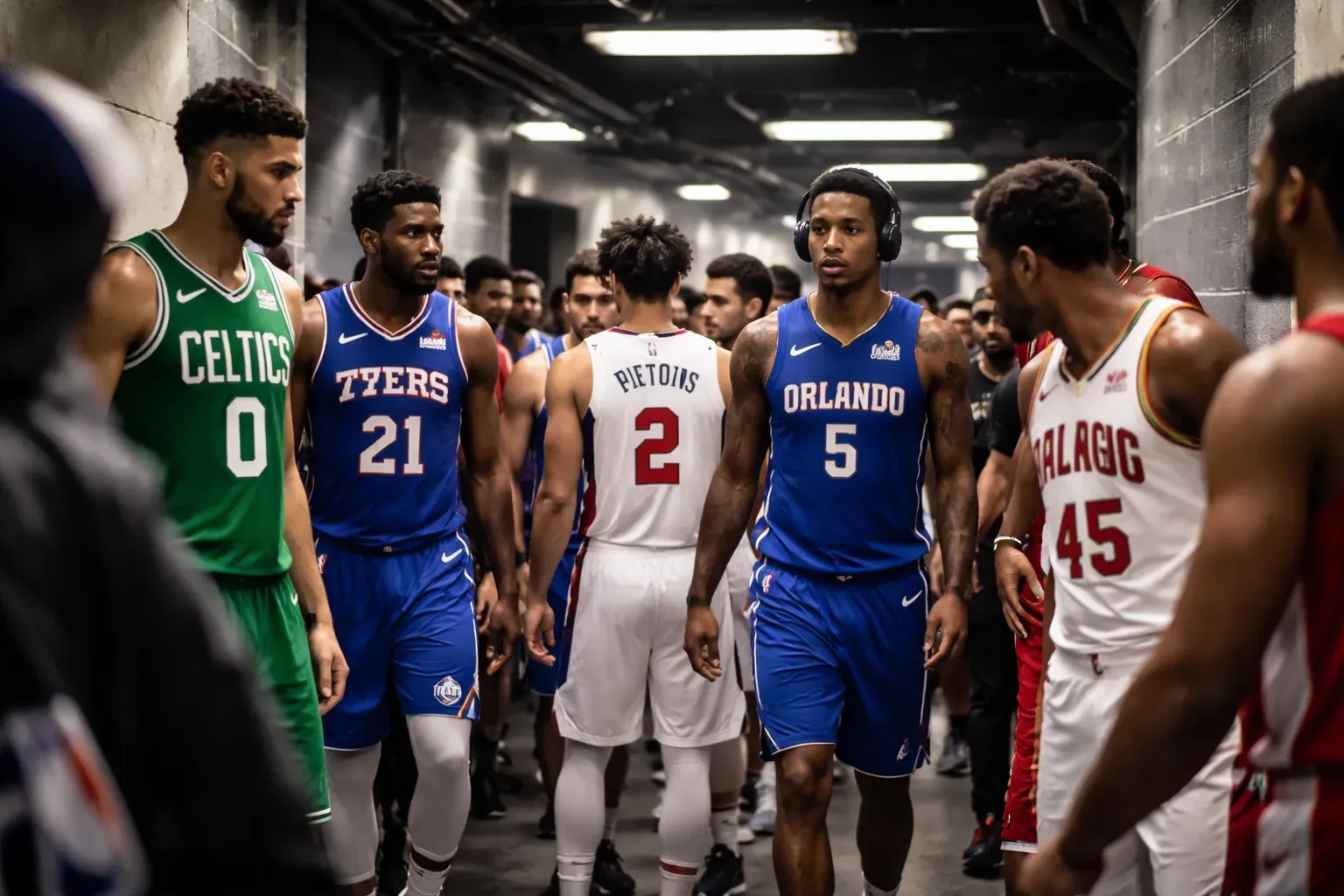
- Featured matchups include the Boston Celtics vs. Philadelphia 76ers and Detroit Pistons vs. Orlando Magic.
- The Cleveland Cavaliers and Toronto Raptors are also set for a winner-take-all finale to their series.
What happened
The 2026 NBA playoffs have hit a bottleneck in the Eastern Conference, with multiple first-round series going the full distance and delaying the final shape of the second round. Instead of a settled conference semifinal bracket, the league is heading into a cluster of Game 7 matchups involving the Boston Celtics, Philadelphia 76ers, Detroit Pistons, Orlando Magic, Cleveland Cavaliers, and Toronto Raptors.
That alone makes this stage unusual. The NBA postseason usually produces at least some quick separation in the opening round. Here, the East has instead produced a picture of parity, fatigue, and high-stakes uncertainty all at once.
Why multiple Game 7s matter
Every Game 7 is effectively a single-elimination event disguised as part of a best-of-seven series. Once several happen at once, the entire bracket slows and the next round takes on a different texture. Teams that already advanced gain extra rest, extra prep time, and a chance to watch potential opponents absorb one of the most stressful environments in professional basketball.
That creates a meaningful structural advantage. The winners of these series do not just have to survive. They may have to do it while expending key minutes from stars, tightening already thin rotations, and carrying emotional residue directly into the conference semifinals.
The headline series: Celtics vs. 76ers
The Celtics vs. 76ers Game 7 naturally carries the most historical weight. Few rivalries in the Eastern Conference generate more attention, and when Boston and Philadelphia reach a winner-take-all game, the story immediately expands beyond one season. It becomes about franchise memory, pressure, and star accountability.
A Game 7 between those teams is not only tactical. It is reputational. Players, coaches, and front offices know that the narrative after the final buzzer will be sharp in either direction. One side advances with momentum and validation. The other spends the offseason answering questions about what went wrong.
The younger-rising-team subplot
The Pistons vs. Magic matchup represents a different kind of playoff tension. This series is less about legacy and more about emergence. Both teams have been trying to move from rebuilding identity into actual Eastern Conference relevance, and a Game 7 offers the clearest test possible of whether a young core is ready for serious postseason basketball.
That matters because these series often reveal whether regular-season promise translates under pressure. Shot creation tightens, defensive mistakes become costly, and young teams are forced to manage tempo and nerves at the same time.
Cavaliers vs. Raptors adds more pressure to the bracket
The Cavaliers vs. Raptors series rounds out the congestion and reinforces the theme of balance in the East. Neither side has been able to close early, which says something about how compressed the middle and upper-middle tier of the conference has become. There are fewer easy paths and fewer clean seed-based assumptions than in some previous years.
When three separate series hit Game 7 territory, the bracket stops feeling orderly. It starts feeling volatile.
What to watch next
The obvious focus is who advances, but the more important second-order question is what condition those teams will be in once they do. Watch for heavy star workloads, short recovery windows, and the possibility that teams coming off Game 7 wins enter the next round with less physical margin than opponents who finished early.
Why this matters
The NBA playoffs 2026 Game 7 traffic jam matters because it reshapes the second round before it begins. These are not just dramatic standalone games. They are bracket-defining pressure points that will determine not only who survives, but who arrives in the next round strongest.
Related coverage
Why it matters
Game 7 represents the highest stakes in the NBA postseason, serving as a single-elimination hurdle that determines season-ending outcomes or advancement toward the championship.
Read next
Follow this story through the topic hub, more sports coverage, and the latest updates.
Weekly briefing
Get the week's key developments in one concise email.
Get a fast catch-up on the biggest stories, the context behind them, and the links worth your time.
Cadence
Weekly, for a quick catch-up
Coverage
AI, business, world, security, sports
Format
Clear takeaways and useful context
Request the briefing
Leave your email to open a prepared request and get on the list for the weekly briefing.
About the byline
Sports reporter
Olivia Park covers sports with an emphasis on competition, governance, and the business forces shaping global leagues, major events, and athlete decision-making.
Sources and methodology