New York Knicks Stifle Hawks to Open 2026 Eastern Conference First
The Knicks leveraged a suffocating defense and home-court advantage to dismantle the Atlanta Hawks in the series opener, setting a physical tone for the

Sports reporter
Reports on leagues, tournaments, and athlete developments with an emphasis on verified event details, official announcements, and commercial context.
Editorial responsibility: Lead reviewer for match reporting, tournament context, and league governance coverage
Primary source: ESPN Top Headlines. Full source links and update notes are below.
Fast summary
Start here
- The Knicks' perimeter defense held the Hawks to under 30% from three-point range during Game 1.
- New York's bench rotation provided a 15-point scoring advantage over the Atlanta reserves.
- Jalen Brunson controlled the tempo, neutralizing the Hawks' attempts at a high-speed transition game.
What happened
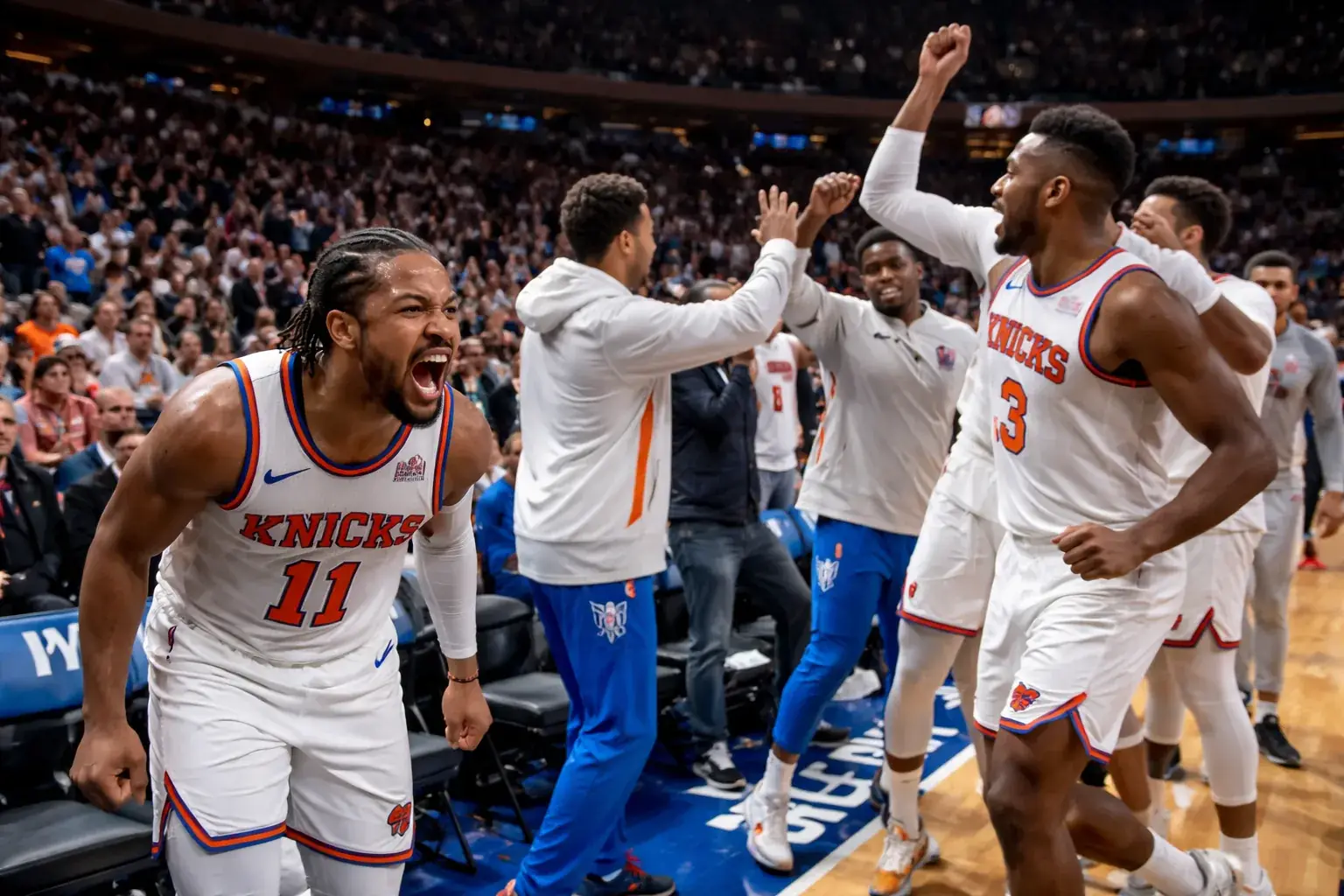
The New York Knicks opened their Eastern Conference first-round series by overwhelming the Atlanta Hawks in a Game 1 that looked less like a coin-flip playoff matchup and more like a statement about style, discipline, and physical control. From the opening minutes, New York dictated where the game would be played, how quickly it would move, and which Hawks actions would be available. The result was a playoff opener that reinforced the Knicks' central identity: they want every possession to feel harder for the opponent than it does for them.
That was the real takeaway from the win. It was not merely that New York outscored Atlanta. It was that the Knicks made Atlanta play a version of basketball that looked uncomfortable from the start.
What's new in this update
Game 1 suggested the Knicks have found a defensive blueprint that can significantly reduce Atlanta's volatility. During the regular season, the Hawks often survived through pace, shot creation from the backcourt, and drive-and-kick sequences that can avalanche quickly when defenders are late. In this opener, New York took away the oxygen from that style. Closeouts were sharper, transition lanes were better protected, and the Hawks were pushed into more static half-court possessions than they wanted.
The Knicks also looked more balanced offensively than the most Brunson-dependent versions of themselves. Jalen Brunson still controlled the game, but secondary scoring and bench stability meant Atlanta could not simply treat every Knicks possession as a one-man problem.
Key details
Statistically, New York won several of the categories that tend to define playoff control: rebounding margin, second-chance opportunities, bench contribution, and opponent shooting disruption. The Hawks were held below their preferred efficiency levels, especially from deep, while the Knicks consistently generated extra possessions and prevented the game from turning into a high-speed exchange.
Several elements shaped the result:
- The Knicks' perimeter defense took away clean rhythm threes.
- Jalen Brunson controlled tempo and kept Atlanta from living in transition.
- New York's bench outplayed Atlanta's reserves.
- The Hawks' physical disadvantage showed up on the glass and in half-court execution.
When those factors align in a playoff setting, the underdog must usually change something structural rather than hope for ordinary shooting variance to fix the problem.
Background and context
The Knicks entered the series with the profile of a team that can impose playoff terms: strong defense, interior toughness, and a lead guard capable of managing late possessions. The Hawks, by contrast, offered a more volatile formula built on offensive bursts and the hope that skill and speed could loosen up a more physical opponent. That contrast made Game 1 a referendum on style, and the early result strongly favored New York's approach.
This matchup also carried emotional and historical energy. Knicks-Hawks meetings have repeatedly attracted extra attention in recent years, and Madison Square Garden remains one of the few arenas where playoff atmosphere can visibly tilt a game's emotional rhythm. In Game 1, that home-court edge did not win the game by itself, but it amplified the pressure once Atlanta started slipping.
What to watch next
The most important question for Game 2 is whether Atlanta can change the geometry of the series. That may require smaller lineups, faster outlet decisions, or more aggressive attempts to pull Knicks defenders into space before help can form. If the Hawks keep playing into New York's preferred half-court physicality, the series could get away from them quickly.
For the Knicks, the challenge is different. They need to show that the Game 1 formula was not mostly energy-driven or opener-specific. If they can repeat the defensive sharpness and rebounding edge, then the series may start to resemble a structural mismatch rather than a competitive chess match.
Why this matters
This matters because the New York Knicks, Atlanta Hawks, Jalen Brunson, the NBA Playoffs, and the Eastern Conference are all now framed by one immediate reality: New York looked like the team with the clearer postseason identity. Game 1 did not decide the series, but it did establish the burden of adjustment. The Hawks now have to prove they can disrupt the terms the Knicks imposed, or this first-round matchup could tilt decisively before it ever leaves New York.
Reader context
This story belongs to Northstar Herald's NBA Playoffs and Eastern Conference coverage, with related entities including NBA, Basketball, Postseason, Knicks. The report is based on ESPN Top Headlines source material.
Related coverage
Why it matters
This victory reaffirms the Knicks' identity as a defensive powerhouse and puts immediate pressure on the Hawks to overhaul their offensive schemes before Game 2.
Read next
Follow this story through the topic hub, more sports coverage, and the latest updates.
Weekly briefing
Get the week's key developments in one concise email.
Get a fast catch-up on the biggest stories, the context behind them, and the links worth your time.
Cadence
Weekly, for a quick catch-up
Coverage
AI, business, world, security, sports
Format
Clear takeaways and useful context
Request the briefing
Leave your email to open a prepared request and get on the list for the weekly briefing.
About the byline
Sports reporter
Olivia Park covers sports with an emphasis on competition, governance, and the business forces shaping global leagues, major events, and athlete decision-making.
Sources and methodology