Goaltending Woes Resurface as Sabres Drop Game 5 to Canadiens
Buffalo now faces a series deficit after defensive lapses and inconsistent play in net allowed Montreal to take control of the matchup.

Sports reporter
Reports on leagues, tournaments, and athlete developments with an emphasis on verified event details, official announcements, and commercial context.
Editorial responsibility: Lead reviewer for match reporting, tournament context, and league governance coverage
Primary source: ESPN Top Headlines. Full source links and update notes are below.
Fast summary
Start here
- The Buffalo Sabres lost Game 5 of their series against the Montreal Canadiens, placing them at a disadvantage in the postseason bracket.
- Internal concerns regarding goaltending stability resurfaced as Buffalo failed to contain Montreal's offensive pressure.
- The defeat follows a period of relatively steady play, highlighting ongoing reliability issues at the goaltender position.
What happened
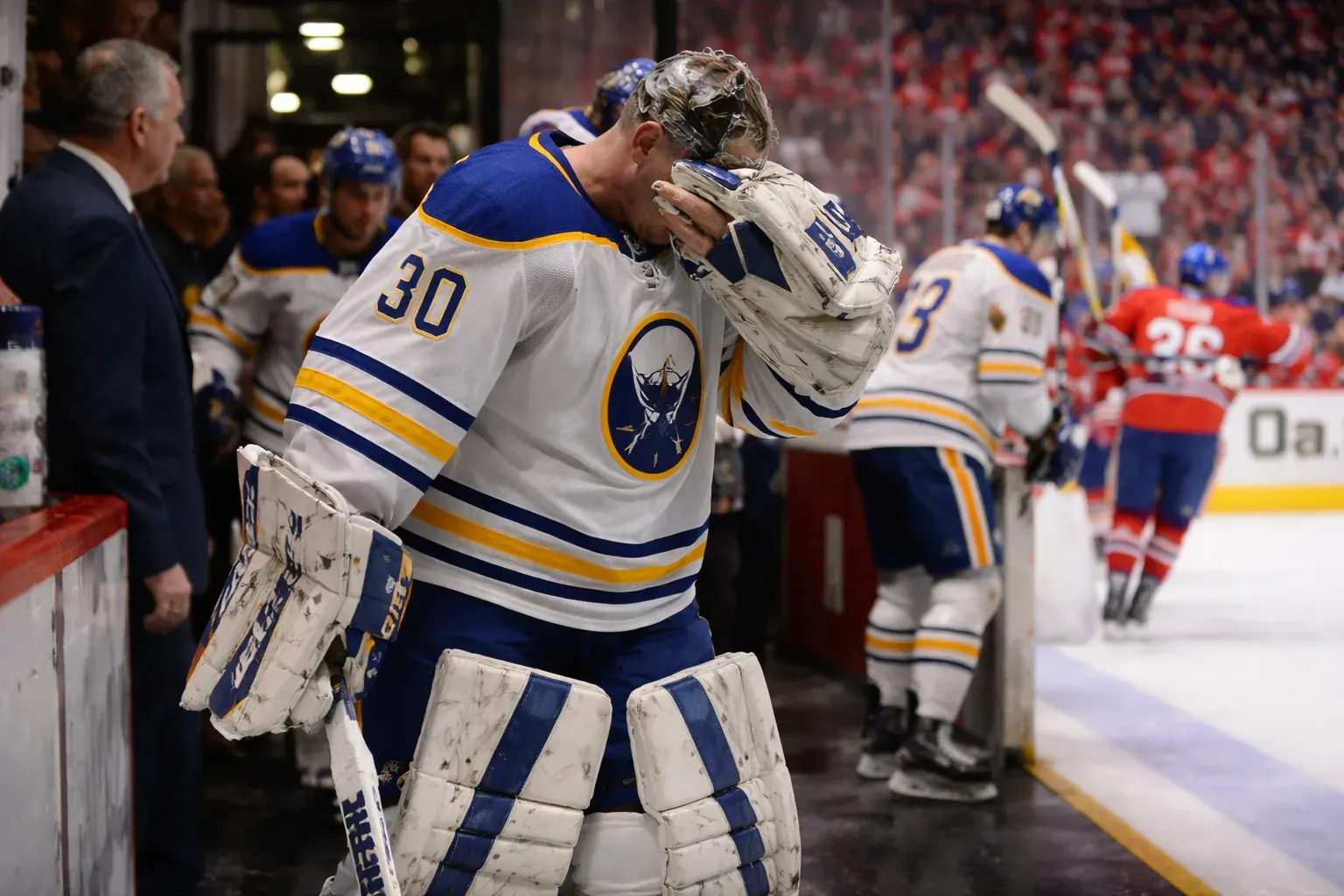
The Buffalo Sabres dropped Game 5 of their playoff series against the Montreal Canadiens, and the most damaging theme was a familiar one: goaltending instability at the worst possible moment. In a postseason where every rebound, screen, and save sequence can flip a series, Buffalo's inconsistency in net gave Montreal the kind of opening a disciplined playoff team knows how to exploit.
That makes the Buffalo Sabres Game 5 loss about more than one bad night. It revives the larger concern that Buffalo's roster may be good enough to compete territorially and offensively, but still too uncertain in goal to survive the pressure of a long playoff series.
Why goaltending became the story again
Playoff analysis often starts with scoring stars or tactical adjustments, but Game 5 appears to have refocused attention on the crease because Montreal was able to convert chances that Buffalo needed stopped. In the regular season, teams can sometimes outscore instability in net. In a playoff setting, that math changes quickly. One soft goal, one delayed read through traffic, or one rebound left in the slot can rewrite the entire emotional shape of a game.
That is why the Sabres' goaltending issues matter so much now. They are no longer just a season-long debate point for fans. They are actively shaping whether Buffalo can stay alive in a series that suddenly feels tilted.
Why Game 5 is usually a turning point
In a tied or tightly contested best-of-seven series, Game 5 often acts as the pressure hinge. The team that wins it usually grabs not only the numerical advantage, but also the psychological leverage of pushing the opponent into elimination stress. Buffalo's failure to hold that moment means every unresolved issue becomes louder, and no issue is louder in playoff hockey than uncertainty at the most important defensive position.
For the Canadiens, a Game 5 win validates pressure tactics and offensive persistence. For Buffalo, it creates an immediate identity question: can the Sabres trust their current goaltending setup enough to ride it through the next elimination-stage test?
The challenge is not just the goalie
It is also important not to turn the entire loss into a one-man explanation. Goaltending struggles are often entangled with defensive breakdowns. If Montreal was repeatedly generating high-danger looks, net-front chaos, or east-west movement, then Buffalo's team defense also contributed to the problem. In playoff hockey, weak slot protection and slow puck support tend to magnify every imperfection from the goalie.
Still, that is precisely why the position is judged so harshly. Elite playoff goaltending is valuable because it covers for moments when structure breaks. The Sabres do not necessarily need perfection, but they do need the kind of stabilizing saves that keep a game from sliding away.
What Buffalo has to decide next
The biggest immediate question is whether the Sabres stay with the same starter or consider a change for the next game. Coaching staffs are usually cautious about making panic decisions, especially if they believe the broader defensive environment was more at fault than the goalie alone. But playoff series compress decision-making. If the locker room or staff senses hesitancy in net, the psychological effect can spread fast.
That means Buffalo must evaluate more than the stat line. They need to judge rebound control, puck tracking, body language, and whether the group in front of the goalie still looks confident playing its normal game.
What to watch next
Watch for Buffalo's response in three areas: lineup decisions in net, defensive tightening around the crease, and whether the Sabres try to simplify their own game to reduce rush exposure. Also watch Montreal's approach. If the Canadiens keep attacking traffic areas aggressively, it may signal they believe the Sabres are vulnerable there no matter who starts.
Why this matters
The Buffalo Sabres Game 5 loss matters because it puts their playoff hopes in the hands of a question they still have not answered convincingly: can they get reliable goaltending under maximum pressure? Until that answer becomes yes, every other strength on the roster will remain harder to trust in a series that now leans toward Montreal.
Reader context
This story belongs to Northstar Herald's sports coverage, with related entities including NHL, Buffalo Sabres, Montreal Canadiens, Stanley Cup Playoffs. The report is based on ESPN Top Headlines source material.
Related coverage
Why it matters
In the NHL playoffs, goaltending consistency is often the deciding factor in close series; Buffalo's inability to stabilize the position threatens their championship aspirations.
Read next
Follow this story through the topic hub, more sports coverage, and the latest updates.
Weekly briefing
Get the week's key developments in one concise email.
Get a fast catch-up on the biggest stories, the context behind them, and the links worth your time.
Cadence
Weekly, for a quick catch-up
Coverage
AI, business, world, security, sports
Format
Clear takeaways and useful context
Request the briefing
Leave your email to open a prepared request and get on the list for the weekly briefing.
About the byline
Sports reporter
Olivia Park covers sports with an emphasis on competition, governance, and the business forces shaping global leagues, major events, and athlete decision-making.
Sources and methodology