Jurors Begin Deliberations in Musk's Legal Battle Over OpenAI’s
Nine jurors must decide if OpenAI co-founders violated a charitable agreement with Elon Musk by pivoting to a for-profit model with Microsoft.

AI reporter
Reports on model launches, frontier labs, developer platforms, and AI policy with an emphasis on claims verification and rollout context.
Editorial responsibility: Lead reviewer for AI coverage, launch claims, and policy context
Primary source: TechCrunch AI. Full source links and update notes are below.
Fast summary
Start here
- The jury is considering charges of breach of charitable trust, unjust enrichment, and aiding and abetting by Microsoft.
- OpenAI's defense argues that Musk's donations were spent before 2021 and that no specific restrictions were ever documented.
- A verdict for Musk could trigger a judicial review of OpenAI’s current for-profit structure and its relationship with Microsoft.
What happened
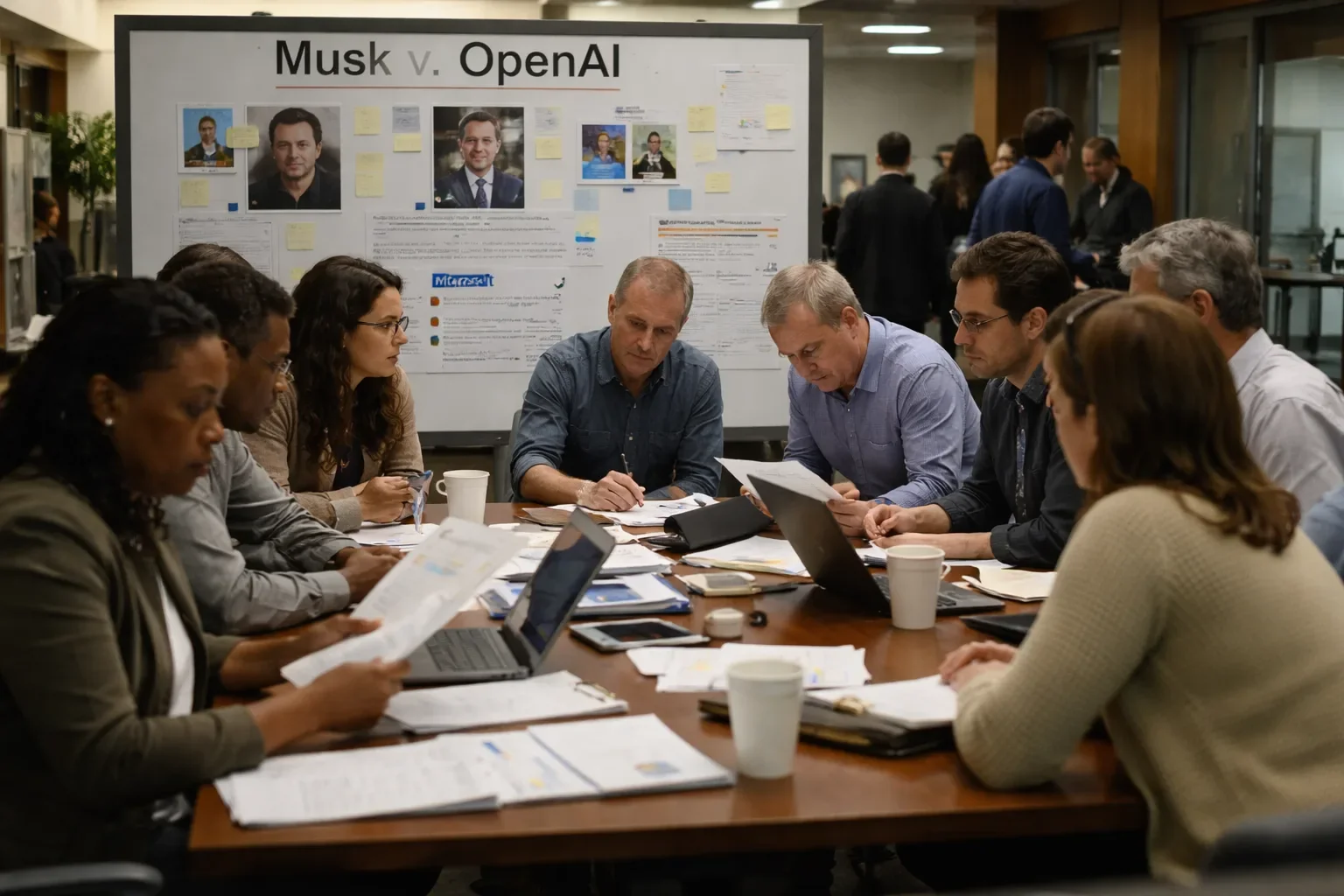
Nine California jurors are now deciding one of the most consequential governance cases in artificial intelligence: Elon Musk's lawsuit against OpenAI, Sam Altman, and related parties over whether the organization abandoned its original nonprofit mission. The case asks jurors to weigh Musk's claim that his early support for OpenAI was tied to a charitable purpose and that the company's later evolution toward a for-profit structure, including its partnership with Microsoft, broke that understanding.
What's new in this update
The trial has moved from testimony to deliberation, which means the public arguments are now distilled into a smaller set of legal questions for the jury. Jurors must consider claims including breach of charitable trust, unjust enrichment, and whether Microsoft aided or benefited from the disputed shift in OpenAI's structure. That narrows the focus. This is no longer a broad public argument about AI ethics or founder drama. It is a concrete legal test of what, if anything, OpenAI promised, what Musk's money was meant to support, and whether later commercial arrangements crossed a legal line.
Key details
Musk's case is built around the idea that OpenAI was founded to develop artificial intelligence for the benefit of humanity rather than private enrichment. His lawyers argue that the company's transformation and deep financial alignment with Microsoft broke the spirit, and potentially the legal obligations, tied to that founding vision. If jurors accept that theory, it could open the door to follow-on hearings about remedies and corporate restructuring.
OpenAI's defense is more technical and document-driven. The company has argued that Musk's donations were already spent by 2021 and that no legally binding restrictions were placed on those funds. Defense witnesses have also suggested that private capital was always going to be necessary if OpenAI hoped to compete at the frontier of AI research. In that view, the later Microsoft relationship did not represent betrayal so much as the practical financing of an extremely expensive mission.
The statute of limitations argument also matters. Even if jurors think OpenAI changed dramatically, they still have to consider whether Musk waited too long to bring certain claims and whether the conduct at issue fits the legal theories his team is advancing.
Background and context
This lawsuit sits at the intersection of corporate governance, nonprofit law, and AI power politics. OpenAI began with a public-interest mission, but frontier AI became vastly more capital intensive than many early observers expected. Training large-scale models, securing compute, retaining talent, and building commercial products all required money at a level that pure philanthropy may not have been able to sustain.
That tension helps explain why the case resonates far beyond the people in the courtroom. If Musk prevails, the result could reshape how future AI labs describe their missions, structure donor relationships, and draw boundaries between nonprofit ideals and commercial execution. If OpenAI prevails, the verdict may reinforce the view that lofty founding language does not necessarily impose rigid legal restrictions when the underlying documents are looser than the rhetoric.
The case is also inseparable from Musk's personal history with OpenAI. His departure from the organization, his later rivalry with Sam Altman, and his own AI ambitions all affect how the public reads the dispute. But jurors are not being asked to settle a feud. They are being asked to determine whether specific conduct amounted to a legal breach with real consequences.
What to watch next
If the jury rules for Musk on key claims, the next stage would focus on remedies. That could include judicial scrutiny of OpenAI's current for-profit structure, the treatment of past donations, or the contours of its relationship with Microsoft. Any such phase would likely become one of the most closely watched corporate governance battles in the tech sector.
If OpenAI wins, the company will still face public scrutiny, but it would emerge with a stronger legal defense of how it evolved from mission-driven lab to major commercial AI force. Either way, the verdict matters because it will shape how founders, donors, regulators, and investors think about governance in frontier artificial intelligence. The jury is not deciding the future of AI on its own, but it is deciding a case that could influence how the most powerful AI organizations are built and justified.
Why it matters
This trial determines if OpenAI’s multi-billion-dollar shift to a for-profit entity violated its founding mission and legal obligations to its early donors.
Read next
Follow this story through the topic hub, more ai coverage, and the latest updates.
Weekly briefing
Get the week's key developments in one concise email.
Get a fast catch-up on the biggest stories, the context behind them, and the links worth your time.
Cadence
Weekly, for a quick catch-up
Coverage
AI, business, world, security, sports
Format
Clear takeaways and useful context
Request the briefing
Leave your email to open a prepared request and get on the list for the weekly briefing.
About the byline
AI reporter
Alex Rivera reports on artificial intelligence with an emphasis on model launches, frontier lab strategy, developer tooling, and the policy decisions shaping commercial deployment.
Sources and methodology