Inside the Meeting That Fractured OpenAI: Greg Brockman Details Elon
New testimony and journal entries from OpenAI President Greg Brockman describe a tense 2017 confrontation over the organization's move toward

AI reporter
Reports on model launches, frontier labs, developer platforms, and AI policy with an emphasis on claims verification and rollout context.
Editorial responsibility: Lead reviewer for AI coverage, launch claims, and policy context
Primary source: TechCrunch AI. Full source links and update notes are below.
Fast summary
Start here
- OpenAI President Greg Brockman testified for two days, using personal journal entries to describe Elon Musk’s aggressive bid for control in 2017.
- The testimony details an August 2017 meeting where Musk reportedly became angry and stormed out after being denied total authority over the organization.
- The evidence is being used in an ongoing legal battle where Musk's lawyers claim Sam Altman and Brockman 'stole a charity' to form a for-profit entity.
What happened
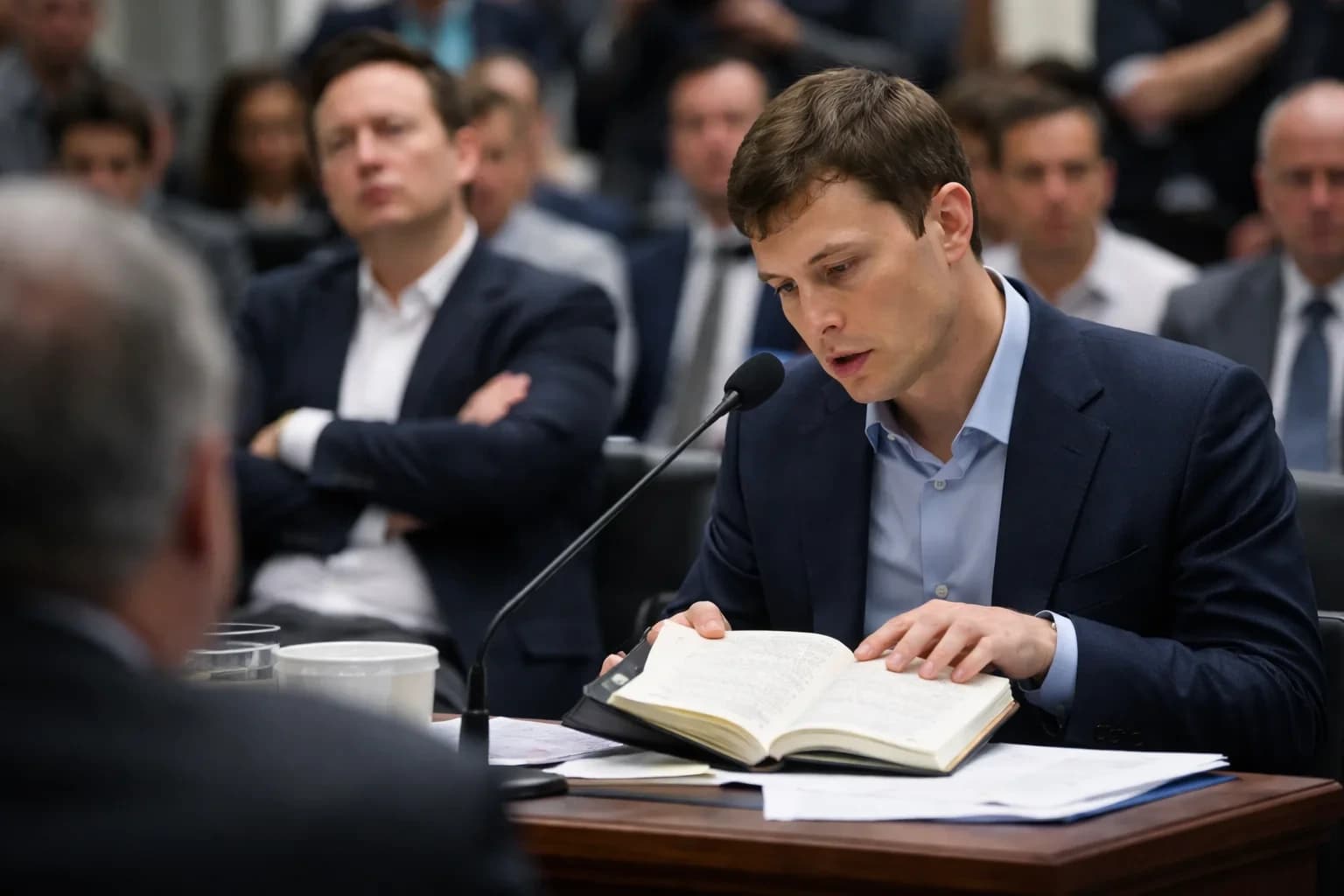
OpenAI president Greg Brockman used courtroom testimony and personal journal entries to describe the breakdown of Elon Musk's relationship with the company in 2017, painting the separation as a struggle over control rather than a clean principled exit. According to Brockman's account, a late-summer meeting turned confrontational when Musk pushed for far greater authority over OpenAI's future direction and reacted angrily when other leaders refused to hand it to him. The testimony matters because it offers one of the clearest inside narratives yet about the moment one of OpenAI's most famous founders effectively broke with the organization.
That internal history is now central to a much larger dispute over mission, commercialization, and ownership. The trial is not only about what OpenAI became. It is also about who tried to shape that outcome first.
What's new in this update
The release of Brockman's journal-backed testimony adds texture that public statements and later legal filings did not fully provide. Rather than a slow or bureaucratic disagreement, the scene is described as personal, emotional, and politically decisive. Brockman's testimony suggests that Musk was not merely frustrated by future commercialization. He was deeply engaged in trying to direct it and sought a form of authority the rest of OpenAI's leadership would not grant.
That distinction is crucial. If the jury or public accepts Brockman's account, then Musk's later narrative of watching others corrupt the mission from the outside becomes harder to sustain without qualification.
Key details
The testimony reportedly described Musk as escalating in anger during the August 2017 confrontation, after being told that OpenAI's leaders would not give him sweeping control. Brockman also suggested that Musk had previously tried various ways of building support for his preferred structure, including through direct influence and symbolic gestures toward key figures.
Several aspects of the testimony matter:
- Brockman relied on contemporaneous journal notes rather than only retrospective memory.
- The dispute centered on control over OpenAI's future structure and commercialization path.
- The testimony challenges the idea that Musk was merely a distant idealist disappointed by later events.
- The courtroom record strengthens OpenAI's argument that internal tensions over power existed well before the later Microsoft era.
This is why the testimony is significant even beyond the verdict. It supplies a chronology that can shape how the entire founding story is understood.
Background and context
OpenAI's origin story has become unusually important because the organization now sits near the center of the global AI power structure. As a result, every disagreement in its early history is being re-read through the lens of immense later value. Questions that once looked like startup governance disputes now look like battles over the future control of one of the most strategically important companies in technology.
Musk's relationship with the company has long been marked by contradiction. He has framed himself as a defender of the original nonprofit mission, while others have argued that he too sought paths that would have mixed idealism with control and commercial leverage. Brockman's testimony strengthens the latter view by describing Musk's departure as connected to authority, not only principle.
What to watch next
The next important issue is how much weight courts, observers, and future historians place on these internal narratives compared with formal corporate documents and public statements. Trials often surface emotionally revealing testimony that does not automatically translate into legal liability but can significantly alter institutional reputation.
It will also be worth watching whether more evidence emerges about the 2017 to 2018 transition period, including communications from Sam Altman and other co-founders. The richer the record becomes, the harder it will be for any side to preserve a simple founding myth.
Why this matters
This matters because Elon Musk, Greg Brockman, Sam Altman, OpenAI, and the larger struggle over AI governance are all intertwined in this testimony. Brockman's account suggests Musk left not simply because OpenAI lost its way, but because he failed to gain the kind of control he wanted. If that interpretation holds, it reshapes one of the most consequential founder disputes in modern tech from a morality play into a power struggle over the future of artificial intelligence.
Reader context
This story belongs to Northstar Herald's OpenAI and Artificial Intelligence coverage, with related entities including Elon Musk, Greg Brockman, Sam Altman, OpenAI Lawsuit. The report is based on TechCrunch AI source material.
Related coverage
Why it matters
This testimony provides firsthand evidence in a high-stakes trial that could redefine the history, ownership, and mission of one of the world's most influential AI labs.
Read next
Follow this story through the topic hub, more ai coverage, and the latest updates.
Weekly briefing
Get the week's key developments in one concise email.
Get a fast catch-up on the biggest stories, the context behind them, and the links worth your time.
Cadence
Weekly, for a quick catch-up
Coverage
AI, business, world, security, sports
Format
Clear takeaways and useful context
Request the briefing
Leave your email to open a prepared request and get on the list for the weekly briefing.
About the byline
AI reporter
Alex Rivera reports on artificial intelligence with an emphasis on model launches, frontier lab strategy, developer tooling, and the policy decisions shaping commercial deployment.
Sources and methodology