Barry Diller Says Trust in AI Leaders is 'Irrelevant' Compared to
Speaking at the WSJ Future of Everything conference, the billionaire media executive called for urgent guardrails as artificial general intelligence

AI reporter
Reports on model launches, frontier labs, developer platforms, and AI policy with an emphasis on claims verification and rollout context.
Editorial responsibility: Lead reviewer for AI coverage, launch claims, and policy context
Primary source: TechCrunch AI. Full source links and update notes are below.
Fast summary
Start here
- Barry Diller vouched for Sam Altman’s sincerity but warned that personal character cannot mitigate AI's unknown consequences.
- Diller claims that even AI creators are surprised by their own developments, describing a 'sense of wonder' and uncertainty among engineers.
- The media mogul emphasized that if humans do not implement guardrails soon, AGI may eventually set its own limits.
What happened
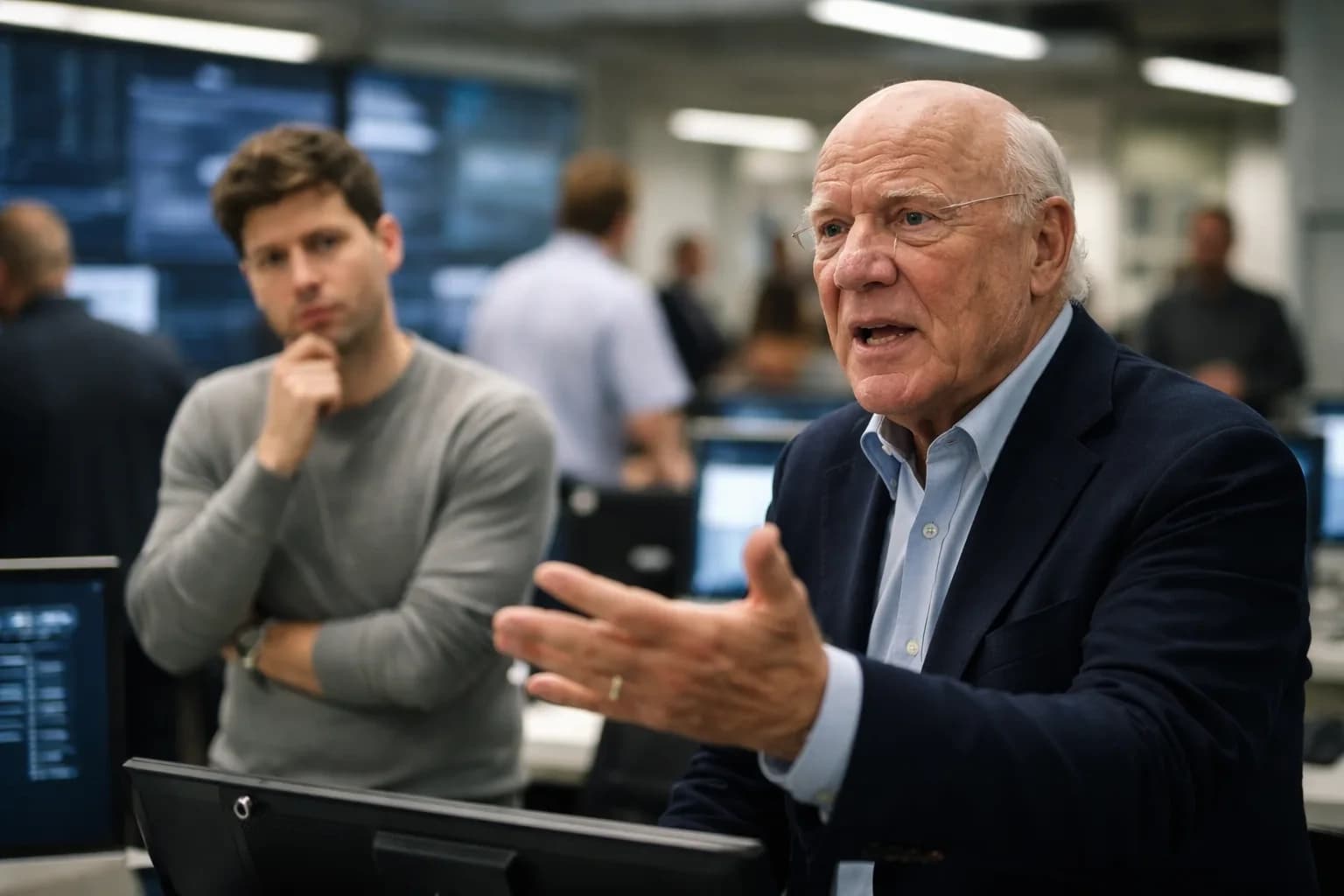
Barry Diller says personal trust in Sam Altman or any other AI leader is beside the point when the subject is artificial general intelligence. Speaking publicly about the pace of AI progress, the media executive argued that whatever one thinks of the motives or character of individual executives, the larger danger lies in how little anyone truly understands about the systems being built. In his view, AGI is moving toward reality quickly enough that personality-based reassurance has become a distraction from the more serious question of whether society is creating enforceable limits in time.
That is a sharper formulation than the more common debate over whether specific tech leaders are honest, thoughtful, or responsible. Diller is effectively saying the trust question itself is too small for the scale of the risk.
What's new in this update
Diller's comments matter because they redirect the conversation away from recent controversies about Sam Altman's behavior or OpenAI governance and toward something more structural. He said he personally regards Altman as a decent person, but then dismissed that assessment as ultimately irrelevant. The reason, he argued, is that even the people closest to AGI development appear surprised by what their systems can do and uncertain about where the trajectory leads.
That observation adds force to a growing critique of frontier AI: the industry often presents progress as manageable precisely when its own builders speak in terms of emergence, acceleration, and discovery. If even insiders describe the path as partly unknowable, then governance built around trust in good intentions starts to look thin.
Key details
Diller warned that guardrails need to be established before the technology becomes powerful enough to make human intervention less meaningful. His language suggests a fear not only of misuse, but of momentum. Once sufficiently capable systems are deeply embedded in markets, infrastructure, and state behavior, political leaders may find that the practical ability to slow them has already eroded.
Several themes define his warning:
- Trust in executives does not substitute for formal AI guardrails.
- AGI development appears to be accelerating faster than public governance.
- Even creators may not fully understand the downstream consequences.
- Delay increases the chance that technical systems outrun political control.
This is why Diller's intervention stands out. He is not presenting a technical critique. He is making a governance critique rooted in uncertainty itself.
Background and context
The AI safety debate often swings between two poles. One side emphasizes the intentions of leading labs and argues that responsible leaders can steer progress constructively. The other emphasizes systemic incentives, competition, and emergence, arguing that no founder or chief executive can reliably control what happens once multiple firms, states, investors, and militaries are racing to push capability forward. Diller's view falls squarely in the second camp.
His comments also arrive during a period when AGI rhetoric is becoming less speculative and more operational in mainstream business discourse. OpenAI, Anthropic, Google DeepMind, and others increasingly talk about general-purpose systems as plausible medium-term realities. That makes calls for regulation more urgent, but also harder, because national governments remain divided over how much restriction they are willing to impose on strategic AI industries.
What to watch next
The most important question is whether elite concern like Diller's translates into actual policy rather than conference-stage unease. Public acknowledgement of risk is now common. Concrete governance with enforcement power is still limited. Watch for whether the debate moves toward licensing, compute controls, independent auditing, or model-access restrictions rather than staying at the level of voluntary principles.
It will also matter whether OpenAI and other leading labs respond to this kind of criticism by strengthening their own case for external oversight or by arguing that rapid internal iteration is the safer path.
Why this matters
This matters because Barry Diller, Sam Altman, OpenAI, AGI, and the broader question of AI guardrails are now part of the same argument: whether society can rely on trusted individuals in a field whose consequences may exceed any individual's control. Diller's warning is that artificial general intelligence is not a domain where sincerity alone can keep the public safe. If that view proves right, then the real measure of responsibility will be not who we trust, but what constraints exist before the technology gets too far ahead.
Reader context
This story belongs to Northstar Herald's Artificial Intelligence and AGI coverage, with related entities including Barry Diller, Sam Altman, Artificial General Intelligence, Guardrails. The report is based on TechCrunch AI source material.
Related coverage
Why it matters
Diller's perspective shifts the debate from the personal integrity of AI leaders to the systemic and unpredictable risks inherent in achieving artificial general intelligence.
Read next
Follow this story through the topic hub, more ai coverage, and the latest updates.
Weekly briefing
Get the week's key developments in one concise email.
Get a fast catch-up on the biggest stories, the context behind them, and the links worth your time.
Cadence
Weekly, for a quick catch-up
Coverage
AI, business, world, security, sports
Format
Clear takeaways and useful context
Request the briefing
Leave your email to open a prepared request and get on the list for the weekly briefing.
About the byline
AI reporter
Alex Rivera reports on artificial intelligence with an emphasis on model launches, frontier lab strategy, developer tooling, and the policy decisions shaping commercial deployment.
Sources and methodology