SpaceXAI Talent Exodus Linked to Cultural Friction and Post-Merger
Over 50 employees, including key researchers in pre-training and voice modeling, have departed the company for rivals like Meta and Thinking Machines Lab.

AI reporter
Reports on model launches, frontier labs, developer platforms, and AI policy with an emphasis on claims verification and rollout context.
Editorial responsibility: Lead reviewer for AI coverage, launch claims, and policy context
Primary source: TechCrunch AI. Full source links and update notes are below.
Fast summary
Start here
- Over 50 technical staff members have exited SpaceXAI since the company was acquired by SpaceX in February.
- Meta and Thinking Machines Lab have successfully recruited nearly 20 former SpaceXAI employees.
- Employee dissatisfaction is reportedly linked to unrealistic development timelines and high-pressure work environments.
What happened
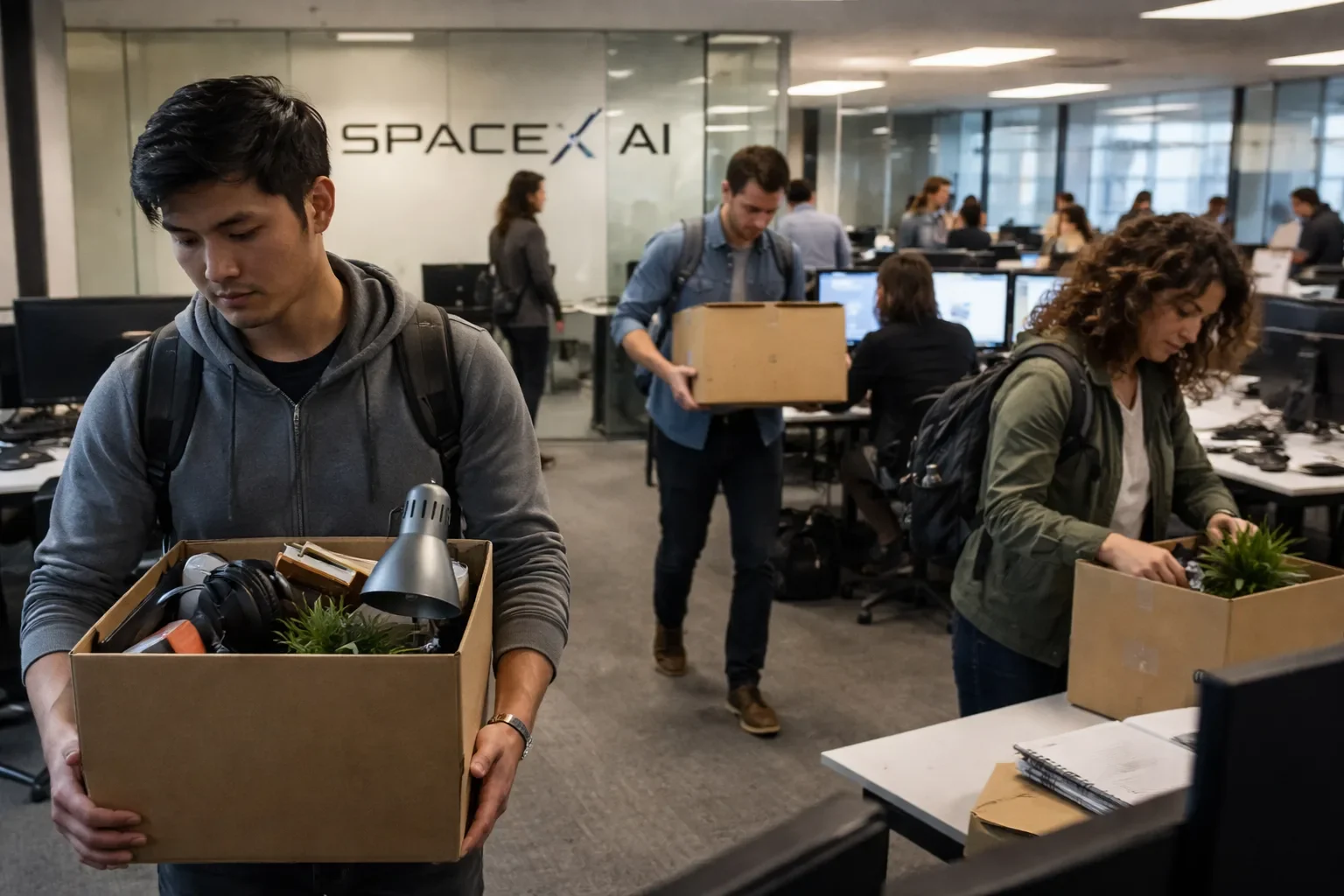
More than 50 employees have reportedly left Elon Musk's SpaceXAI since its merger, raising serious questions about whether the combined company can hold onto the technical talent it needs to compete in the AI race. The departures are said to include researchers and engineers working on critical areas such as pre-training, world models, and voice systems tied to Grok.
That makes the SpaceXAI staff losses story about more than headcount. In frontier AI, top researchers are not interchangeable. When a company loses dozens of technical employees soon after a merger, the real issue is whether product velocity, model quality, and internal confidence can survive the disruption.
Why post-merger talent loss matters so much in AI
Mergers often create overlap, confusion, and culture shock, but those effects are amplified in AI because progress depends heavily on a relatively small number of elite teams. A company can lose routine operational staff and keep moving. Losing core pre-training researchers, model engineers, and technical leaders is different. Those groups carry the institutional knowledge required to build, tune, and scale the next generation of systems.
That is why reports of over 50 departures at SpaceXAI matter. Even if the company still has capital, compute access, and brand visibility through Elon Musk, its competitive position can weaken quickly if the people closest to foundational model work stop believing the environment is sustainable.
Why rivals are benefiting immediately
The report that Meta and Thinking Machines Lab have hired former SpaceXAI staff is especially important because it shows the exiting talent is still highly valued by the market. This does not look like a story about weak performers being pushed out. It looks more like a story about skilled researchers finding more attractive alternatives in a market where top AI labor remains scarce and aggressively contested.
That matters because talent in AI often compounds. When one respected researcher leaves, others become more willing to consider the same move. A post-merger exodus can therefore become self-reinforcing if employees begin to feel that the best people are already heading elsewhere.
The culture question is central
Reports of unrealistic timelines and extreme pressure fit a familiar pattern in Elon Musk-linked companies: extraordinary ambition paired with unusually intense demands. That model can produce rapid execution in some contexts, but it also creates retention risk, especially in AI where researchers often have multiple offers and can choose between very different operating cultures.
If the merger pushed teams into an environment where product expectations accelerated while autonomy or stability declined, then attrition becomes easier to understand. Frontier AI work is already difficult. Adding organizational turbulence can make even highly motivated teams reconsider whether the mission is worth the cost.
Why the pre-training team matters most
Any weakness in the pre-training group is particularly serious because that team helps define the quality ceiling of future models. If the staff responsible for training the next major iteration of Grok or other flagship systems has been depleted, the company may struggle not just operationally, but strategically. It could lose time at the exact stage when rivals are still moving fast.
That is the deeper threat here. SpaceXAI does not merely need to keep shipping. It needs to keep convincing the market that it belongs in the same conversation as OpenAI, Meta, Anthropic, and other leading labs.
What to watch next
The next meaningful signals are whether SpaceXAI can backfill senior research roles, whether product timelines slip, and whether Grok-related development shows any visible slowdown. It will also matter if more departures emerge from the same units, especially pre-training and model systems, because that would suggest the company has not stabilized the post-merger environment.
Why this matters
The SpaceXAI staff exodus matters because frontier AI competition is still shaped by concentrated talent, not just capital or publicity. Losing more than 50 employees after a merger weakens execution, boosts rivals, and raises doubts about whether Elon Musk's combined AI operation can maintain internal coherence while trying to chase the industry's top tier.
Why it matters
The loss of elite researchers threatens SpaceXAI's ability to compete with OpenAI and Meta, particularly as its core pre-training team faces significant depletion.
Read next
Follow this story through the topic hub, more ai coverage, and the latest updates.
Weekly briefing
Get the week's key developments in one concise email.
Get a fast catch-up on the biggest stories, the context behind them, and the links worth your time.
Cadence
Weekly, for a quick catch-up
Coverage
AI, business, world, security, sports
Format
Clear takeaways and useful context
Request the briefing
Leave your email to open a prepared request and get on the list for the weekly briefing.
About the byline
AI reporter
Alex Rivera reports on artificial intelligence with an emphasis on model launches, frontier lab strategy, developer tooling, and the policy decisions shaping commercial deployment.
Sources and methodology