OpenAI Debuts $230 Codex Micro Keyboard Amid Apple Legal Battle
OpenAI launches the $230 Codex Micro keyboard for AI agents as a legal battle with Apple looms over alleged hardware trade secret theft.

AI reporter
Reports on model launches, frontier labs, developer platforms, and AI policy with an emphasis on claims verification and rollout context.
Editorial responsibility: Lead reviewer for AI coverage, launch claims, and policy context
Primary source: TechCrunch AI. Full source links and update notes are below.
Fast summary
Start here
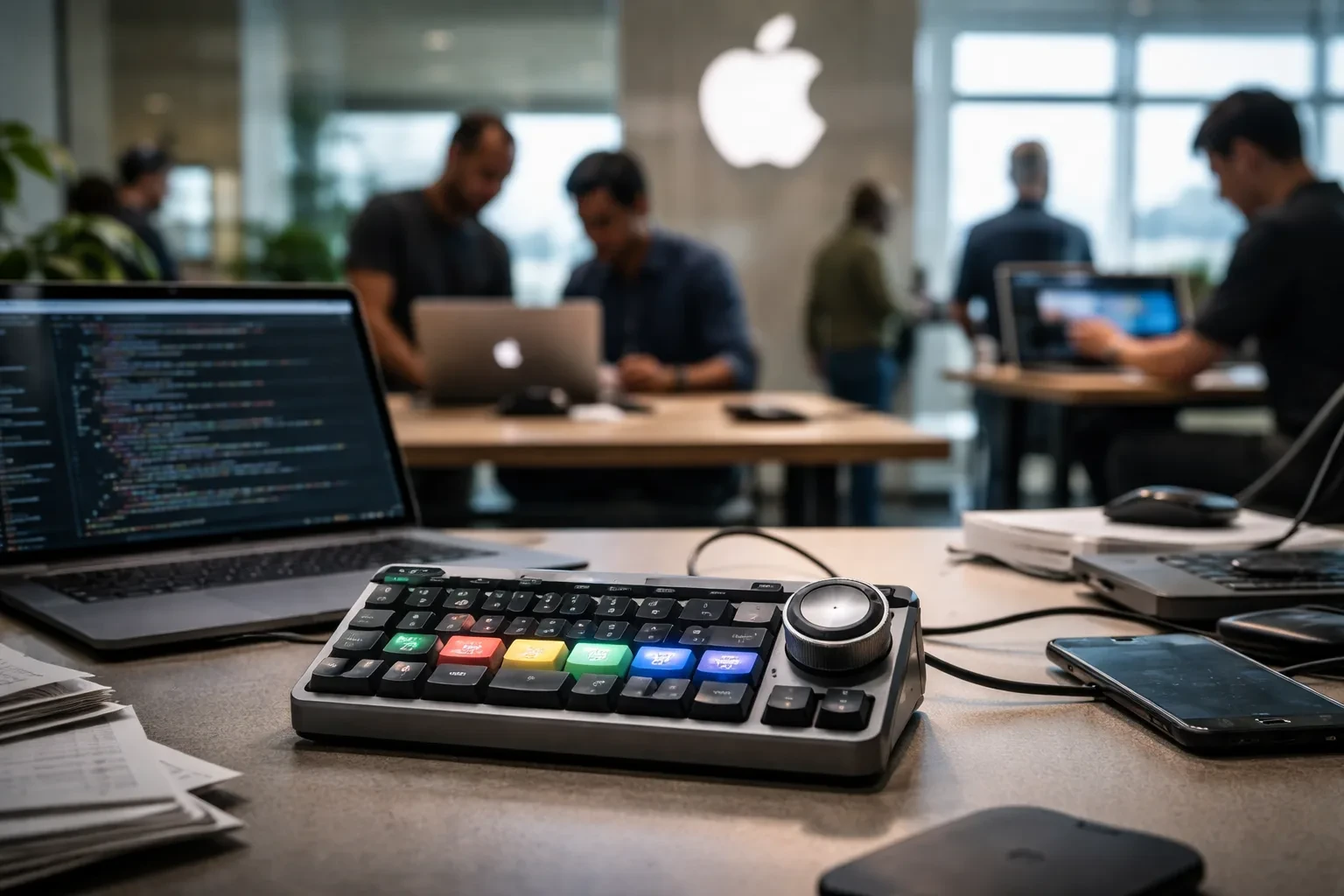
- OpenAI launched the $230 Codex Micro, a specialized mechanical keyboard designed for managing autonomous AI coding agents.
- The device features unique physical controls including Agent Keys for status tracking and a dial to adjust compute reasoning levels.
- The release coincides with a major lawsuit from Apple alleging OpenAI stole trade secrets to develop its nascent hardware division.
What happened
OpenAI has officially transitioned from a software-focused research entity into the consumer hardware space with the release of the Codex Micro. This $230 mechanical keyboard was developed specifically for programmers and developers utilizing the company's Codex AI coding assistant. Created in partnership with specialty keyboard designer Work Louder, the device acts as a physical command center for managing autonomous AI agents. These agents are designed to execute code and perform complex technical tasks with minimal human intervention. By providing a dedicated physical interface, OpenAI aims to streamline the interaction between human developers and their AI fleets, moving beyond the traditional limitations of standard desktop applications and mobile interfaces.
What's new in this update
The Codex Micro is not a standard peripheral but a highly specialized tool with features tied directly to OpenAI's software ecosystem. The keyboard includes light-up Agent Keys that provide real-time visual feedback on the status of various AI coding agents. Perhaps the most innovative feature is a dedicated reasoning dial, which allows users to manually adjust the intensity of the AI's processing power. This allows a developer to dictate exactly how much compute and reasoning time an agent should spend on a specific coding problem. Furthermore, the device includes a joystick for navigating common workflows and customizable Command Keys that act as shortcuts for frequent Codex actions, all controllable via the ChatGPT desktop application.
Key details
While the Codex Micro is being released as a limited-edition collaboration, it appears to be a precursor to more ambitious hardware projects. Recent reports suggest that OpenAI is also working on a portable, screenless smart speaker that utilizes mechanical elements to move autonomously. This project is reportedly being spearheaded by a group of former Apple engineers, which has become a point of significant contention. The Codex Micro itself serves as a flashy entry point into the market, featuring a design that prioritizes aesthetics and tactile feedback for a niche audience of power users. Despite its high price tag and limited run, the device demonstrates OpenAI's commitment to creating a proprietary hardware environment for its generative models.
Background and context
The timing of this product launch is complicated by an escalating legal dispute with Apple. Last week, Apple filed a lawsuit against OpenAI, alleging that the company's leadership implemented a deliberate strategy to acquire Apple's confidential hardware trade secrets. The lawsuit claims that OpenAI recruited former Apple staff specifically to extract sensitive information for the purpose of developing its own hardware devices. OpenAI has denied these allegations, but the friction underscores the high stakes as Silicon Valley's major players compete for dominance in AI-integrated devices. For years, OpenAI relied on third-party hardware to deliver its models, but the hiring of high-profile designers suggested a pivot toward physical products was always part of its long-term roadmap.
What to watch next
The immediate focus for the industry will be the outcome of the Apple litigation, which could potentially stall or reshape OpenAI's future hardware releases. If the courts find that OpenAI utilized stolen trade secrets, the company may face significant financial penalties or injunctions against its upcoming products. Beyond the legal arena, the market reception of the Codex Micro will indicate whether there is sustainable demand for AI-specific peripherals. Industry observers are particularly curious about the rumored screenless speaker and how its 'moving parts' will enhance user interaction. As OpenAI continues to expand its team of hardware specialists, the line between software provider and hardware manufacturer will likely continue to blur in the coming years.
Why it matters
This move marks OpenAI's first foray into physical products, signaling a strategy to control both the AI models and the specialized hardware used to operate them.
Read next
Follow this story through the topic hub, more ai coverage, and the latest updates.
Weekly briefing
Get the week's key developments in one concise email.
Get a fast catch-up on the biggest stories, the context behind them, and the links worth your time.
Cadence
Weekly, for a quick catch-up
Coverage
AI, business, world, security, sports
Format
Clear takeaways and useful context
Request the briefing
Leave your email to open a prepared request and get on the list for the weekly briefing.
About the byline
AI reporter
Alex Rivera reports on artificial intelligence with an emphasis on model launches, frontier lab strategy, developer tooling, and the policy decisions shaping commercial deployment.
Sources and methodology