Databricks Reaches $188B Valuation as AI Strategy Drives Growth
Led by Coatue, the latest funding round solidifies the company’s transition from a big data specialist to a central player in the AI ecosystem.

AI reporter
Reports on model launches, frontier labs, developer platforms, and AI policy with an emphasis on claims verification and rollout context.
Editorial responsibility: Lead reviewer for AI coverage, launch claims, and policy context
Primary source: TechCrunch AI. Full source links and update notes are below.
Fast summary
Start here
- Databricks announced a new funding round valuing the firm at $188 billion, up from $134 billion just five months ago.
- The company has shifted its focus toward AI infrastructure, including products like the Lakebase database and the Omnigent meta-harness.
- Internal benchmarking reveals Databricks is leveraging open-weight models and the Pi harness to reduce operational costs for its engineers.
What happened
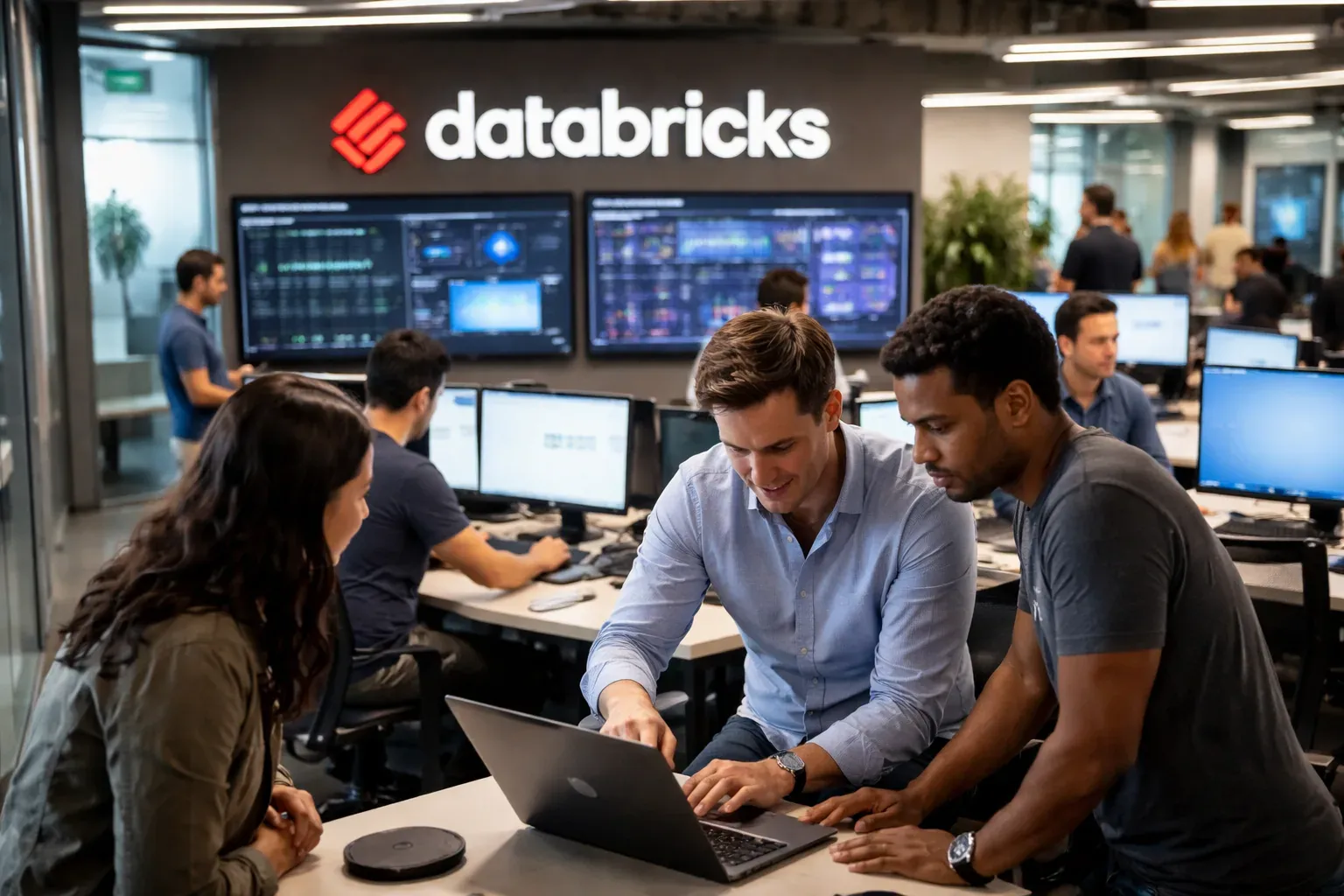
Databricks has announced a new private funding round that elevates its valuation to a staggering $188 billion, a move that underscores its position as a primary beneficiary of the ongoing artificial intelligence boom. Led by investment firm Coatue, the round is expected to close later this summer. While the specific amount raised was not officially disclosed by the company, reports indicate the figure is approximately $3 billion. This announcement marks a significant jump from the $134 billion valuation the company held in February 2026. The rapid appreciation in value reflects a broader market trend where established enterprise data firms are being re-rated by investors as essential pillars of the AI stack. By announcing the valuation before the final close, Databricks highlights the intense demand among venture capital firms to secure a stake in the company’s expanding ecosystem.
What's new in this update
Beyond the financial milestones, the current funding round highlights Databricks' pivot from its origins in big data analytics to a comprehensive AI provider. The company has introduced several specialized tools designed to manage the complexities of modern generative AI deployments. Key among these are Lakebase, a database specifically architected for AI agents, and Unity, which serves as a secure gateway for AI operations. Additionally, Databricks has launched Omnigent, a "meta-harness" designed to orchestrate and manage multiple AI agents simultaneously. These product releases demonstrate a strategic effort to capture the "agentic" workflow market, where software autonomously performs tasks rather than just generating text. The shift is already paying dividends, as the company increasingly provides the foundational security and governance layers that large enterprises require before they are willing to deploy AI models at scale.
Key details
The fundraising history of Databricks over the last 20 months reveals an unprecedented pace of capital accumulation. In December 2024, the company raised a record-breaking $10 billion at a $62 billion valuation. This was followed by a $1 billion raise in September 2025 at a $100 billion valuation, and a $5 billion Series L round in February 2026. The company’s ability to repeatedly return to the market for larger checks at higher valuations has become a point of discussion within the tech industry, with some observers joking about the exhaustion of the venture capital alphabet. However, the underlying financials remain robust. The company’s growth is fueled by its ability to store massive quantities of enterprise data in the cloud while providing the high-speed analytics necessary for modern business operations, now enhanced with native AI capabilities.
Background and context
Founded in 2013, Databricks originally rose to prominence by commercializing Apache Spark, an open-source engine for large-scale data processing. For years, it was viewed primarily as a SaaS sensation competing in the big data sector. However, the emergence of generative AI shifted the competitive landscape. Databricks found itself in a unique position because it already managed the core data repositories of many Fortune 500 companies. Recognizing that AI is only as good as the data feeding it, the company rebranded itself as an AI-first organization. This "second act" allowed Databricks to avoid being categorized as a legacy software provider. It has also leaned into the open-source movement, positioning itself as a cost-effective alternative to proprietary models from companies like OpenAI and Anthropic by championing open-weight models that provide greater transparency and control.
What to watch next
A major focus for Databricks moving forward will be the optimization of AI operational costs, a critical concern for enterprises in 2026. CEO Ali Ghodsi recently highlighted internal benchmarking that showed open-weight models, specifically Z.ai’s GLM 5.2, could handle high-level coding tasks as effectively as proprietary rivals but at a significantly lower cost. Crucially, the company discovered that the choice of "harness"—the tool that manages a model’s context and instructions—is as important as the model itself. Databricks identified the open-source Pi harness as a top performer in context management. As the company prepares to close its latest funding round, observers will be watching how it integrates these cost-saving methodologies into its commercial offerings. The company’s continued success will likely depend on its ability to prove that its agentic tools and open-model strategy can deliver superior ROI compared to closed-ecosystem competitors.
Why it matters
The massive valuation reflects investor confidence in legacy data firms that successfully pivot to AI infrastructure while maintaining enterprise-grade security.
Read next
Follow this story through the topic hub, more ai coverage, and the latest updates.
Weekly briefing
Get the week's key developments in one concise email.
Get a fast catch-up on the biggest stories, the context behind them, and the links worth your time.
Cadence
Weekly, for a quick catch-up
Coverage
AI, business, world, security, sports
Format
Clear takeaways and useful context
Request the briefing
Leave your email to open a prepared request and get on the list for the weekly briefing.
About the byline
AI reporter
Alex Rivera reports on artificial intelligence with an emphasis on model launches, frontier lab strategy, developer tooling, and the policy decisions shaping commercial deployment.
Sources and methodology