Humpback Whale 'Hope' Found Dead Off Denmark Following High-Profile Rescue
Danish authorities confirmed the identity of the carcass found near Anholt island, weeks after a privately funded German operation ferried the animal to the North Sea.
Primary source: BBC World News. Full source links, newsroom standards, and correction details are below.
Fast summary
Start here
- The whale, nicknamed 'Timmy' or 'Hope,' was found dead off the island of Anholt between Denmark and Sweden.
- A private rescue in early May used a water-filled barge to move the animal from a Baltic sandbank to the North Sea after official efforts were abandoned.
- Danish officials have warned the public to stay away from the carcass due to the risk of disease and potential explosion from decomposition gases.
What happened
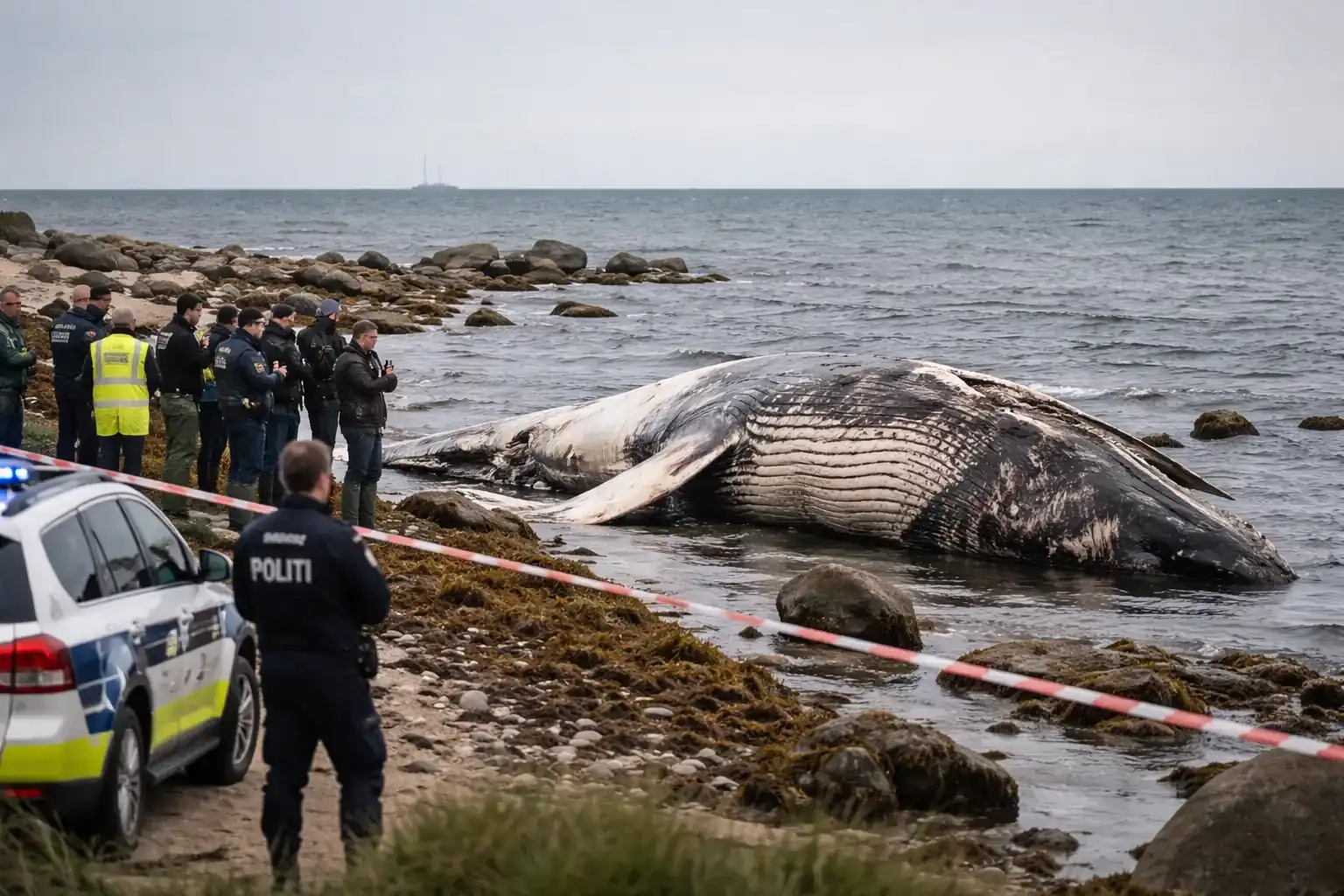
A humpback whale that became a subject of intense public interest in Germany after multiple beaching incidents has been found dead. The carcass was spotted off the Danish island of Anholt, and the Danish Environmental Protection Agency confirmed the animal's identity on Saturday after retrieving its tracking device.
What's new in this update
Danish authorities reported that weather conditions finally allowed for the definitive identification of the whale. While there are currently no plans for a necropsy or to remove the carcass, officials issued a public health warning. They noted that the whale could carry transmissible diseases and poses a physical danger due to internal gases that could cause the carcass to explode as it decomposes.
Key details
The rescue operation was funded privately by entrepreneurs Karin Walter-Mommert and Walter Gunz after German state authorities had declared they were giving up on the animal. The operation involved coaxing the whale into the Fortuna B, a water-filled transport ship, to relocate it to the North Sea. Despite initial praise from some local politicians, conservation groups remained skeptical, citing the whale's weakened state and skin damage caused by low-salinity waters in the Baltic Sea.
Background and context
The whale was first sighted in late March on a sandbank off the German island of Poel. It subsequently stranded itself multiple times in Lübeck Bay and on Timmendorfer Beach. While the environment minister in Mecklenburg-Vorpommern, Till Backhaus, hailed the barge rescue as a success, the German Oceanographic Museum and Whale and Dolphin Conservation warned that the animal had a low long-term chance of survival due to extreme exhaustion.
What to watch next
The Danish Environmental Protection Agency does not currently consider the carcass to be a problem for the local area and does not plan further intervention. The death of the whale is expected to spark further debate among wildlife experts and the public regarding the ethics and practical limits of high-cost private interventions for stranded marine life.
Why this matters
This incident highlights the controversy surrounding human intervention in wildlife strandings and the biological challenges of relocating marine mammals between environments of differing salinity.
Reader context
This story belongs to Northstar Herald's International Relations coverage, with related entities including Humpback Whale, Germany, Denmark, Marine Conservation. The report is based on BBC World News source material.
Related coverage
Why it matters
This incident highlights the controversy surrounding human intervention in wildlife strandings and the biological challenges of relocating marine mammals between environments of differing salinity.
Read next
Follow this story through the topic hub, more world coverage, and the latest updates.
Weekly briefing
Get the week's key developments in one concise email.
Get a fast catch-up on the biggest stories, the context behind them, and the links worth your time.
Cadence
Weekly, for a quick catch-up
Coverage
AI, business, world, security, sports
Format
Clear takeaways and useful context
Request the briefing
Leave your email to open a prepared request and get on the list for the weekly briefing.
Author

The world desk follows geopolitics, humanitarian crises, diplomacy, and major international developments with an emphasis on fast updates and public-interest context.
Sources and methodology