US and Iran Exchange New Strikes in Gulf as Fragile Ceasefire Falters
American forces targeted Iranian radar sites after intercepting drones, while Iran launched retaliatory missiles at US bases in Kuwait and Bahrain.
Primary source: BBC World News. Full source links, newsroom standards, and correction details are below.
Fast summary
Start here
- US Central Command intercepted four Iranian attack drones and destroyed coastal surveillance radar sites in southern Iran.
- Iran responded with ballistic missile strikes against US military facilities in Kuwait and Bahrain, most of which were intercepted.
- The escalation follows a deadly drone attack on Kuwait's international airport that killed one person and injured over 60 others.
What happened
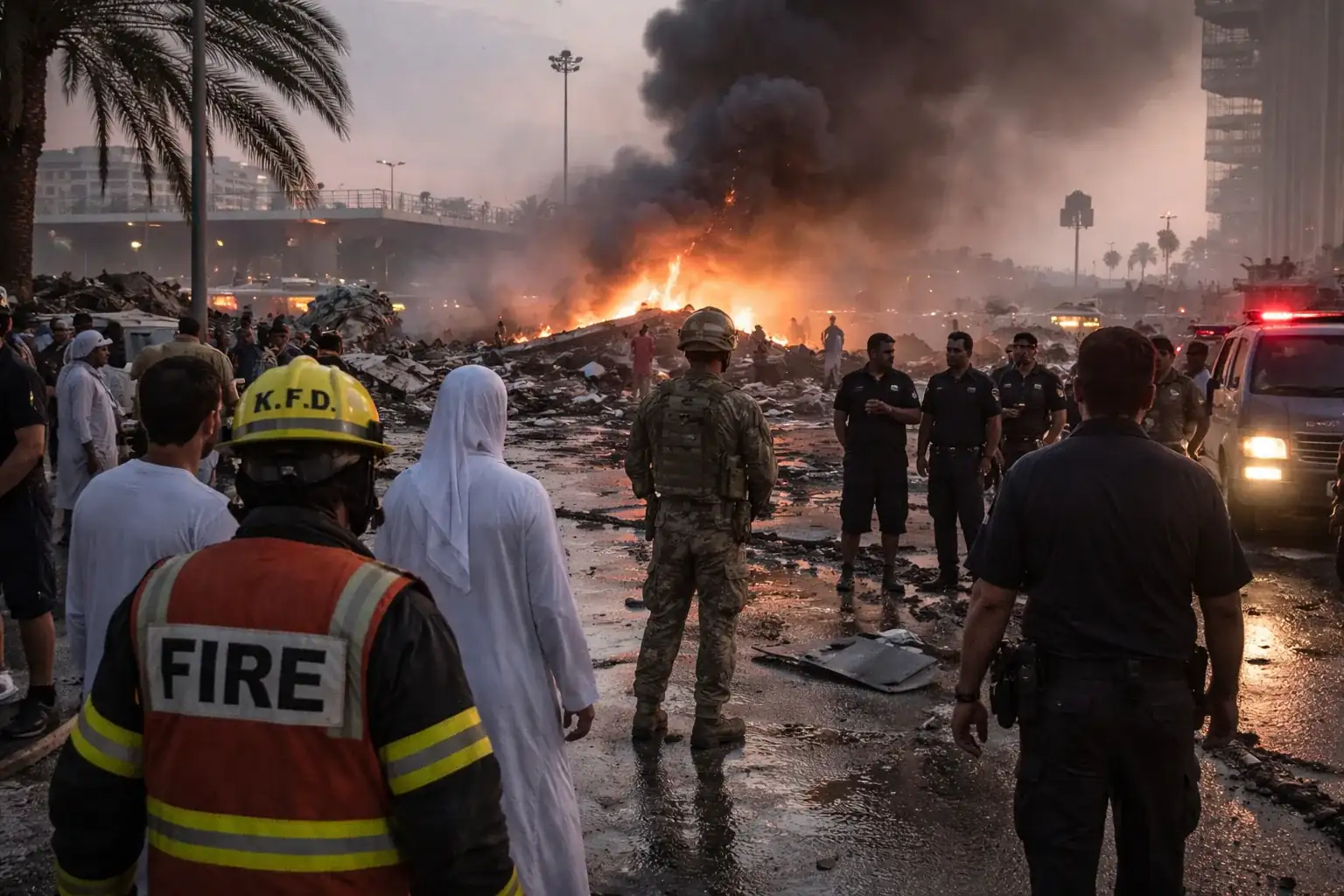
Recent military exchanges in the Gulf have severely tested the shaky ceasefire between the United States and Iran. US Central Command confirmed it intercepted four Iranian one-way attack drones near the Strait of Hormuz and subsequently struck Iranian coastal surveillance radar installations to defend against further attacks. Iran retaliated by firing ballistic missiles at US air bases in Kuwait and facilities of the US Navy in Bahrain.
What's new in this update
This latest round of direct strikes marks a significant escalation since the ceasefire was established in April. While Iran's Islamic Revolution Guard Corps denied responsibility for a drone strike on Kuwait's international airport earlier this week, US officials have categorized the event as a deliberate and calculated attack by Tehran. Furthermore, ceasefire negotiations have reportedly stalled as the US administration seeks changes to the existing terms.
Key details
According to US Central Command, six of the seven Iranian missiles fired at Gulf states were intercepted, while one failed to reach its target. The military actions occurred alongside a unique diplomatic development: the US has granted visas to Iran's World Cup football team ahead of their match in Los Angeles. This marks a rare instance of a host nation receiving a team from a country with which it is in active conflict.
Background and context
Tensions escalated on February 28 following wide-ranging US and Israeli strikes on Iran. In response, Iran targeted US-allied states and effectively closed the Strait of Hormuz, through which approximately 20% of the world's oil and liquefied natural gas travels. Although a ceasefire was reached in early April, the US has maintained a blockade of Iranian ports, which President Trump stated will remain in effect until a final agreement is signed.
What to watch next
The primary focus remains on the stalled diplomatic negotiations and whether either side will make concessions to finalize a peace deal. Observers are also monitoring the impact of the conflict on global oil prices, which surged following the closure of the Strait of Hormuz. The upcoming arrival of the Iranian football team in the US on June 15 will serve as a high-profile test of diplomatic decorum during the ongoing hostilities.
Why this matters
Renewed hostilities threaten the stability of global energy markets and risk collapsing a fragile diplomatic truce that has been in place since April.
Reader context
This story belongs to Northstar Herald's International Relations and Middle East Conflict coverage, with related entities including Iran, United States, Strait of Hormuz, Kuwait. The report is based on BBC World News source material.
Related coverage
Why it matters
Renewed hostilities threaten the stability of global energy markets and risk collapsing a fragile diplomatic truce that has been in place since April.
Read next
Follow this story through the topic hub, more world coverage, and the latest updates.
Weekly briefing
Get the week's key developments in one concise email.
Get a fast catch-up on the biggest stories, the context behind them, and the links worth your time.
Cadence
Weekly, for a quick catch-up
Coverage
AI, business, world, security, sports
Format
Clear takeaways and useful context
Request the briefing
Leave your email to open a prepared request and get on the list for the weekly briefing.
Author

The world desk follows geopolitics, humanitarian crises, diplomacy, and major international developments with an emphasis on fast updates and public-interest context.
Sources and methodology