Ukraine Strikes Russian Tankers to Disrupt Crimea Supply Routes
Ukrainian forces target Russia's maritime logistics in the Sea of Azov, hitting dozens of vessels to restrict fuel flow into the occupied peninsula.

World correspondent
Reports on international affairs, diplomacy, and humanitarian developments with an emphasis on official statements, multilateral institutions, and regional context.
Editorial responsibility: Lead reviewer for geopolitics, international institutions, and crisis coverage
Primary source: BBC World News. Full source links and update notes are below.
Fast summary
Start here
- Ukrainian drone commanders report hitting dozens of ships in the Sea of Azov over a four-day period.
- The strikes target Russia's 'shadow fleet' of commercial oil tankers and military supply ferries.
- The maritime campaign is part of a broader 'logistics lockdown' strategy aimed at isolating occupied Crimea.
What happened
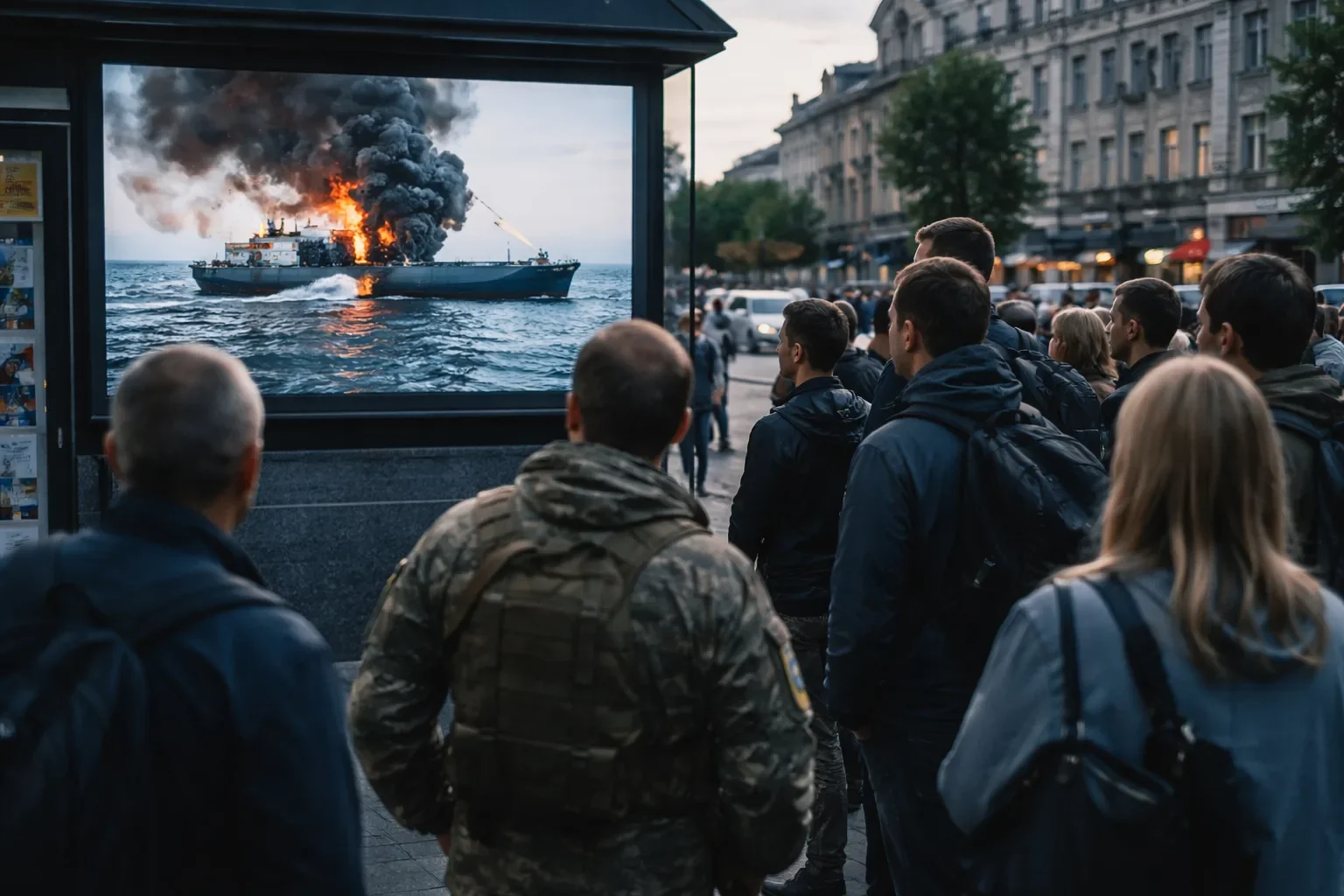
Ukraine's military has significantly escalated its campaign against Russian maritime logistics, targeting fuel tankers and supply vessels in the Sea of Azov and the Black Sea. Over a four-day period, Ukrainian drone force commander Robert Brovdi, widely known by the call sign 'Magyar,' reported that at least 25 ships were struck and caught fire. These operations mark a new phase in Kyiv's attempt to isolate the Crimean Peninsula, which Russia annexed in 2014. By focusing on the 'shadow fleet' of commercial oil tankers, Ukraine aims to disrupt the flow of essential resources that power the Russian military machine in the region. This maritime offensive follows a series of successful strikes on land-based corridors, including bridges and rail lines, signaling a multi-domain effort to squeeze Russian logistics.
What's new in this update
The latest reports highlight a rapid intensification of drone activity, with Ukraine claiming to have hit as many as 36 ships in total, including both military-adjacent vessels and commercial tankers. Specific tankers identified in recent strikes include the Venera-3, Sanar-1, Sanar-17, Klimena, and others. Beyond deep-sea targets, the SKS One passenger ferry and a bulk carrier were also reportedly hit at the port of Kerch. Satellite imagery analyzed by BBC Verify confirms a noticeable reduction in tanker traffic near Kerch following these strikes, as vessels appear to be fleeing the area to avoid further damage. New footage released by the Ukrainian General Staff also showed a naval drone attack on the sanctioned tanker 'Blue' near Yalta, demonstrating that even outside the immediate Sea of Azov, Russian-affiliated shipping remains vulnerable to high-speed unmanned surface vessels.
Key details
The Sea of Azov, once considered a relatively safe inland sea for Russian operations, has become a primary combat zone for unmanned systems. Drone commander Robert Brovdi detailed daily strikes occurring between July 6 and July 9, involving vessels carrying thousands of tons of fuel. For instance, two tankers hit early in the week were reportedly transporting approximately 7,000 tons of fuel each from the Taganrog area to Crimea. NASA fire data and satellite images have captured large plumes of smoke from vessels loitering off the Crimean coast, indicating sustained fires after the strikes. While Russian regional governors, such as Yuri Slyusar of the Rostov region, have confirmed some attacks on empty tankers in Taganrog Bay, Ukrainian officials maintain that the targets are actively fueling the occupation. The use of 'Magyar' drones represents a significant shift in how Ukraine projects power across maritime bottlenecks like the Kerch Strait.
Background and context
This naval escalation is a core component of Ukraine's self-declared 'logistics lockdown,' a strategy designed to choke off the various routes Russia uses to supply its forces in southern Ukraine. Since the full-scale invasion began, the Kerch Bridge has been a high-priority target, but as Russia reinforced that link, Kyiv pivoted toward refineries and maritime assets. The targeting of oil refineries across Russia has already led to domestic fuel shortages in major cities like Moscow and St. Petersburg. President Volodymyr Zelensky has defended these strikes as a proportional response to Russian attacks on Ukrainian energy infrastructure, stating that Russian citizens must feel the direct consequences of the war their state is waging. By targeting the 'shadow fleet'—vessels often operating under opaque ownership to bypass international sanctions—Ukraine is also complicating Russia's ability to export oil and generate revenue for its war effort.
What to watch next
Moving forward, the maritime conflict is expected to intensify as Ukraine refines its naval drone technology and increases the range of its unmanned systems. Observers will be looking to see if Russia can effectively counter these low-profile, high-speed threats or if it will be forced to withdraw its commercial and military fleet further from the Crimean coast, effectively ceding maritime control of the Sea of Azov. The continued disruption of fuel supplies may lead to more severe energy rationing within occupied territories and potentially impact the mobility of Russian armored units on the southern front. Additionally, the international community will be monitoring the impact on global energy markets as more 'shadow fleet' tankers are removed from service or redirected. Ukraine's ability to maintain this high tempo of operations will depend on its domestic production of drones and its intelligence-gathering capabilities regarding Russian naval movements.
Why it matters
The escalation threatens Russia's ability to sustain its military operations and civilian infrastructure in Crimea by cutting off critical maritime fuel corridors.
Read next
Follow this story through the topic hub, more world coverage, and the latest updates.
Weekly briefing
Get the week's key developments in one concise email.
Get a fast catch-up on the biggest stories, the context behind them, and the links worth your time.
Cadence
Weekly, for a quick catch-up
Coverage
AI, business, world, security, sports
Format
Clear takeaways and useful context
Request the briefing
Leave your email to open a prepared request and get on the list for the weekly briefing.
About the byline
World correspondent
Leila Haddad covers world affairs, diplomacy, and humanitarian crises, with a focus on how fast-moving international developments affect public policy, conflict response, and cross-border institutions.
Sources and methodology