Ukrainian Drones Strike Strategic Oil Hub in St Petersburg
Kyiv expands its long-range campaign against Russian energy assets, striking a critical export terminal and targeting a naval base over 500 miles from the

World correspondent
Reports on international affairs, diplomacy, and humanitarian developments with an emphasis on official statements, multilateral institutions, and regional context.
Editorial responsibility: Lead reviewer for geopolitics, international institutions, and crisis coverage
Primary source: BBC World News. Full source links and update notes are below.
Fast summary
Start here
- Ukraine successfully hit a major oil terminal and a naval base in St Petersburg using long-range drones in an overnight operation.
- President Zelensky identified the facility as a critical revenue-generating asset for the Russian war effort, located 850km from the border.
- Conflicting reports have emerged regarding the eastern town of Kostyantynivka, with Ukraine denying Vladimir Putin's claims of Russian control.
What happened
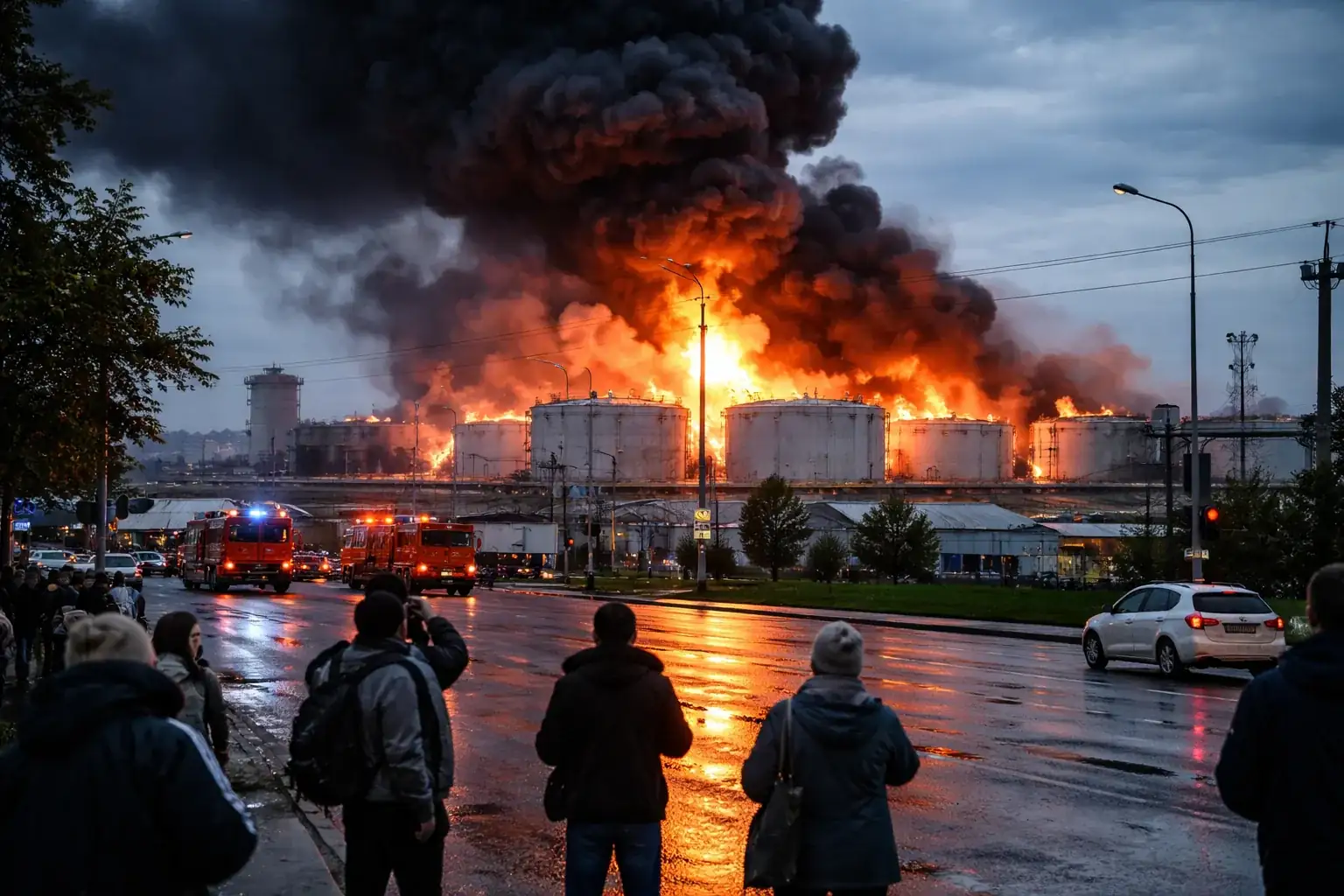
Ukrainian forces launched a significant long-range drone operation overnight, successfully striking a major oil terminal in St Petersburg, Russia’s second-largest city. President Volodymyr Zelensky confirmed the attack on Saturday, characterizing the facility as vital infrastructure that generates essential revenue for Russia’s ongoing war effort. St Petersburg Governor Aleksandr Beglov acknowledged that the city came under a massive drone assault and admitted the oil terminal was hit, though he reported no casualties among the civilian population. The strike represents a significant reach for Ukrainian forces, targeting a facility located approximately 850 kilometers or 528 miles from the Ukrainian border. This operation coincides with reports from the Ukrainian military that a major Russian naval base in Kronstadt, belonging to the Baltic Fleet, was also a target during the same wave of aerial attacks.
What's new in this update
The latest strike marks a deliberate intensification of Kyiv’s strategy to dismantle the economic engines fueling the Kremlin's invasion. For the first time, local Russian officials have provided specific figures regarding the scale of the defensive response, with Governor Beglov stating that 72 Ukrainian drones were intercepted over St Petersburg and the wider Leningrad region. Despite these defensive claims, visual evidence shared by President Zelensky showed a drone successfully navigating toward its target, followed by a massive column of black smoke rising from the terminal area. Furthermore, the update brings to light a sharp discrepancy regarding the frontline town of Kostyantynivka. While Vladimir Putin recently claimed Russian forces had seized control of the heavily-fortified town in June, Ukrainian military spokesman Maj Andriy Kovalyov countered this assertion, stating that the fortress belt location remains under the control of Ukraine’s Defence Forces despite localized infantry infiltration.
Key details
The St Petersburg oil terminal is one of Russia’s most significant energy export nodes, with the capacity to process and handle approximately 12.5 million tonnes of petroleum products annually. Ukrainian military officials emphasized the terminal's strategic importance, noting its role as a primary revenue stream for the Russian state. The distance of the strike underscores the growing capability of Ukraine’s domestic drone manufacturing and intelligence operations. In the wake of the attack, local infrastructure in St Petersburg faced immediate disruptions; Governor Beglov warned residents of potential mobile internet outages and urged the city's five million inhabitants to remain indoors while the drone threat persisted. This tactical shift toward the north-west of Russia suggests a broadening of the conflict's geography, forcing Russian air defenses to stretch thin across a wider perimeter to protect secondary cities and critical energy hubs far from the primary combat zones.
Background and context
Since the full-scale invasion began in February 2022, Russia has relied heavily on its fossil fuel exports to sustain its military spending and domestic economy. In response, Ukraine has pivoted toward a campaign of asymmetric warfare, using relatively low-cost drones to strike high-value energy targets deep within Russian territory. Kyiv claims that these persistent strikes have disabled nearly 43% of Russia’s total oil refining capacity, a figure that, while not independently verified, aligns with reports of domestic fuel shortages within Russia. Vladimir Putin himself recently made a rare admission regarding these shortages, which have forced Moscow to look toward unconventional labor sources, such as students, to fill gaps in the workforce. The strikes on St Petersburg and the Kronstadt naval base target the Baltic Fleet's operational heart, complicating Russia’s maritime logistics and energy exports simultaneously while bringing the reality of the war closer to major Russian population centers.
What to watch next
As the conflict moves into its next phase, the focus will likely remain on the resilience of Russia’s energy sector and the reliability of its air defense systems in protecting critical urban centers like St Petersburg and Moscow. Observers are closely monitoring whether Ukraine can maintain this tempo of long-range strikes and if they will lead to a broader collapse in Russian fuel distribution or domestic economic stability. On the ground, the situation in the fortress belt of the Donetsk region, specifically around the town of Kostyantynivka, remains a flashpoint of conflicting narratives. The outcome of the fighting there will determine the stability of Ukraine's eastern defensive lines. President Zelensky’s recent public statements suggest a willingness to challenge Putin’s claims of territorial control, potentially using these frontline defensive successes as leverage in future diplomatic maneuvering, though the immediate focus remains on degrading Russia's ability to finance its military operations.
Why it matters
The strike on St Petersburg demonstrates Ukraine's ability to hit strategic economic targets deep within Russian territory, potentially crippling the fossil fuel exports that fund the invasion. This expansion of the conflict's geographical reach forces Russia to reallocate air defense resources to protect vital energy infrastructure far from the front lines.
Read next
Follow this story through the topic hub, more world coverage, and the latest updates.
Weekly briefing
Get the week's key developments in one concise email.
Get a fast catch-up on the biggest stories, the context behind them, and the links worth your time.
Cadence
Weekly, for a quick catch-up
Coverage
AI, business, world, security, sports
Format
Clear takeaways and useful context
Request the briefing
Leave your email to open a prepared request and get on the list for the weekly briefing.
About the byline
World correspondent
Leila Haddad covers world affairs, diplomacy, and humanitarian crises, with a focus on how fast-moving international developments affect public policy, conflict response, and cross-border institutions.
Sources and methodology