The Forbidden Mother: How Kim Jong Un’s Hidden Heritage Challenges
For 15 years, Kim Jong Un has never publicly named his mother, Ko Yong Hui, whose Japanese birth and wavering social status contradict the regime's sacred

World correspondent
Reports on international affairs, diplomacy, and humanitarian developments with an emphasis on official statements, multilateral institutions, and regional context.
Editorial responsibility: Lead reviewer for geopolitics, international institutions, and crisis coverage
Primary source: BBC World News. Full source links and update notes are below.
Fast summary
Start here
- Kim Jong Un's mother, Ko Yong Hui, was born in Osaka, Japan, making her a Zainichi Korean—a group historically marginalized and monitored within the North Korean songbun system.
- The North Korean regime relies on the Paektu bloodline for legitimacy, a mythic lineage tied to the nation's founder that Ko’s foreign background threatens to undermine.
- Despite being the favorite consort of Kim Jong Il and mother to his successor, Ko's identity has been scrubbed from state media to maintain the illusion of hereditary purity.
What happened
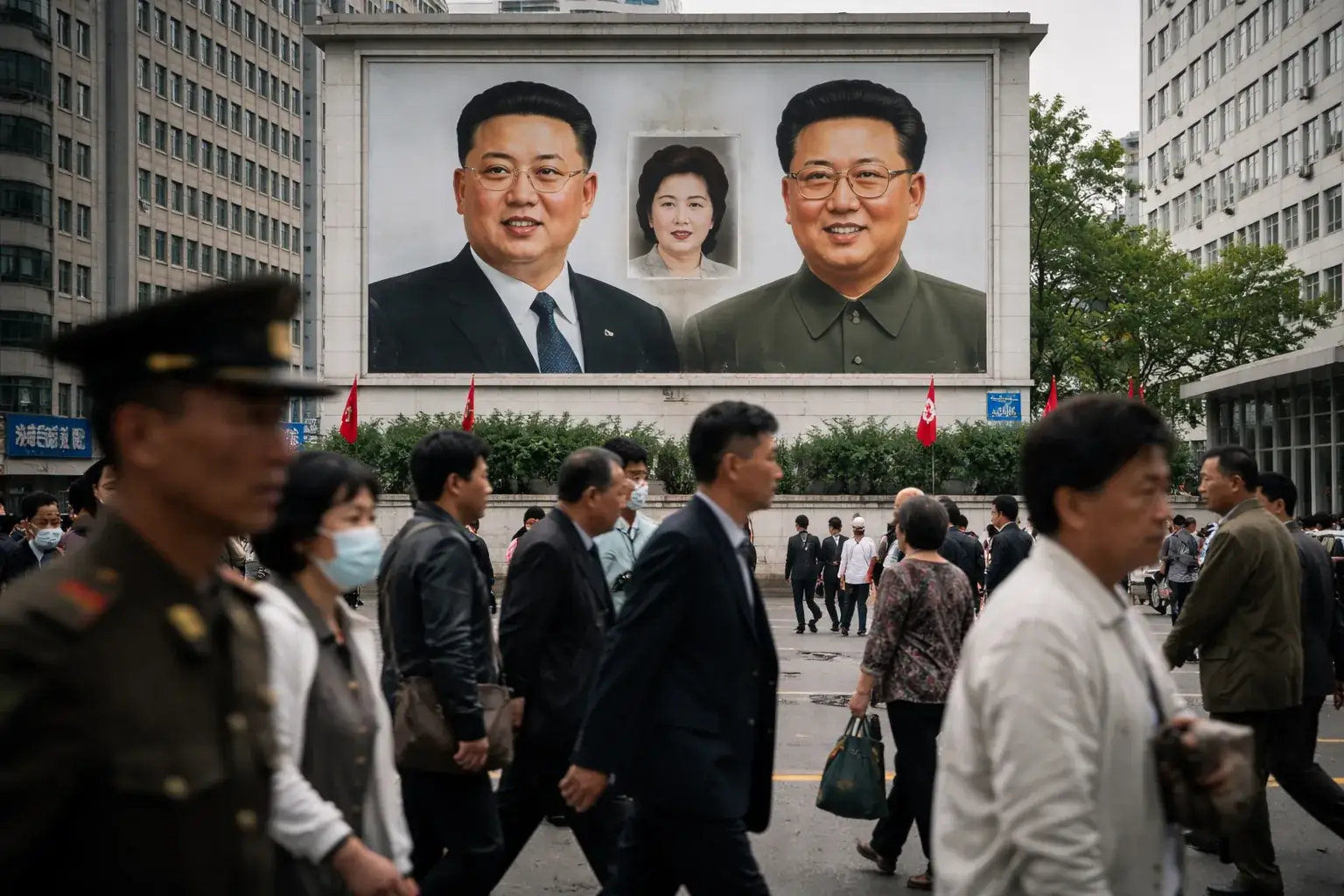
In the decade and a half since assuming power, North Korean leader Kim Jong Un has maintained a conspicuous and absolute silence regarding the identity of his mother. While the regime's internal propaganda heavily emphasizes the Paektu bloodline—a direct hereditary link to the nation's founder Kim Il Sung and the sacred mountain where the Korean people supposedly originated—it has never publicly named Ko Yong Hui. This omission is not accidental; rather, it is a strategic necessity to prevent the collapse of the mythic narrative that sustains the Kim family’s absolute grip on power. Research by biographers and intelligence analysts reveals that Ko’s life story directly contradicts the xenophobic and hierarchical standards of the North Korean songbun system. Consequently, her name and image are effectively purged from the public record to avoid exposing the leader's descent from a group historically viewed with suspicion by the state.
What's new in this update
Recent reports and publications from North Korean experts have shed new light on why the Paektu narrative is so fragile. Ryu Hyun-woo, an exiled North Korean diplomat, explains in his recent writings that Kim Jong Un’s legitimacy rests entirely on this bloodline because he lacked significant military or political achievements prior to his succession in his late 20s. The sensitivity surrounding Ko Yong Hui has intensified as more details emerged about her origins in Osaka, Japan. This revelation is particularly damaging because the regime positions itself as the ultimate defender against Japanese and imperialist influences. By acknowledging a mother born in Japan, Kim would be forced to reconcile his sacred status with a background that the state’s own social classification system labels as contaminated. This ideological friction ensures that Ko remains a non-person in the eyes of the North Korean public.
Key details
Ko Yong Hui was born in Osaka in 1952 to parents who had moved to Japan from Jeju Island during the colonial era. In the early 1960s, her family returned to North Korea as part of a mass resettlement program that lured nearly 93,000 Zainichi Koreans with promises of a socialist utopia. However, upon arrival, these returnees were often treated as outcasts. Known disparagingly as jjaepo, they were placed in the wavering class of the songbun hierarchy—a caste system that determines access to education, housing, and employment. Despite this low social standing, Ko’s beauty and talent as a dancer in the elite Mansudae Art Troupe eventually brought her into the inner circle of Kim Jong Il. She became his favorite consort, yet her status as a jjaepo meant she could never be officially recognized as a queen or the mother of the nation without jeopardizing the dynasty’s claim to pure Korean revolutionary heritage.
Background and context
The Paektu bloodline is the foundation of North Korean political theology. The state claims that Kim Il Sung founded the nation from the slopes of Mount Paektu and that Kim Jong Il was born there under a double rainbow. In reality, historical records suggest Kim Jong Il was born in a Soviet military camp in Russia. By anchoring the family to Mount Paektu, the regime creates a quasi-divine status for the Kims. The songbun system reinforces this by categorizing every citizen based on their family's perceived loyalty to the revolution. Those with ties to Japan or South Korea are automatically relegated to lower tiers, subjected to perpetual state surveillance and denied the privileges afforded to the core class. For Kim Jong Un, his mother’s status in the wavering class represents a profound ideological contradiction that the state propaganda machine is currently unequipped to resolve.
What to watch next
As North Korea continues to tighten its ideological grip and enforce loyalty through the cult of personality, the silence regarding Ko Yong Hui is likely to persist. Any mention of her in state media would require a massive and potentially risky overhaul of the national history books. Analysts will be monitoring whether the regime eventually attempts to re-mythologize her life—perhaps by fabricating a revolutionary backstory that aligns with the Paektu narrative—or if they will simply continue to treat her as a non-person. The risk of her true identity leaking into the general population remains a major concern for the Ministry of State Security, as the realization that the Supreme Leader is the son of a jjaepo could significantly erode the ideological foundations of his rule. The ongoing efforts to maintain this secret highlight the deep-seated anxieties of a regime that relies more on mythological purity than on tangible governance or economic success.
Why it matters
The systematic erasure of Ko Yong Hui illustrates the extreme lengths the Kim dynasty goes to preserve its internal mythology, as acknowledging her background would categorize the Supreme Leader as part of the socially inferior wavering class.
Read next
Follow this story through the topic hub, more world coverage, and the latest updates.
Weekly briefing
Get the week's key developments in one concise email.
Get a fast catch-up on the biggest stories, the context behind them, and the links worth your time.
Cadence
Weekly, for a quick catch-up
Coverage
AI, business, world, security, sports
Format
Clear takeaways and useful context
Request the briefing
Leave your email to open a prepared request and get on the list for the weekly briefing.
About the byline
World correspondent
Leila Haddad covers world affairs, diplomacy, and humanitarian crises, with a focus on how fast-moving international developments affect public policy, conflict response, and cross-border institutions.
Sources and methodology