Internal Files Reveal Shell Ignored Staff Warnings on Nigeria Pipeline Pollution
Documents disclosed in a UK court case show executives were cautioned about the risks of the Nembe Creek Trunk Line as early as 2008.
Primary source: BBC World News. Full source links, newsroom standards, and correction details are below.
Fast summary
Start here
- Internal Shell documents from 2008 show executives were warned about the risks of pumping oil through infrastructure subject to massive theft.
- The Nembe Creek Trunk Line continued operations for years despite technical standards and staff warnings regarding environmental damage.
- A lawsuit brought by the Bille community seeks $1 billion in compensation and cleanup costs for over 100 leaks between 2011 and 2013.
What happened
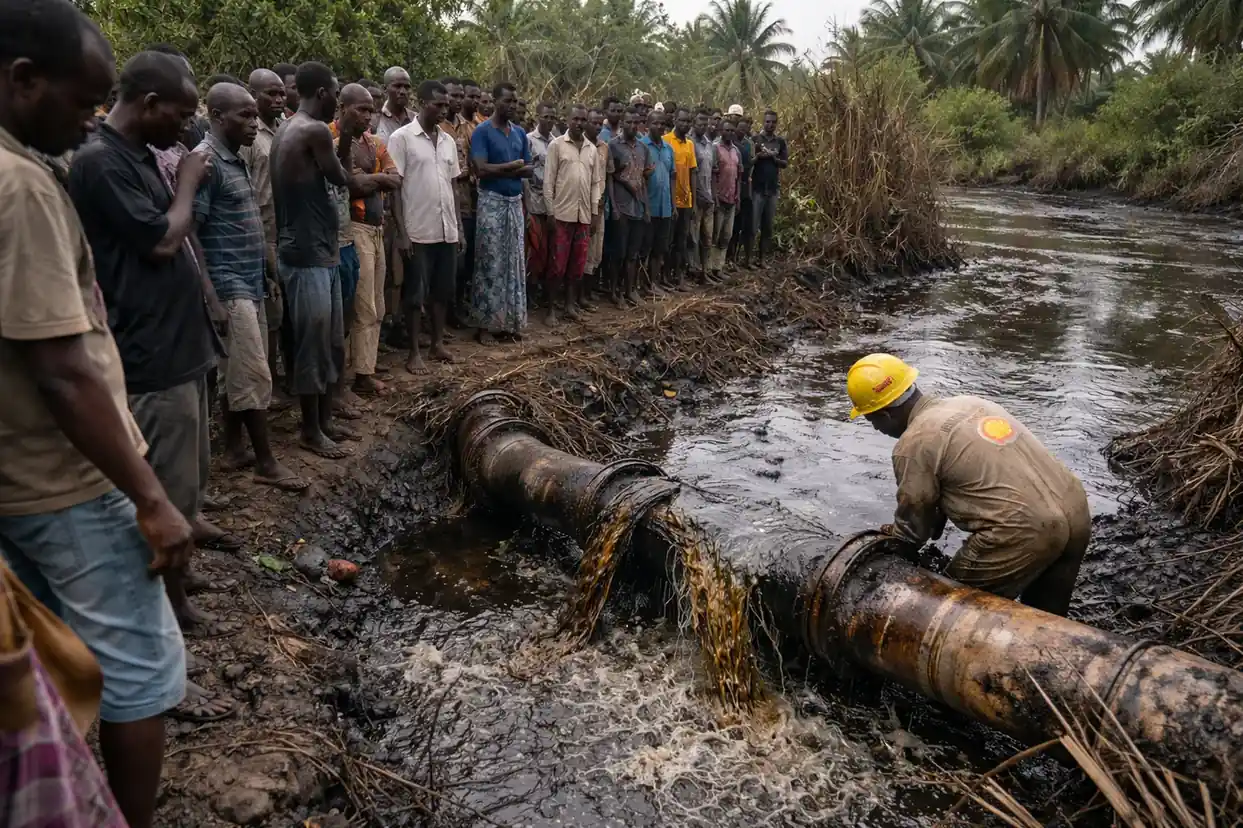
Shell continued to operate the Nembe Creek Trunk Line in Nigeria for several years despite internal warnings that it was causing significant environmental pollution. Internal presentations and emails, obtained by the BBC, show a senior executive raised concerns about the risks of continuing to pump fuel through the infrastructure as early as 2008.
What's new in this update
The disclosure of these internal files occurred during ongoing legal proceedings in the United Kingdom. These documents indicate that Shell was aware of the structural failures and the impact of large-scale theft on the pipeline’s integrity long before the period covered by the current $1 billion lawsuit.
Key details
The 60-mile pipeline was capable of transporting 150,000 barrels of oil daily from inland fields to coastal processing sites. While Shell sold the infrastructure last year, the lawsuit focuses on more than 100 leaks between 2011 and 2013. Residents of the Bille community report that once-thriving fishing grounds have become toxic, leading to severe economic hardship and health concerns.
Background and context
Shell has faced decades of criticism and legal action over its operations in the Niger Delta. The UN estimates that since 1958, at least 13 million barrels of oil have been spilled in the region. Shell maintains that the majority of pollution is the result of bunkering—the illegal tapping of pipelines by criminal gangs—and sabotage rather than corporate negligence.
What to watch next
The UK court will continue to evaluate the liability of Shell’s Nigerian subsidiary versus the parent company's responsibility for local operations. The outcome of the $1 billion claim could set a significant precedent for how multinational corporations are held accountable for environmental damage in foreign jurisdictions.
Why this matters
The disclosure challenges Shell's defense in international courts by suggesting the company prioritized operations over known environmental risks in the Niger Delta.
Reader context
This story belongs to Northstar Herald's International Relations and Human Rights coverage, with related entities including Shell, Nigeria, Niger Delta, Oil Pollution. The report is based on BBC World News source material.
Related coverage
Why it matters
The disclosure challenges Shell's defense in international courts by suggesting the company prioritized operations over known environmental risks in the Niger Delta.
Read next
Follow this story through the topic hub, more world coverage, and the latest updates.
Weekly briefing
Get the week's key developments in one concise email.
Get a fast catch-up on the biggest stories, the context behind them, and the links worth your time.
Cadence
Weekly, for a quick catch-up
Coverage
AI, business, world, security, sports
Format
Clear takeaways and useful context
Request the briefing
Leave your email to open a prepared request and get on the list for the weekly briefing.
Author

The world desk follows geopolitics, humanitarian crises, diplomacy, and major international developments with an emphasis on fast updates and public-interest context.
Sources and methodology