A New Reality in the South China Sea: Rapid Land Reclamation and Military Infrastructure
China has converted the submerged Antelope Reef into a significant landmass in six months, as Vietnam responds with its own massive dredging spree.
Primary source: BBC World News. Full source links and update notes are below.
Fast summary
Start here
- China transformed Antelope Reef into a 6-sq-km island with potential military infrastructure in just six months.
- Vietnam has reclaimed over 11 sq km of land across 20 reefs over the last three years, roughly half of China's total reclaimed area.
- Multiple claimants are shifting from passive monitoring to active land-building to solidify territorial presence.
What happened
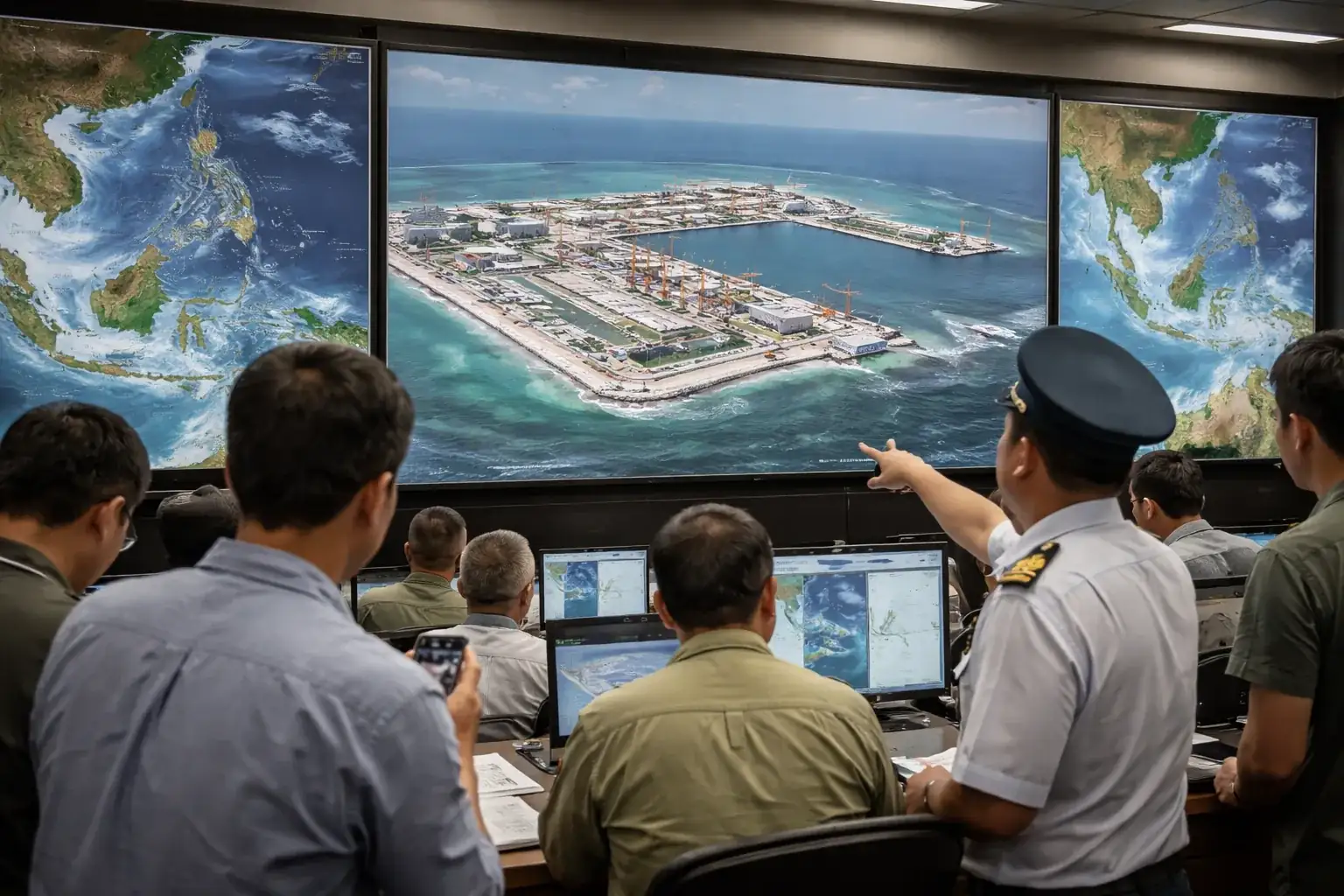
China has completed a massive dredging operation at Antelope Reef in the Paracel Islands, turning a mostly submerged reef into a 6-square-kilometer island of sand and buildings. This transformation occurred within roughly six months, utilizing specialized cutter suction dredgers capable of moving 6,000 cubic meters of material per hour. The speed of the operation has set a new precedent for land reclamation in the disputed region.
What's new in this update
While China's land-building is well-established, Vietnam has dramatically increased its own reclamation efforts to keep pace. Over the past three years, Vietnam has pumped sand around at least 20 reefs, creating 11 new harbors. Vietnam now controls more than 11 square kilometers of reclaimed land, representing a significant acceleration in its strategy to defend its territorial claims through physical occupation.
Key details
Satellite imagery of Antelope Reef shows a crescent-shaped island with a straight-line edge, suggesting the potential for a military-grade runway similar to those China has built on Mischief, Fiery Cross, and Subi reefs. For its part, Vietnam has begun installing military-grade infrastructure, including navigation beacons, on its newly expanded outposts. These developments occur as China's maritime militia and coastguard continue to patrol the 'nine-dash line' to overwhelm rival claimants.
Background and context
The Paracel and Spratly Islands are claimed by China, Vietnam, the Philippines, Taiwan, Malaysia, and Brunei. China took control of the Paracels in 1974 after a battle with South Vietnamese forces. Despite recent high-level diplomatic meetings between Beijing and Hanoi—including a state visit by Vietnam's President To Lam—the physical competition on the water continues. Historically, China has used its dredging fleet to turn reefs into fortified airbases, a tactic other nations are now beginning to emulate.
What to watch next
Observers are monitoring whether the construction at Antelope Reef will lead to a fully operational military base, which would further solidify Chinese control over the Paracel Islands. Additionally, the restrained diplomatic protests from Vietnam suggest a delicate balancing act where both nations maintain outward civility while racing to expand their physical footprints in the South China Sea.
Why it matters
The physical transformation of submerged reefs into habitable islands creates a permanent change in the regional status quo, complicating diplomatic resolutions and increasing the risk of maritime friction.
Read next
Follow this story through the topic hub, more world coverage, and the latest updates.
Weekly briefing
Get the week's key developments in one concise email.
Get a fast catch-up on the biggest stories, the context behind them, and the links worth your time.
Cadence
Weekly, for a quick catch-up
Coverage
AI, business, world, security, sports
Format
Clear takeaways and useful context
Request the briefing
Leave your email to open a prepared request and get on the list for the weekly briefing.
Author
See who assembled this story and follow more of their work.
Sources and methodology