Scientists Confirm El Nino Arrival, Warning of Potential
The US National Oceanic and Atmospheric Administration has declared the onset of the warming phase, which could see global temperatures reach unprecedented

World correspondent
Reports on international affairs, diplomacy, and humanitarian developments with an emphasis on official statements, multilateral institutions, and regional context.
Editorial responsibility: Lead reviewer for geopolitics, international institutions, and crisis coverage
Primary source: BBC World News. Full source links and update notes are below.
Fast summary
Start here
- NOAA officially confirmed El Nino conditions are underway as sea surface temperatures in the tropical Pacific rose above the 0.5C-average threshold.
- There is a 63% chance of a very strong event by early 2027, potentially ranking among the largest El Nino events since records began in 1950.
- Scientists warn the combination of this natural cycle and human-caused climate change could lead to record global heat and economic disruption.
What happened
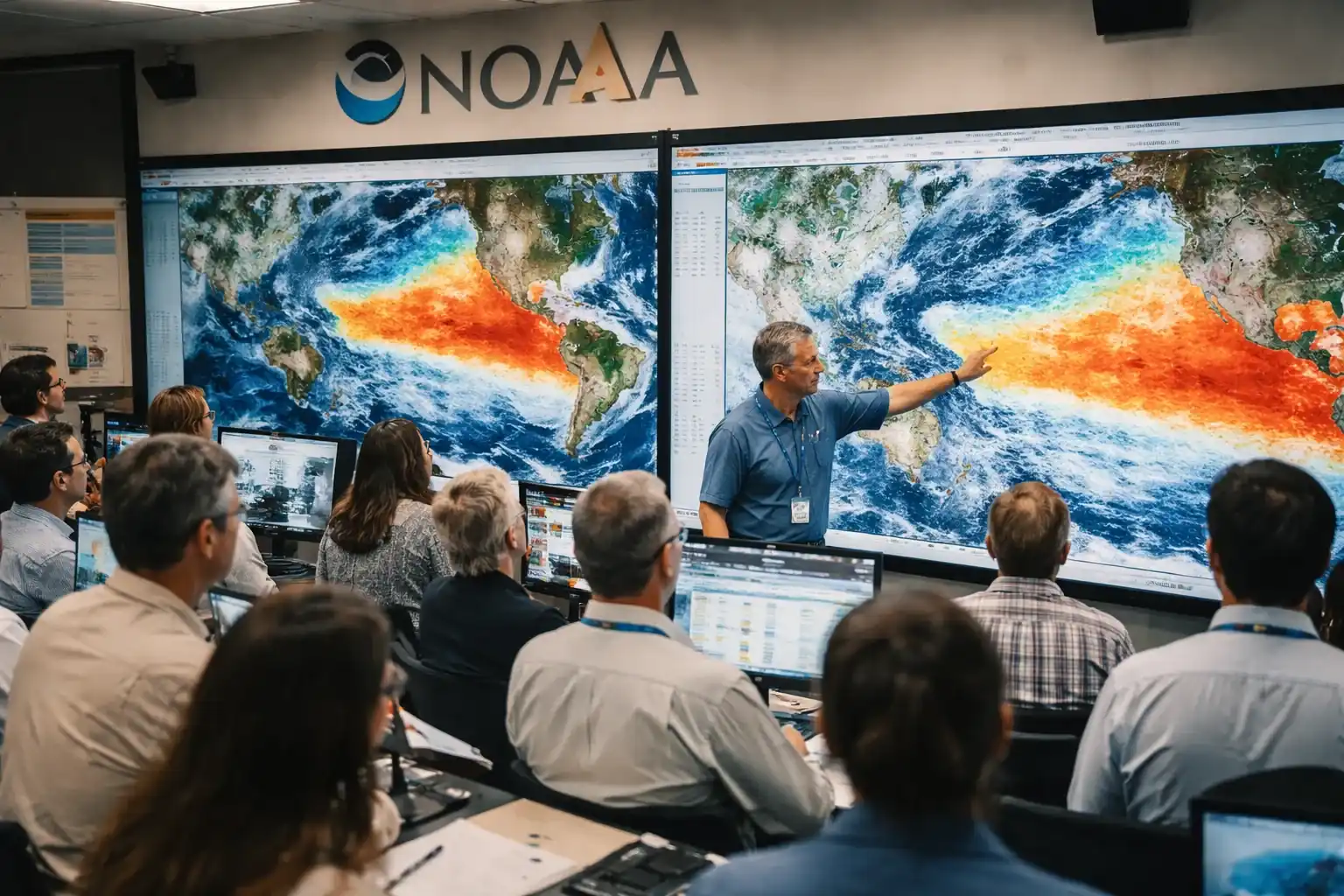
NOAA has officially declared the start of an El Nino pattern in the tropical Pacific, confirming that ocean and atmospheric conditions have shifted into the warming phase that often reshapes weather around the world. The announcement matters because El Nino is not just a technical meteorology milestone. It is a global climate signal that can influence heat, rainfall, drought, agriculture, and disaster risk across multiple continents.
That is why the NOAA El Nino declaration immediately draws attention from scientists, governments, commodity markets, and communities vulnerable to weather extremes.
What El Nino means in practical terms
El Nino refers to a warming of sea surface temperatures in parts of the central and eastern tropical Pacific, accompanied by broader atmospheric changes. When the pattern becomes established, it can shift storm tracks, suppress rainfall in some regions, intensify it in others, and add extra heat to the global climate system. Those effects do not appear identically everywhere, but the pattern is one of the most important drivers of year-to-year global weather variability.
In simpler terms, El Nino changes the background conditions under which regional weather unfolds.
Why NOAA's declaration matters
NOAA does not make this call casually. An official declaration signals that the temperature thresholds and atmospheric indicators have aligned enough for forecasters to say the event is underway, not merely possible. That gives governments, planners, and industries a more concrete basis for adjusting seasonal outlooks and risk assumptions.
This is especially important because weather-sensitive sectors cannot wait until impacts are fully visible. Agriculture, water management, power planning, insurance, and emergency preparedness all benefit from earlier confirmation of major climate patterns.
Why El Nino is especially concerning now
The current concern is amplified by the interaction between El Nino and long-term human-caused warming. On its own, El Nino can raise global temperatures by releasing additional ocean heat into the atmosphere. When layered on top of an already unusually warm planet, that extra boost can help push the world into record-breaking annual heat territory.
That is the core warning behind the current forecasts. The danger is not only that El Nino exists, but that it is arriving in a climate system already running hot.
The forecast risk of a strong event
Models suggesting a meaningful chance of a very strong El Nino make the story more urgent. Strong events can produce sharper disruptions in rainfall patterns, crop conditions, fisheries, heat stress, and disaster management planning. Not every region experiences the same effect, but the aggregate global impact tends to be larger when the event intensifies.
This is why forecasters focus not only on whether El Nino has begun, but on how strong it may become by late 2026 or early 2027.
Why the world watches El Nino so closely
El Nino is one of the rare climate patterns that reliably matters to a wide range of audiences at once. Farmers worry about drought or excess rain. Health systems worry about heat, food insecurity, and disease patterns. Governments worry about infrastructure strain, wildfire conditions, flooding, and economic volatility. Commodity markets worry about harvests and supply chains.
That breadth of consequence is what gives the NOAA announcement global relevance. It is a weather story, a climate story, and an economic story at the same time.
The difference between El Nino and climate change
It is also important to separate the two concepts properly. El Nino is a natural climate pattern that rises and falls in cycles. Climate change is the long-term warming trend driven primarily by greenhouse gas emissions. The reason the combination is so dangerous is that natural variability can now stack on top of a warmer baseline, making extreme outcomes more likely or more damaging.
That means El Nino is not the cause of global warming, but it can temporarily intensify some of its most visible consequences.
What comes next
The next key period will be the months leading into the typical peak window later in the year and into early 2027, when scientists will watch how quickly Pacific temperatures rise and how strongly the atmosphere responds. Regional forecasts will become more important as the global pattern begins to translate into local weather risk.
For now, NOAA's declaration of the official start of El Nino is an early warning with worldwide implications. It tells governments and communities that the climate system has entered a phase that can magnify heat, disrupt rainfall, and strain already fragile systems. In a warming world, even a familiar pattern can become more dangerous than it used to be.
Why it matters
The return of El Nino threatens to push global temperatures beyond critical thresholds, impacting food security, weather stability, and national economies.
Read next
Follow this story through the topic hub, more world coverage, and the latest updates.
Weekly briefing
Get the week's key developments in one concise email.
Get a fast catch-up on the biggest stories, the context behind them, and the links worth your time.
Cadence
Weekly, for a quick catch-up
Coverage
AI, business, world, security, sports
Format
Clear takeaways and useful context
Request the briefing
Leave your email to open a prepared request and get on the list for the weekly briefing.
About the byline
World correspondent
Leila Haddad covers world affairs, diplomacy, and humanitarian crises, with a focus on how fast-moving international developments affect public policy, conflict response, and cross-border institutions.
Sources and methodology