Mass Casualties Feared After Nigerian Air Strike Hits Local Market
Military jets targeting Islamist militants reportedly struck a weekly market on the border of Yobe and Borno states, sparking international condemnation.

World correspondent
Reports on international affairs, diplomacy, and humanitarian developments with an emphasis on official statements, multilateral institutions, and regional context.
Editorial responsibility: Lead reviewer for geopolitics, international institutions, and crisis coverage
Primary source: BBC World News. Full source links and update notes are below.
Fast summary
Start here
- Conflicting reports suggest between 10 and 200 civilians were killed in an air strike at Jilli Market on Saturday.
- The Nigerian Air Force confirmed 'mop-up' operations against terrorists in the area but has not verified striking the civilian hub.
- Amnesty International and local officials described the incident as a reckless use of deadly force that ignores civilian safety.
What happened
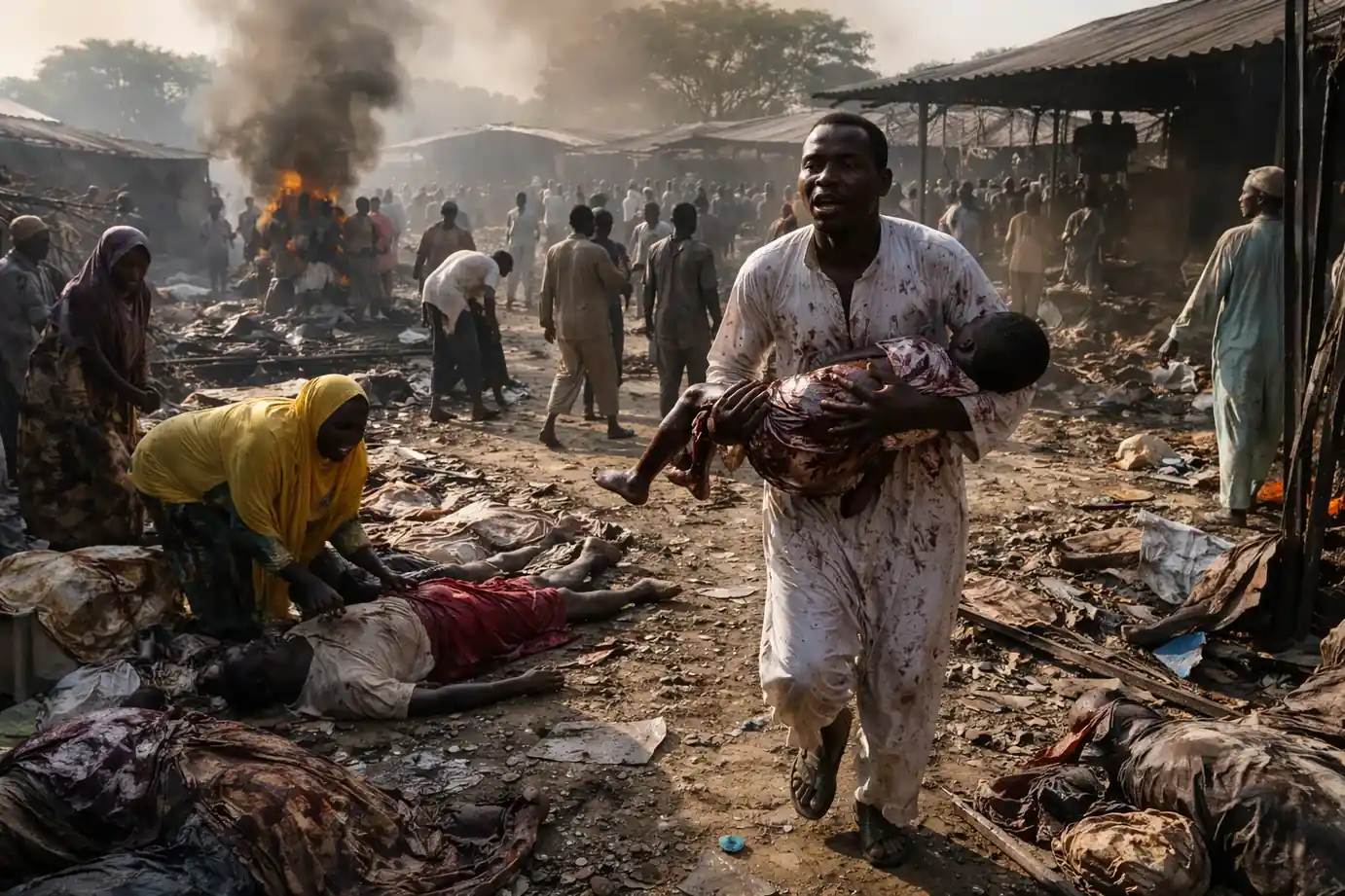
Reports from northeastern Nigeria say a Nigerian military air strike hit a crowded weekly market near the border of Yobe and Borno states, causing mass civilian casualties in an area already scarred by years of insurgency. The strike reportedly targeted Jilli Market during operations against Islamist militants, but witnesses and local officials say traders, shoppers, and residents were among the people killed when bombs or missiles landed in the civilian hub.
The full death toll remains unclear, with different sources offering sharply different estimates ranging from dozens to as many as 200 fatalities. That wide gap reflects a recurring problem in remote conflict zones: access is limited, communications are poor, and official military accounts often emerge more slowly than eyewitness testimony and local administrative reporting. Even without a confirmed final number, the scale of the alleged disaster has triggered condemnation from human rights groups and renewed scrutiny of Nigerian military tactics.
What the Nigerian Air Force says
The Nigerian Air Force confirmed it carried out operations in the Jilli axis, describing the mission as a strike against fleeing or regrouping terrorist elements. However, it has not formally acknowledged hitting the market itself or accepted responsibility for civilian deaths. That wording is important. By confirming a military action in the area while withholding confirmation of civilian casualties, the authorities leave open the possibility of later contesting the location, target identification, or casualty profile.
This kind of ambiguity is familiar in Nigeria's long war against Boko Haram and related armed groups. Security forces often frame air operations as necessary responses to difficult battlefield conditions, while local residents and rights monitors repeatedly accuse the military of poor targeting and inadequate civilian protection.
Why Jilli Market matters
Weekly markets in northeastern Nigeria are not just places of commerce. They are essential community lifelines where people travel from surrounding villages to buy food, sell goods, exchange news, and sustain local economies weakened by conflict and displacement. A strike on such a site can therefore cause harm far beyond the immediate deaths and injuries. It can destroy livelihoods, worsen food insecurity, and deepen the fear civilians already feel about moving through spaces that should be routine parts of daily life.
That broader damage is one reason market strikes are so politically explosive. They do not look like abstract collateral damage. They look like the state failing to distinguish militants from the population it claims to protect.
A wider pattern of civilian harm
The incident also fits a troubling history. Nigeria's air force has previously been accused of bombing villages, camps for displaced people, and other civilian gathering points during anti-insurgency operations. Those episodes have repeatedly raised the same questions: How are targets verified? What intelligence standards are being used? And why do civilian communities continue to appear inside the blast radius of operations meant to eliminate militants?
Human rights groups such as Amnesty International argue that these incidents reveal structural problems rather than isolated mistakes. In their view, the issue is not only whether one strike went wrong, but whether rules of engagement, accountability systems, and intelligence practices are failing repeatedly in ways that make more civilian deaths likely.
Why this is happening in a hard battlefield
To be clear, northeastern Nigeria remains one of the most difficult counterinsurgency environments in Africa. Boko Haram and splinter factions have long used rural terrain, village networks, and fluid movement across state lines to evade security forces. That makes air power attractive to the military because it offers reach into remote areas where ground operations are slower and more dangerous.
But air power is also blunt when intelligence is weak or real-time verification is poor. In a setting where civilians and armed actors may move through the same routes, the margin for error is narrow and the consequences of failure are catastrophic.
What comes next
Pressure is now on Nigerian authorities to conduct a transparent investigation and release a credible account of what happened at Jilli Market. Local emergency agencies and independent groups will try to establish casualty numbers, identify victims, and document the sequence of events. The military will also face renewed calls to explain how it distinguishes militant targets from civilian gatherings in areas where markets remain central to survival.
For families in Yobe and Borno, the issue is more immediate than doctrine or procedure. They need to know whether the state can fight Boko Haram without turning ordinary civilians into victims of its own campaign. If the reports from Jilli Market are confirmed, this air strike will stand as another devastating example of how anti-insurgency warfare can fail the very people it is supposed to defend.
Why it matters
This incident underscores the ongoing risk to civilians during military operations against insurgent groups and highlights a recurring pattern of accidental strikes in northeastern Nigeria.
Read next
Follow this story through the topic hub, more world coverage, and the latest updates.
Weekly briefing
Get the week's key developments in one concise email.
Get a fast catch-up on the biggest stories, the context behind them, and the links worth your time.
Cadence
Weekly, for a quick catch-up
Coverage
AI, business, world, security, sports
Format
Clear takeaways and useful context
Request the briefing
Leave your email to open a prepared request and get on the list for the weekly briefing.
About the byline
World correspondent
Leila Haddad covers world affairs, diplomacy, and humanitarian crises, with a focus on how fast-moving international developments affect public policy, conflict response, and cross-border institutions.
Sources and methodology