Nigeria Demands Answers From South Africa After Fatal Anti-Immigrant
The Nigerian government has expressed profound concern over the recent killings of its citizens and the rise of organized anti-foreigner sentiment.

World correspondent
Reports on international affairs, diplomacy, and humanitarian developments with an emphasis on official statements, multilateral institutions, and regional context.
Editorial responsibility: Lead reviewer for geopolitics, international institutions, and crisis coverage
Primary source: BBC World News. Full source links and update notes are below.
Fast summary
Start here
- Nigeria summoned South Africa's acting High Commissioner for a formal meeting scheduled for Monday.
- At least six foreign nationals, including two Nigerians and four Ethiopians, have been killed in recent weeks.
- Anti-immigrant groups have been targeting foreign-owned businesses and demanding identity papers in cities like Pretoria and Johannesburg.
What happened
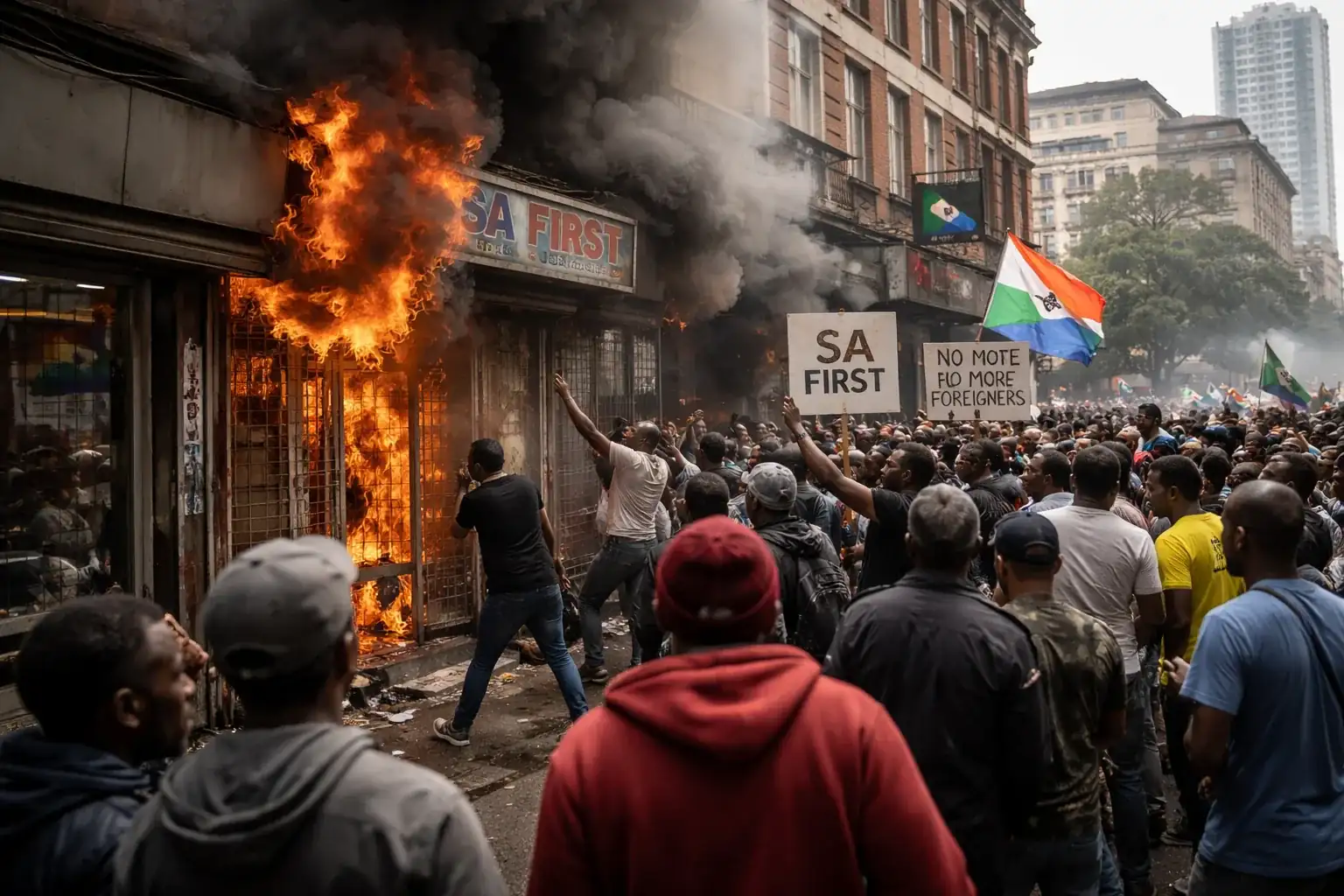
Nigeria has formally summoned South Africa's acting High Commissioner after a wave of anti-immigrant violence and xenophobic attacks in South African cities left foreign nationals dead and many others living in fear. The diplomatic move signals that Abuja no longer sees the issue as a matter of isolated street unrest. It is treating the attacks on Nigerians and other African migrants as a bilateral crisis serious enough to affect relations between two of the continent's most influential states.
The immediate trigger was a series of attacks and intimidation campaigns in places such as Johannesburg and Pretoria, where anti-immigrant groups reportedly confronted foreigners, threatened businesses, and demanded identity papers. Nigerian officials said at least two Nigerians were among those killed, alongside Ethiopian nationals, and warned that their citizens' safety had become a pressing diplomatic concern.
Why Nigeria's response matters
Summoning an envoy is one of the clearest formal signals a government can send short of more severe diplomatic retaliation. It allows Nigeria to register protest directly, demand explanations, and place South African authorities on notice that the problem is being monitored at the highest levels. The move also serves a domestic purpose. Nigerian leaders need to show citizens that attacks abroad, especially those seen as ethnically or nationally targeted, will not be met with silence.
That matters because anti-foreigner violence in South Africa has repeatedly triggered outrage across the African continent. Each new episode revives broader arguments about pan-African solidarity, economic inequality, migration pressure, and whether African states are doing enough to protect fellow Africans living and working beyond their borders.
The roots of the violence
South Africa has long struggled with periodic waves of xenophobia directed at migrants from elsewhere in Africa. Foreigners are often blamed for unemployment, crime, and pressure on public services, even when those claims are exaggerated or unsupported. In times of economic stress and political dissatisfaction, migrant communities can become easy targets for frustration that is really about deeper structural problems.
This is why the attacks are not simply a policing issue. They reflect wider tensions around poverty, state capacity, political rhetoric, and the uneven distribution of opportunity in South Africa's cities. When organized groups begin patrolling neighborhoods, targeting foreign-owned businesses, or demanding documents from passersby, the line between protest and vigilantism becomes dangerously thin.
Why this affects Africa's two biggest economies
Nigeria and South Africa have one of the most important bilateral relationships on the continent. They are major economic powers, diplomatic players, and symbolic centers of regional influence. Tension between them can affect trade, investment confidence, student mobility, and broader cooperation inside African Union frameworks.
That is what makes xenophobic attacks more than a domestic South African issue. When Nigerians are killed or threatened, Abuja is compelled to respond not only to protect its citizens but also to defend its standing. South Africa, meanwhile, faces the challenge of containing internal unrest without allowing repeated episodes of violence to erode its reputation as a continental leader.
The pressure on South African authorities
President Cyril Ramaphosa has condemned such attacks in the past, but condemnation alone rarely satisfies governments whose citizens are being targeted. Nigeria and other African states will be looking for tangible action: arrests, stronger policing against vigilante groups, public guarantees for migrant safety, and a clearer political message that anti-immigrant violence will not be tolerated.
The recurring problem for South Africa is credibility. Each outbreak makes it harder for neighbors to believe that the authorities have the situation fully under control. Even if national leaders reject xenophobia publicly, local fear persists when businesses are threatened and migrants feel abandoned in the neighborhoods where they live and work.
What comes next
The immediate focus will be the meeting between Nigerian officials and the South African envoy, along with any public commitments that emerge afterward. If South Africa moves quickly to calm the situation and reassure affected communities, the diplomatic damage may be contained. If attacks continue, pressure could build for stronger responses, including travel advisories, economic friction, or retaliatory public pressure inside Nigeria.
At its core, this story is about more than one diplomatic summons. It is about whether African governments can protect migrant communities from political scapegoating and mob violence without allowing those attacks to poison relations across the continent. Nigeria's message is clear: xenophobic attacks in South Africa are no longer just local unrest. They are a continental issue with diplomatic consequences.
Why it matters
The escalating violence and diplomatic friction threaten the relationship between Africa's two largest economies and signal rising social instability regarding migration.
Read next
Follow this story through the topic hub, more world coverage, and the latest updates.
Weekly briefing
Get the week's key developments in one concise email.
Get a fast catch-up on the biggest stories, the context behind them, and the links worth your time.
Cadence
Weekly, for a quick catch-up
Coverage
AI, business, world, security, sports
Format
Clear takeaways and useful context
Request the briefing
Leave your email to open a prepared request and get on the list for the weekly briefing.
About the byline
World correspondent
Leila Haddad covers world affairs, diplomacy, and humanitarian crises, with a focus on how fast-moving international developments affect public policy, conflict response, and cross-border institutions.
Sources and methodology