Over 1,000 Held on Cruise Ship in France Following Gastrointestinal
Passengers on the Ambition are being held in Bordeaux as regional health officials investigate 49 cases of illness and conduct medical testing.

World correspondent
Reports on international affairs, diplomacy, and humanitarian developments with an emphasis on official statements, multilateral institutions, and regional context.
Editorial responsibility: Lead reviewer for geopolitics, international institutions, and crisis coverage
Primary source: BBC World News. Full source links and update notes are below.
Fast summary
Start here
- Forty-nine people onboard the Ambition cruise ship have reported symptoms consistent with gastrointestinal illness.
- French health authorities in Bordeaux have suspended all passenger disembarkations as a precautionary measure to contain the spread.
- A 92-year-old passenger died on board Sunday, though the cruise operator states he did not report symptoms related to the outbreak.
What happened
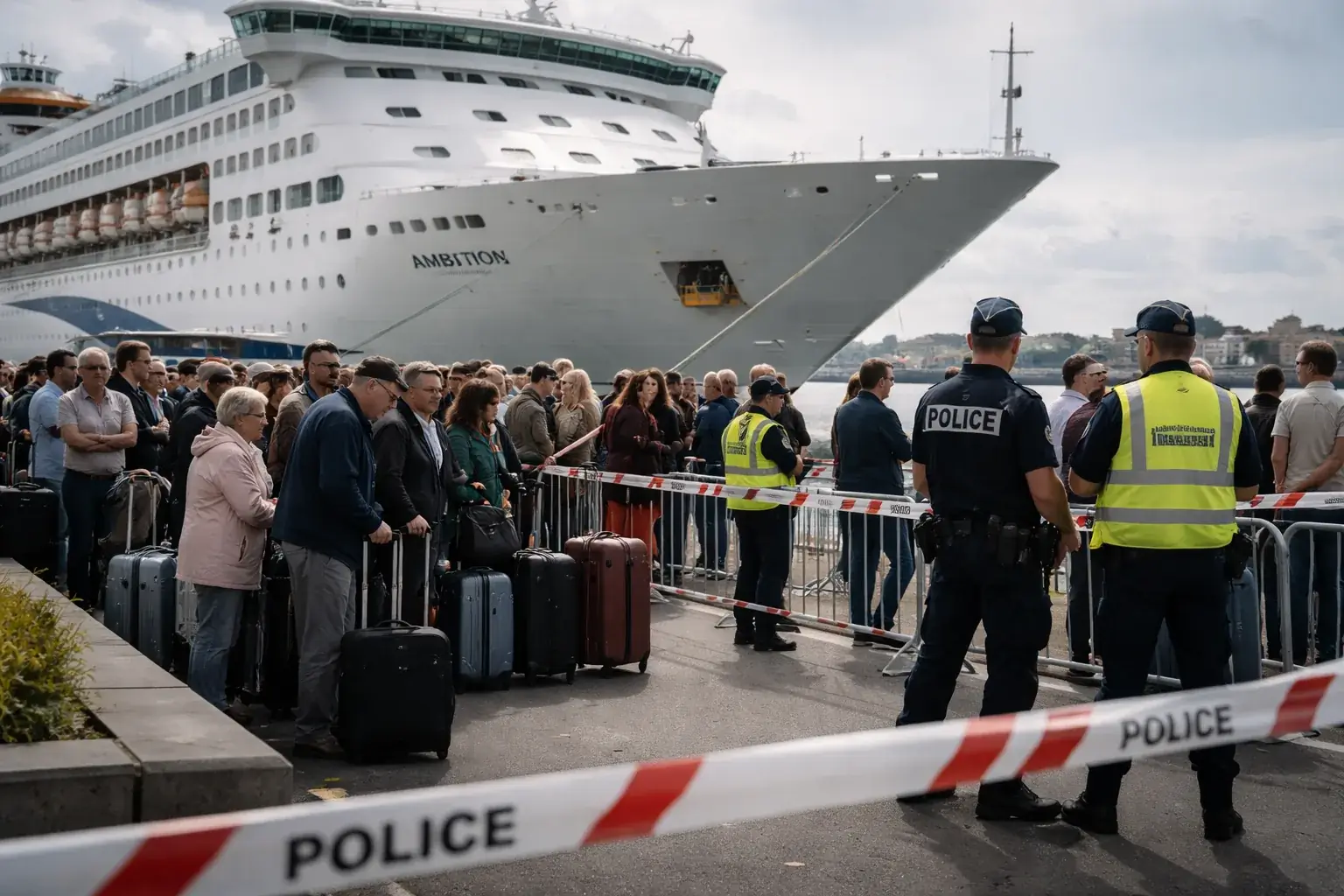
French health authorities in Bordeaux have blocked more than 1,000 passengers from leaving the cruise ship Ambition after a gastrointestinal illness outbreak sickened dozens of people on board. The vessel, operated by Ambassador Cruise Line, was held while medical teams investigated the cluster, collected biological samples, and assessed whether it was safe to allow passengers into the port city.
Cruise ships are uniquely vulnerable to this kind of event. Large numbers of people share dining areas, corridors, cabins, and sanitation systems in a confined environment, which means gastrointestinal illnesses can spread quickly once an outbreak begins. That is why authorities chose to suspend disembarkation rather than treat the illnesses as a routine onboard medical issue.
Why the Ambition outbreak triggered such a strong response
Officials said 49 people, including passengers and at least one crew member, had reported symptoms consistent with gastroenteritis. On the surface, that may sound like a modest number compared with the full population of the ship, but public health responses on cruise vessels are not based only on current case totals. They are based on how rapidly symptoms may spread and how difficult it can be to contain gastrointestinal infections once they take hold in a closed travel environment.
The decision to keep passengers aboard also protects the wider public. If the illness were caused by norovirus or a similar fast-spreading pathogen, immediate disembarkation could potentially export the outbreak into hotels, transport systems, and local healthcare settings before lab confirmation was complete.
The public health challenge on cruise ships
Cruise ship outbreaks are operationally difficult because the ship is both a transport system and a temporary community. People eat from shared service channels, attend group activities, and frequently touch the same railings, elevators, and facilities. When vomiting or diarrheal illness appears, even a small cluster can become a serious management problem very quickly.
That is why cruise operators typically move to enhanced cleaning, isolation protocols, food-service adjustments, and medical monitoring as soon as an outbreak is suspected. In the case of the Ambition, the line said passengers with symptoms were isolated and disinfection measures were intensified, but the final decision over disembarkation rested with French health authorities.
The Bordeaux dimension
Bordeaux's regional health agency sent medical teams to the ship and began coordinating testing through Bordeaux University Hospital. This is a reminder that once a cruise ship docks during an outbreak, the event immediately becomes a land-based public health matter as well. Port authorities, hospitals, sanitation teams, and regional health officials all have a stake in determining whether the vessel is safe to interface with the local population.
That is especially true when passengers have embarked from multiple places and may have carried infection chains aboard at different points in the voyage. The Ambition had taken on passengers in Belfast and Liverpool, and the operator said illness reports rose after the Liverpool boarding.
The death on board
The death of a 92-year-old passenger added further attention, even though the cruise operator said the individual had not reported symptoms related to the outbreak. In these situations, public concern often expands quickly when any onboard death occurs near a health emergency, whether or not the two events are connected. That is why authorities and operators alike are usually careful to separate confirmed facts from assumption while investigations continue.
The company also clarified that the gastrointestinal illness on Ambition had no connection to the hantavirus outbreak reported on a different ship, an important distinction given how easily separate cruise-related health stories can become conflated.
What comes next
The next step depends on laboratory results and on whether additional cases appear. If tests identify a common source or a typical cruise-ship gastrointestinal pathogen, authorities can decide when the health risk has fallen enough to permit disembarkation. If cases continue rising, restrictions could last longer and the operational disruption would grow.
For now, the outbreak on the Ambition shows how quickly a cruise voyage can turn into a controlled public health operation. More than 1,000 passengers in Bordeaux were not held because officials knew the worst had happened. They were held because with gastrointestinal illness on a cruise ship, waiting a few hours for evidence can be the difference between a contained outbreak and a much wider one.
Why it matters
The incident highlights the logistical and health challenges of managing contagious outbreaks within the enclosed and highly mobile environments of international cruise travel.
Read next
Follow this story through the topic hub, more world coverage, and the latest updates.
Weekly briefing
Get the week's key developments in one concise email.
Get a fast catch-up on the biggest stories, the context behind them, and the links worth your time.
Cadence
Weekly, for a quick catch-up
Coverage
AI, business, world, security, sports
Format
Clear takeaways and useful context
Request the briefing
Leave your email to open a prepared request and get on the list for the weekly briefing.
About the byline
World correspondent
Leila Haddad covers world affairs, diplomacy, and humanitarian crises, with a focus on how fast-moving international developments affect public policy, conflict response, and cross-border institutions.
Sources and methodology