Australia Confirms First Diphtheria Death Since 2018 as Outbreak Intensifies
A man in the Northern Territory died from the vaccine-preventable disease, marking a grim milestone in the nation's largest outbreak since 1991.
Primary source: BBC World News. Full source links, newsroom standards, and correction details are below.
Fast summary
Start here
- Autopsy results confirmed a man died of diphtheria in April at Royal Darwin Hospital, the first such death in Australia in six years.
- Australia has recorded 245 cases this year, the highest annual total since 1991, with the majority concentrated in remote Indigenous communities.
- Chief Medical Officer Michael Kidd has declared the outbreak a communicable disease incident of national significance, triggering a $7.2m federal funding package.
What happened
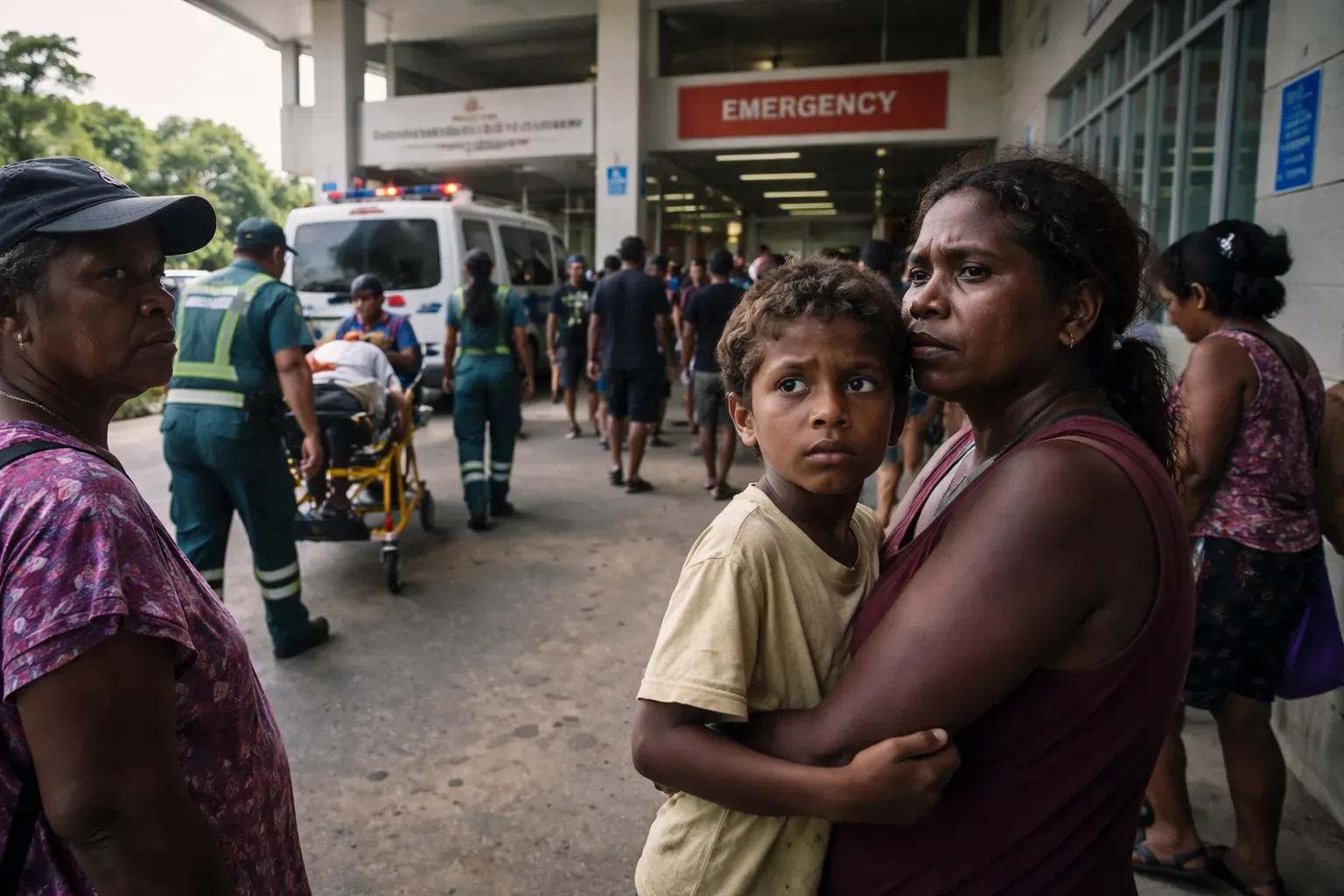
Health officials in the Northern Territory confirmed on Tuesday that a man died from diphtheria in April, the first fatality from the disease recorded in Australia since 2018. The confirmation comes as the country grapples with 245 cases so far this year, making it the most significant outbreak of the disease in Australia since 1991.
What's new in this update
Northern Territory Health Minister Steve Edgington announced that autopsy results from an overseas laboratory recently verified that diphtheria was the cause of the April death. In response to the scale of the crisis, Australia's Chief Medical Officer Prof Michael Kidd has officially declared the outbreak a communicable disease incident of national significance.
Key details
The outbreak is primarily concentrated in the Northern Territory, which accounts for 60% of cases, followed by Western Australia with approximately 36%. Since late March, authorities have administered 10,407 vaccinations in a massive push to contain the spread. The federal government has committed AU$7.2 million to provide additional resources, staff, and medical supplies to the affected regions.
Background and context
Diphtheria is a bacterial infection that can present in respiratory or cutaneous (skin) forms. While respiratory cases can lead to severe breathing difficulties and are often life-threatening, cutaneous cases typically result in slow-healing skin ulcers. The current surge began in late 2025, and in March, Western Australia recorded its first respiratory cases of the disease in more than 50 years.
What to watch next
Health officials report that the rate of new infections has begun to fall following the ramped-up vaccination efforts. Pop-up clinics remain active in Darwin, Katherine, and Alice Springs to encourage booster shots among teenagers and adults. Authorities are continuing to monitor remote communities to ensure that the AU$7.2 million package effectively addresses logistical hurdles in vaccine delivery.
Why this matters
This outbreak represents a significant resurgence of a disease largely controlled by vaccination for decades, revealing critical gaps in immunization coverage among vulnerable and remote populations.
Reader context
This story belongs to Northstar Herald's International Relations coverage, with related entities including Australia, Diphtheria, Vaccination, Public Health. The report is based on BBC World News source material.
Related coverage
Why it matters
This outbreak represents a significant resurgence of a disease largely controlled by vaccination for decades, revealing critical gaps in immunization coverage among vulnerable and remote populations.
Read next
Follow this story through the topic hub, more world coverage, and the latest updates.
Weekly briefing
Get the week's key developments in one concise email.
Get a fast catch-up on the biggest stories, the context behind them, and the links worth your time.
Cadence
Weekly, for a quick catch-up
Coverage
AI, business, world, security, sports
Format
Clear takeaways and useful context
Request the briefing
Leave your email to open a prepared request and get on the list for the weekly briefing.
Author

The world desk follows geopolitics, humanitarian crises, diplomacy, and major international developments with an emphasis on fast updates and public-interest context.
Sources and methodology