Le Pen Reclaims 2027 Candidacy, Sidelining Protege Jordan Bardella
Marine Le Pen confirms her 2027 presidential bid, sidelining protege Jordan Bardella despite his rise. She proposes a winning ticket with him as PM.

World correspondent
Reports on international affairs, diplomacy, and humanitarian developments with an emphasis on official statements, multilateral institutions, and regional context.
Editorial responsibility: Lead reviewer for geopolitics, international institutions, and crisis coverage
Primary source: BBC World News. Full source links and update notes are below.
Fast summary
Start here
- Marine Le Pen has officially announced her intention to run for the presidency in 2027, reclaiming the party's lead role from Jordan Bardella.
- A Paris court recently ended a ban on Le Pen holding public office, though she is required to wear an electronic monitoring tag for one year.
- Bardella, the party's president, has publicly accepted the secondary role of potential prime minister, though observers note his muted reaction.
What happened
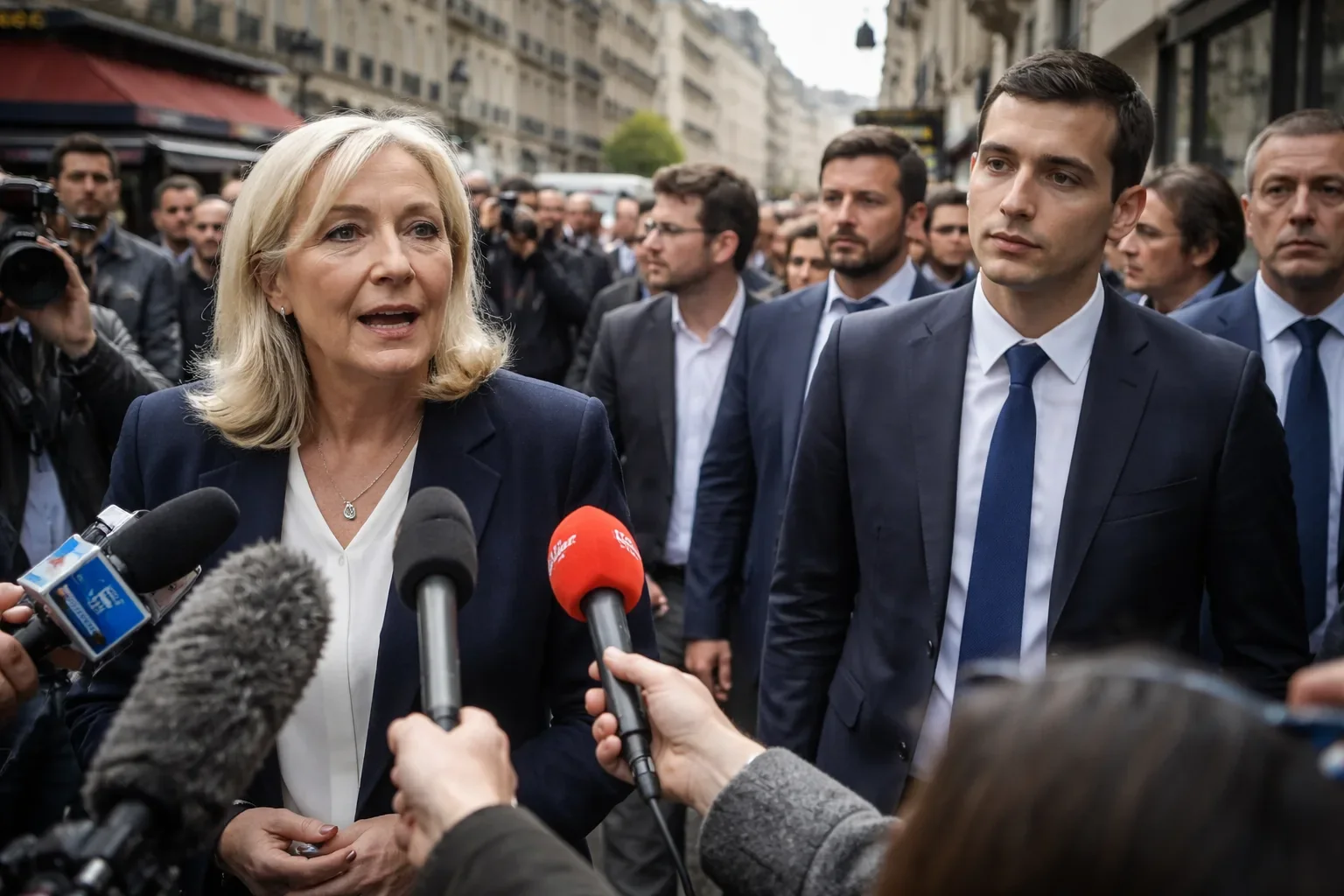
Marine Le Pen has officially announced her intention to run for the French presidency in 2027, putting an end to months of speculation that her protege, Jordan Bardella, might lead the National Rally ticket. During a high-profile primetime television appearance, Le Pen confirmed her candidacy following a crucial court ruling that cleared her to hold public office. This move dramatically shifts the political trajectory for Bardella, the 30-year-old party president who had been increasingly viewed by the public and international observers as a viable successor to Le Pen. While the two presented a coordinated winning ticket concept—with Le Pen serving as president and Bardella as prime minister—the actual timeline for such an arrangement remains legally and politically complex under France's current fifth republic structure. The announcement reestablishes the hierarchy within France’s most prominent hard-right party as it prepares for the next major electoral cycle.
What's new in this update
The latest development hinges on a Paris court decision that removed a specific ban on Marine Le Pen holding public office, which had originated from a long-running legal battle involving a fake jobs scam and party funds. While the court still ordered Le Pen to wear an electronic monitoring tag for one year, the ruling crucially preserves her eligibility for the 2027 race. Jordan Bardella’s reaction to this sudden shift has been described by many political analysts as uncharacteristically muted and stoic. During a recent campaign event in the village of La Flèche, the younger politician appeared visibly strained and provided flat, rehearsed responses to reporters’ questions regarding his potential disappointment. Although he continues to maintain publicly that he is glad Le Pen is representing the party, his body language suggests a significant cooling of the meteoric momentum that has defined his political career.
Key details
Bardella's rise within the National Rally has been exceptionally rapid since he first joined the National Front as a 17-year-old in 2012. Often portrayed as a digital-native success story from the outskirts of Paris, his personal narrative has recently come under closer scrutiny. This includes details about his father’s more affluent background and business in Montmorency, which contrasts with the hard-luck story often presented to the electorate. Before Le Pen's announcement, Bardella had begun adopting an increasingly statesman-like persona, which included a high-profile visit to Poland last month to meet with international party allies and tour the eastern border. These moves were widely interpreted as early preparations for a personal presidential run. However, Le Pen’s decision to reclaim the top spot leverages her experience from three previous presidential campaigns and her current strong standing in national polls.
Background and context
The relationship between Le Pen and Bardella has long been viewed as a master-protege dynamic, with Le Pen molding Bardella to modernize the National Rally's image and appeal to younger, tech-savvy voters. Bardella's proficiency with social media platforms and streaming services—honed during his teenage years as a gamer and YouTuber—allowed him to connect with demographics that traditionally shunned the party. Despite his individual popularity, the National Rally remains deeply tied to the Le Pen family legacy and name. The party’s long-term strategy has involved a process of de-demonization to move away from the extremist associations of its founder, Jean-Marie Le Pen. By maintaining control of the candidacy, Marine Le Pen ensures that the party's strategic direction remains firmly under her guidance, even as Bardella’s popularity provides a vital bridge to a broader and younger French electorate.
What to watch next
The primary challenge for the proposed Le Pen-Bardella ticket is the inherent disconnect between the French presidential and parliamentary election calendars. France's next scheduled parliamentary elections are not due until 2029, meaning that even if Le Pen were to win the presidency in 2027, she would not be able to immediately appoint Bardella as prime minister unless she successfully triggers a snap election. Observers will be closely watching for any signs of friction or factionalism within the party as Bardella navigates several years of serving as a deputy rather than the primary leader. Additionally, the optics of Le Pen’s performance while wearing an electronic monitoring tag—a constant visual reminder of her previous legal challenges—will be a unique and potentially volatile factor in her 2027 campaign narrative and her overall standing with the French voting public.
Why it matters
This leadership decision stabilizes the National Rally under its veteran figurehead but risks internal tension with the younger, increasingly popular Bardella.
Read next
Follow this story through the topic hub, more world coverage, and the latest updates.
Weekly briefing
Get the week's key developments in one concise email.
Get a fast catch-up on the biggest stories, the context behind them, and the links worth your time.
Cadence
Weekly, for a quick catch-up
Coverage
AI, business, world, security, sports
Format
Clear takeaways and useful context
Request the briefing
Leave your email to open a prepared request and get on the list for the weekly briefing.
About the byline
World correspondent
Leila Haddad covers world affairs, diplomacy, and humanitarian crises, with a focus on how fast-moving international developments affect public policy, conflict response, and cross-border institutions.
Sources and methodology