Restoration of Milan’s ‘Lucky’ Bull Mosaic Sparks Online Debate Over ‘Missing’ Parts
Local officials clarify that repair work on the famous mosaic at Galleria Vittorio Emanuele II is ongoing after social media users questioned the animal's appearance.
Primary source: BBC World News. Full source links, newsroom standards, and correction details are below.
Fast summary
Start here
- Tourists grinding heels for luck created a crater in the 19th-century mosaic's central figure.
- Social media users reacted with confusion to a 'restored' photo, claiming the bull's testicles had been erased.
- Milan's city council maintains the project is incomplete and the new pink marble will settle into a more natural tone.
What happened
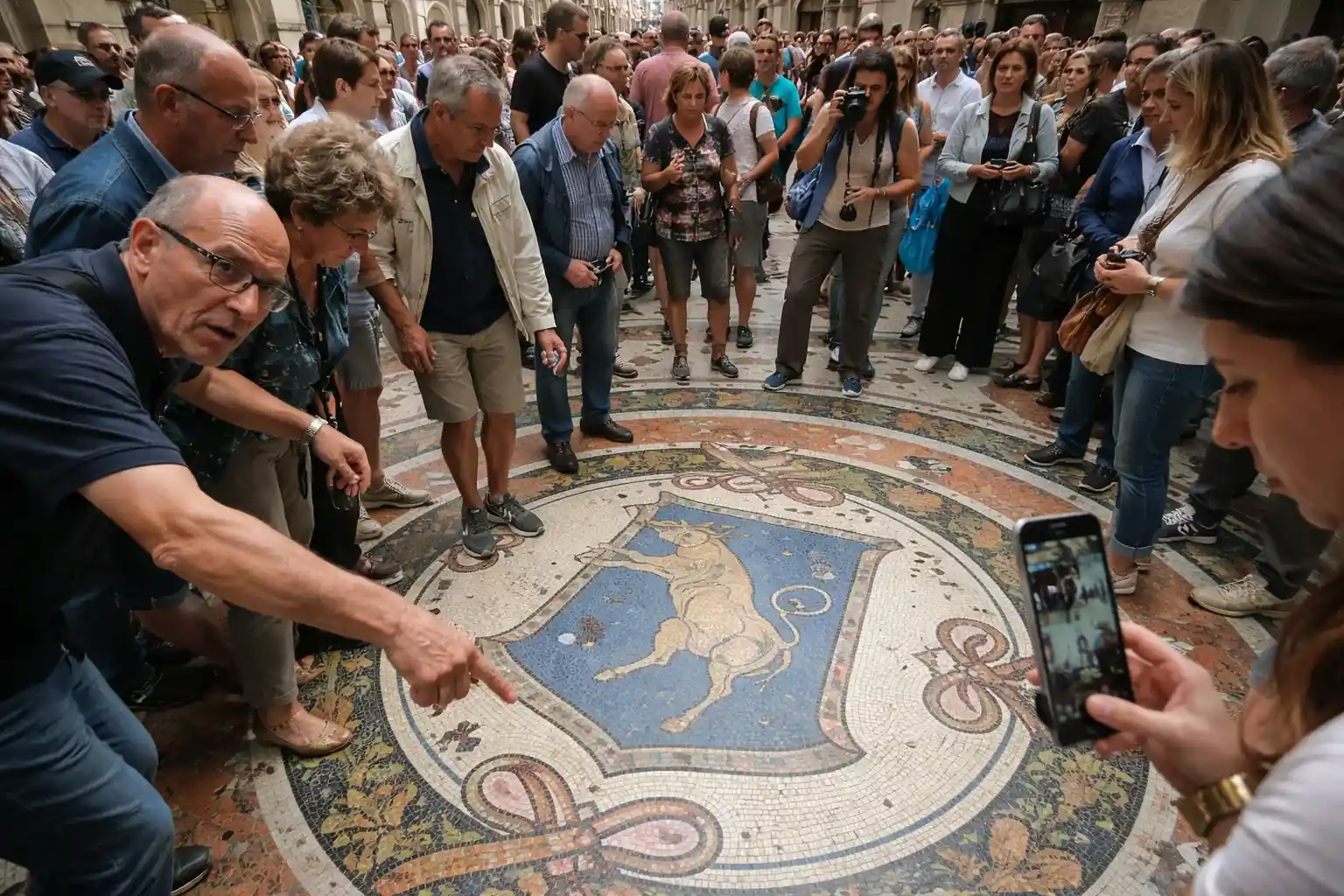
Restoration work on the famous bull mosaic in Milan's Galleria Vittorio Emanuele II has drawn public scrutiny after photos of the repair appeared to show significant changes to the animal's anatomy. The mosaic, a representation of the city of Turin, has long been a site for a local 'good luck' tradition involving tourists spinning their heels on the bull's private parts, which eventually caused a small crater to form in the marble.
What's new in this update
Following a social media post by Milan councillor Marco Granelli claiming the mosaic was 'completely restored,' residents and online observers reacted with bemusement. Many argued that the bull’s lucky-charm testicles appeared to have been erased or 'castrated' by the new stonework. Officials have since clarified that the work is not yet fully finished and the mosaic remains partially covered while the materials settle.
Key details
Artisan Gianluca Galli is conducting the restoration by hand-cutting new pieces of stone. The city council explained that they chose pink marble for the repair as it was considered the closest material to the original 19th-century appearance. Officials noted that a previous restoration in 2017 used a darker marble that was less historically accurate than the current material.
Background and context
The beige and blue mosaic represents Turin, the first capital of Italy, and is located in the historic Galleria Vittorio Emanuele II arcade. The tradition of spinning clockwise on the bull's testicles three times is believed to bring good fortune and ensure a return visit to Milan. This repetitive friction from thousands of visitors necessitated the current intervention to repair the structural damage to the floor.
What to watch next
The restoration site will remain under observation to allow the colors of the new tiles to settle into their final shade. Master restorer Galli stated that he will continue the project under the 'watchful eye' of the city council, though he has not yet received any formal objections to his work from official heritage bodies.
Why this matters
The mosaic is a significant cultural landmark and tourist attraction, illustrating the tension between preserving historic art and accommodating popular traditions.
Reader context
This story belongs to Northstar Herald's International Relations coverage, with related entities including Milan, Italy, Art Restoration, Galleria Vittorio Emanuele II. The report is based on BBC World News source material.
Related coverage
Why it matters
The mosaic is a significant cultural landmark and tourist attraction, illustrating the tension between preserving historic art and accommodating popular traditions.
Read next
Follow this story through the topic hub, more world coverage, and the latest updates.
Weekly briefing
Get the week's key developments in one concise email.
Get a fast catch-up on the biggest stories, the context behind them, and the links worth your time.
Cadence
Weekly, for a quick catch-up
Coverage
AI, business, world, security, sports
Format
Clear takeaways and useful context
Request the briefing
Leave your email to open a prepared request and get on the list for the weekly briefing.
Author

The world desk follows geopolitics, humanitarian crises, diplomacy, and major international developments with an emphasis on fast updates and public-interest context.
Sources and methodology