Satellite Imagery Reveals Damage to 20 US Military Sites in Iranian Attacks
Independent analysis suggests Tehran's strikes are more precise and extensive than previously acknowledged, targeting billion-dollar defense systems across eight countries.
Primary source: BBC World News. Full source links, newsroom standards, and correction details are below.
Fast summary
Start here
- Satellite imagery confirms damage to 20 US or shared military facilities in Saudi Arabia, UAE, Qatar, Kuwait, Iraq, Jordan, Bahrain, and Oman.
- Targeted hardware includes three state-of-the-art THAAD anti-ballistic missile batteries and an E-3 Sentry surveillance plane.
- The Pentagon has requested satellite providers restrict new images of the region, citing operational security as damage costs mount.
What happened
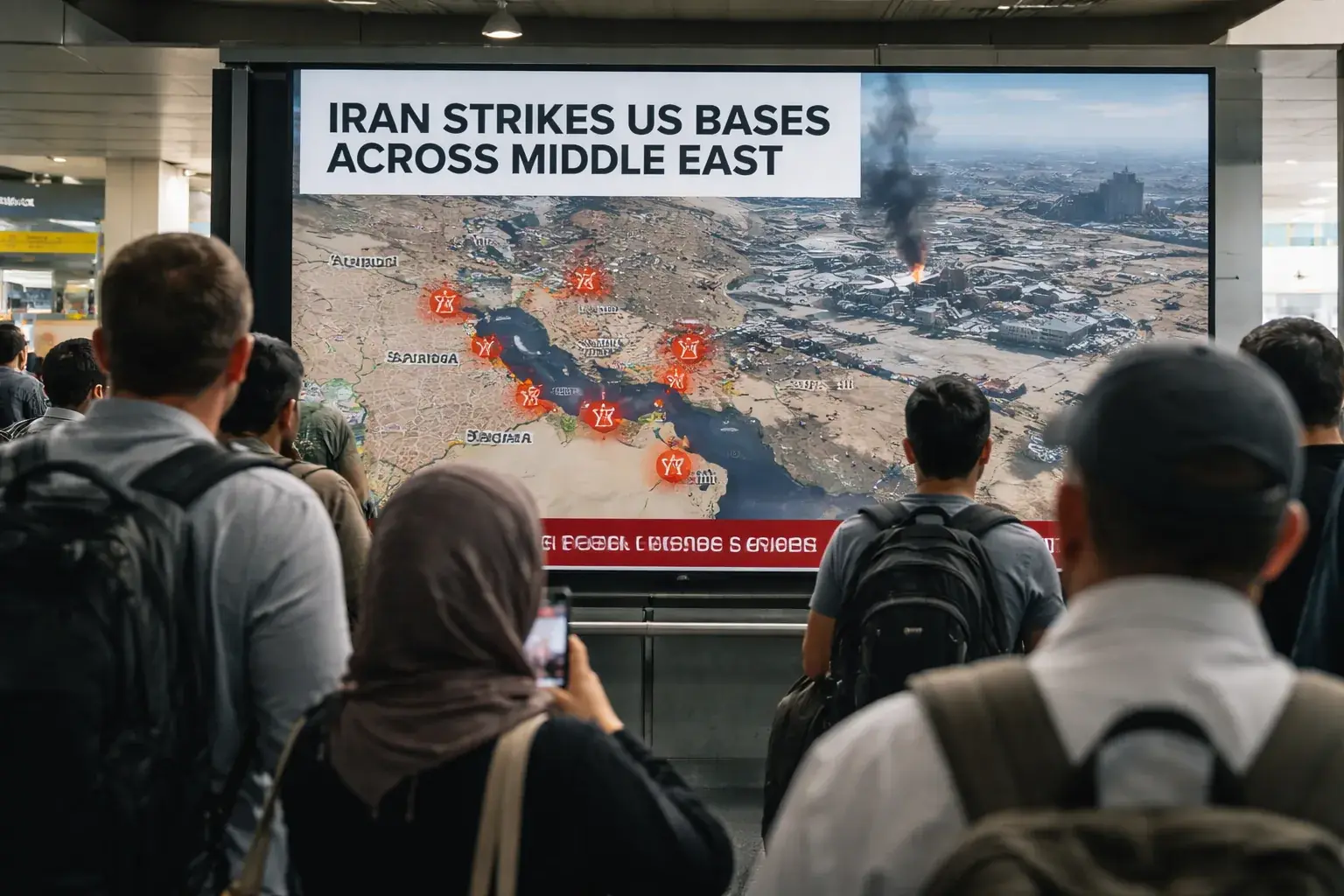
An analysis of satellite imagery and video by BBC Verify has identified damage to 20 US military sites and shared facilities across eight Middle Eastern nations. The investigation indicates that Iranian strikes have successfully targeted high-value military hardware, including state-of-the-art air defense systems and surveillance aircraft, since the onset of Operation Epic Fury. These findings suggest the scale of destruction is more extensive than the White House or Pentagon has publicly admitted.
What's new in this update
The latest findings highlight the precision of Iranian counter-attacks against specific high-cost assets. Analysts identified damage to three Terminal High Altitude Area Defense (THAAD) batteries at Al Ruwais and Al Sader airbases in the UAE and Muwaffaq Salti Airbase in Jordan. Each battery costs approximately $1 billion to manufacture. Additionally, an E-3 Sentry surveillance plane—valued at up to $700 million—was identified as damaged at Prince Sultan Airbase in Saudi Arabia.
Key details
Beyond high-tech defense systems, the strikes have hit fuel storage bunkers, aircraft hangars, satellite communications hardware, and troop accommodation. The damage was confirmed across several major installations, including Ali Al Salem Airbase and Camp Arifjan in Kuwait. While the Pentagon's May estimate put the total cost of Operation Epic Fury at $29 billion, critics suggest this figure may underestimate the rising repair and replacement costs for specialized equipment.
Background and context
Tehran has framed these strikes as retaliation for ongoing US-Israeli operations in Iran and Lebanon. To manage information regarding the conflict, the US government requested that Planet, a primary satellite image provider, impose an indefinite restriction on releasing new imagery of the region. This move aimed to prevent adversarial actors from using the data for targeting, though analysts have bypassed these restrictions using older images and alternative international providers.
What to watch next
The focus now shifts to the US military's ability to replace these highly complex defense systems, which expert Vice-Admiral Mark Mellett notes cannot be 'quickly or easily replaced.' As Iran's Supreme Leader Mojtaba Khamenei claims the Middle East is no longer a 'safe place' for American bases, the Pentagon's continued reliance on operational security leaves questions about the true state of regional readiness and the final financial toll of the hardware losses.
Why this matters
The precision of these strikes indicates a significant evolution in Iranian military capability, threatening the core of the U.S. regional defense network and its billion-dollar assets.
Reader context
This story belongs to Northstar Herald's International Relations and Middle East Conflict coverage, with related entities including Iran, US Military, Satellite Imagery, Operation Epic Fury. The report is based on BBC World News source material.
Related coverage
Why it matters
The precision of these strikes indicates a significant evolution in Iranian military capability, threatening the core of the U.S. regional defense network and its billion-dollar assets.
Read next
Follow this story through the topic hub, more world coverage, and the latest updates.
Weekly briefing
Get the week's key developments in one concise email.
Get a fast catch-up on the biggest stories, the context behind them, and the links worth your time.
Cadence
Weekly, for a quick catch-up
Coverage
AI, business, world, security, sports
Format
Clear takeaways and useful context
Request the briefing
Leave your email to open a prepared request and get on the list for the weekly briefing.
Author

The world desk follows geopolitics, humanitarian crises, diplomacy, and major international developments with an emphasis on fast updates and public-interest context.
Sources and methodology