Hezbollah Escalates Use of Fibre-Optic Drones Against Israeli Forces
The Lebanese armed group is utilizing low-cost, first-person view drones that bypass traditional electronic countermeasures to strike soldiers and armored vehicles.
Primary source: BBC World News. Full source links, newsroom standards, and correction details are below.
Fast summary
Start here
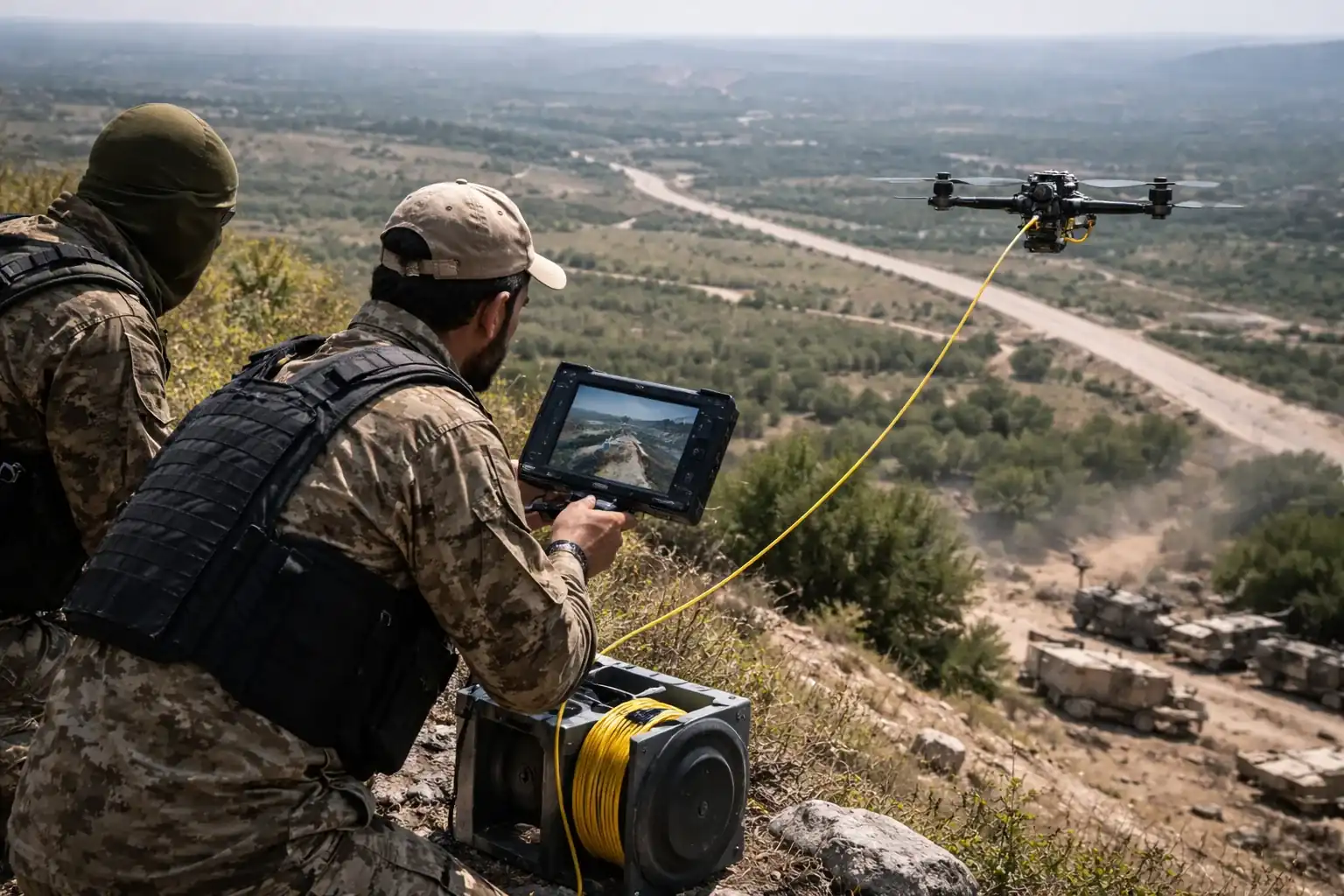
- Hezbollah has increased its deployment of first-person view (FPV) drones, including models controlled by fibre-optic cables to evade electronic jamming.
- BBC Verify geolocated 35 videos of strikes on Israeli military assets, including armored vehicles, air defense systems, and soldiers in northern Israel and southern Lebanon.
- The drones are locally assembled from commercial and 3D-printed components, costing between $300 and $500 each.
What happened
Hezbollah has significantly ramped up its use of first-person view (FPV) drones to target Israeli Defense Forces (IDF) in northern Israel and southern Lebanon. These attacks utilize small, maneuverable drones to strike high-value military targets, including tanks and air defense arrays. BBC Verify has identified nearly 100 apparent FPV attacks shared on Hezbollah's communication channels since late March, with at least 35 verified through geolocation.
What's new in this update
Recent drone footage shows Hezbollah utilizing drones controlled via fibre-optic cables rather than radio signals. This physical connection makes the drones immune to current Israeli electronic detection and jamming countermeasures. Experts note that because there is no wireless signal to intercept, these drones are nearly impossible to jam, and tracking the location of the operator becomes significantly more difficult for the IDF.
Key details
The FPV drones are being produced for an estimated $300 to $500 per unit, often using commercially available parts from China and components made with 3D printers. Despite their low cost, they have proven lethal; Israeli media reports indicate that FPV strikes have killed at least four IDF soldiers and one civilian, with dozens more injured. One verified video from May shows a sequence of at least four drones attacking an Israeli border outpost near Kiryat Shmona, destroying several military vehicles.
Background and context
The use of FPV drones in modern conflict became widespread during the Russia-Ukraine war, fundamentally changing small-scale combat dynamics. While Hezbollah has operated larger attack drones for years, FPVs represent a new category of threat due to their small size and radar-evading flight profiles. The IDF has also utilized FPV drones for several years, currently deploying them in operations against Hamas in Gaza and Hezbollah in Lebanon.
What to watch next
The IDF is currently investing significant resources into improving alert models and training soldiers to recognize and respond to drone threats. In the near term, Israeli forces are expected to rely more heavily on physical countermeasures, such as protective nets and cages for vehicles, as they seek technological solutions to counter the fibre-optic guidance systems used by Hezbollah.
Why this matters
The use of undetectable, low-cost drone technology challenges Israel's sophisticated defense systems and necessitates a shift in battlefield maneuvers and physical protection for troops.
Reader context
This story belongs to Northstar Herald's International Relations and Middle East Conflict coverage, with related entities including Hezbollah, Israel Defense Forces, FPV Drones, Electronic Warfare. The report is based on BBC World News source material.
Related coverage
Why it matters
The use of undetectable, low-cost drone technology challenges Israel's sophisticated defense systems and necessitates a shift in battlefield maneuvers and physical protection for troops.
Read next
Follow this story through the topic hub, more world coverage, and the latest updates.
Weekly briefing
Get the week's key developments in one concise email.
Get a fast catch-up on the biggest stories, the context behind them, and the links worth your time.
Cadence
Weekly, for a quick catch-up
Coverage
AI, business, world, security, sports
Format
Clear takeaways and useful context
Request the briefing
Leave your email to open a prepared request and get on the list for the weekly briefing.
Author

The world desk follows geopolitics, humanitarian crises, diplomacy, and major international developments with an emphasis on fast updates and public-interest context.
Sources and methodology