German Coalition Sparks Controversy with Plans for Immediate Medical
Chancellor Friedrich Merz defends a move to require doctor's certificates on day one of illness, aiming to reduce high absence rates despite fierce

World correspondent
Reports on international affairs, diplomacy, and humanitarian developments with an emphasis on official statements, multilateral institutions, and regional context.
Editorial responsibility: Lead reviewer for geopolitics, international institutions, and crisis coverage
Primary source: BBC World News. Full source links and update notes are below.
Fast summary
Start here
- Workers will no longer be able to obtain sick notes via telephone, ending a flexibility introduced during the Covid-19 pandemic.
- Chancellor Friedrich Merz argues that Germany's average of 18 sick days per employee per year is an unsustainable competitive disadvantage.
- Medical organizations warn that the policy will overwhelm doctors' offices with patients who only require brief rest for minor ailments.
What happened
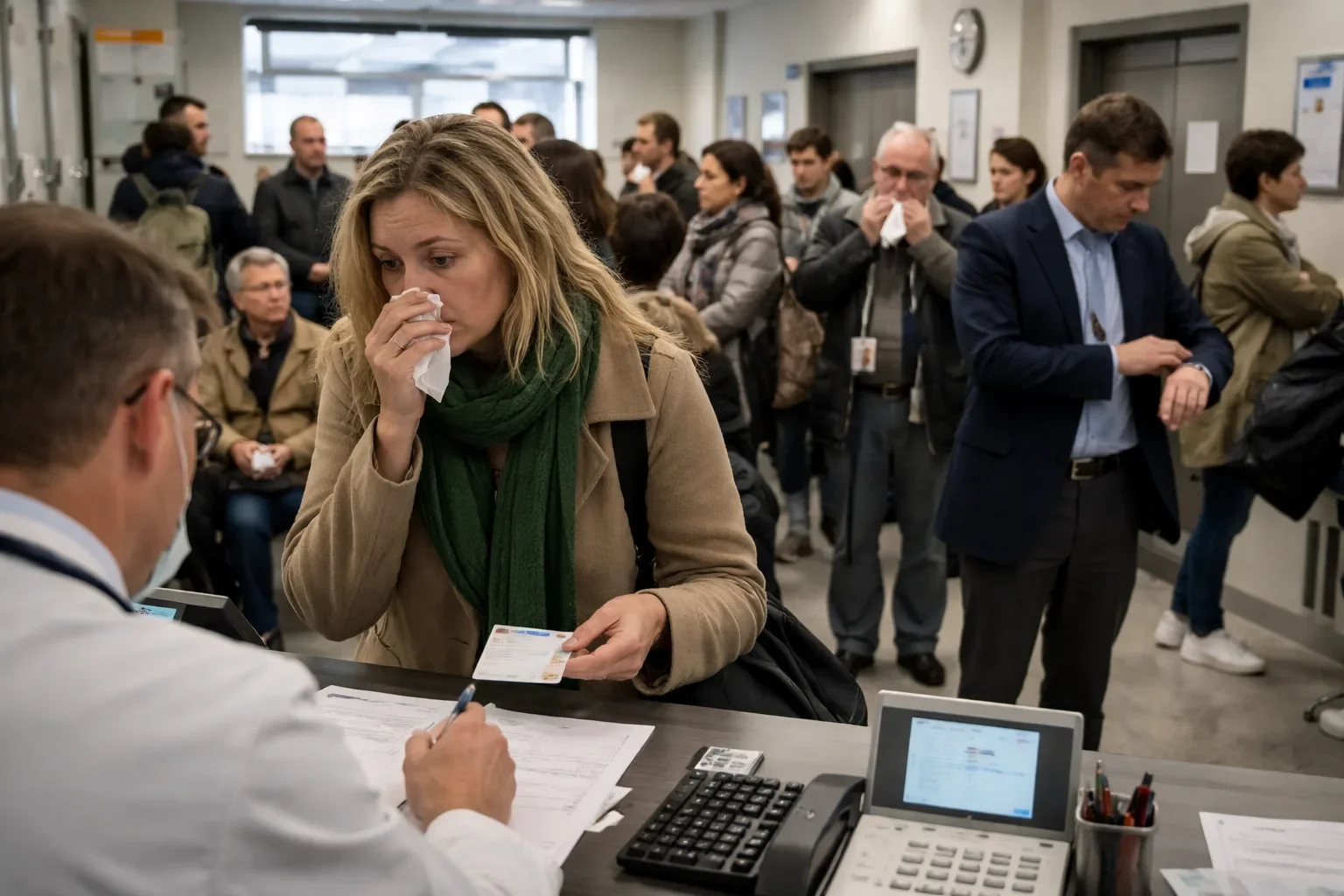
Germany’s coalition government has ignited a national debate after announcing a major shift in labor policy that would require employees to provide a doctor's certificate starting from the first day of their illness. This proposal, spearheaded by Chancellor Friedrich Merz and his conservative Christian Democratic Party (CDU), marks a significant departure from the current standard where certificates are generally only mandatory if an illness persists beyond three days. The decision is part of a broader package of economic reforms intended to bolster German productivity and address concerns regarding the country's high rates of workplace absence. Under the new rules, the flexibility afforded during the Covid-19 pandemic—specifically the ability for patients to obtain a sick note via a telephone consultation—will be scrapped entirely. This forces patients to physically attend a medical practice even for minor symptoms, a move the government believes is necessary to restore discipline and reduce the frequency of short-term absences.
What's new in this update
The latest development involves a sharp rhetorical defense of the policy by Chancellor Merz, who characterized Germany's current sick leave levels as a "competitive disadvantage" for the nation's economy. Speaking to ARD TV, Merz argued that the levels of absence have become "exorbitant" in the years following the global pandemic. He emphasized that the government is essentially returning to pre-pandemic norms, though he noted that individual businesses would still have the autonomy to negotiate their own specific arrangements with their staff. This firm stance has met with immediate and vocal pushback from medical professionals. The KBV, representing statutory health insurance physicians, described the plan as "madness," arguing that forcing thousands of people with minor contagious infections like coughs or stomach bugs into crowded waiting rooms is medically counterproductive. They contend that patients who need simple rest will instead be subjected to unnecessary travel and wait times just to satisfy bureaucratic requirements.
Key details
Supporting the government’s position, Jens Spahn, the leader of the CDU’s parliamentary group, pointed out that Germany currently experiences some of the highest sick leave rates in the European Union. Statistics suggest that the average German employee takes approximately 18 sick days per year. While Spahn maintained that those who are genuinely ill should certainly remain at home, the high aggregate number of days is seen as a drain on national output. The policy transition is a key component of a larger strategy involving tax, labor, and pension reforms designed to revitalize a stagnating German economy. However, the proposal has exposed rifts within the coalition. SPD Vice-Chancellor Lars Klingbeil has attempted to moderate the tone, suggesting that the government is still looking for "workable solutions" that might address the concerns of both employers and the medical community. Meanwhile, Labour Minister Bärbel Bas of the SPD has expressed skepticism, questioning whether the first-day certificate requirement would actually produce the intended economic benefits or merely create logistical difficulties for the healthcare system.
Background and context
Before the pandemic, the German system was traditionally rigid, but the onset of Covid-19 necessitated a temporary relaxation of rules to prevent the spread of the virus in doctors' waiting rooms. The introduction of telephonic sick notes was widely seen as a successful emergency measure that reduced the burden on general practitioners. As the pandemic receded, these temporary measures became a point of contention between pro-labor groups, who valued the flexibility, and fiscal conservatives, who worried about potential abuse. The current dispute highlights a broader tension in German society regarding the balance between generous social protections and the need for economic efficiency in an era of demographic shifts and global competition. The CDU's push for "first-day" certification is a clear signal of their intent to roll back pandemic-era concessions and return to a more supervised labor environment, which they believe is essential for maintaining Germany's status as an industrial powerhouse.
What to watch next
Moving forward, the focus will be on whether the Social Democrats will force a compromise or a dilution of the first-day requirement during the legislative drafting process. Labour Minister Bärbel Bas has already signaled that she will investigate the potential impact of the proposal, indicating that the current agreement in the coalition committee may not be the final version of the law. Public and professional pressure from medical associations like the Association of General Practitioners is likely to intensify, especially if waiting rooms become significantly more crowded during the upcoming flu and cold seasons. Observers are also watching for how individual businesses respond; if the law allows for local opt-outs, large corporations with strong labor unions may choose to maintain the more flexible three-day rule to preserve employee morale. The final legislation will serve as a bellwether for the coalition’s ability to implement tough economic reforms ahead of future elections.
Why it matters
This policy shift represents a significant move to tighten labor regulations in Europe's largest economy as it struggles with productivity. It signals a departure from pandemic-era worker protections in favor of traditional, strict oversight of employee absence.
Read next
Follow this story through the topic hub, more world coverage, and the latest updates.
Weekly briefing
Get the week's key developments in one concise email.
Get a fast catch-up on the biggest stories, the context behind them, and the links worth your time.
Cadence
Weekly, for a quick catch-up
Coverage
AI, business, world, security, sports
Format
Clear takeaways and useful context
Request the briefing
Leave your email to open a prepared request and get on the list for the weekly briefing.
About the byline
World correspondent
Leila Haddad covers world affairs, diplomacy, and humanitarian crises, with a focus on how fast-moving international developments affect public policy, conflict response, and cross-border institutions.
Sources and methodology