Eight Sentenced to Combined 450 Years for Violent Anti-ICE Riot in
A former Marine reservist received a century-long sentence for attempted murder during a Fourth of July assault on a federal detention facility.

World correspondent
Reports on international affairs, diplomacy, and humanitarian developments with an emphasis on official statements, multilateral institutions, and regional context.
Editorial responsibility: Lead reviewer for geopolitics, international institutions, and crisis coverage
Primary source: BBC World News. Full source links and update notes are below.
Fast summary
Start here
- Benjamin Hanil Song, the alleged group leader, was sentenced to 100 years for the attempted murder of a law enforcement officer.
- The U.S. Department of Justice identified the defendants as members of a 'North Texas Antifa Cell,' a designation the group denies.
- Sentences for other participants range from 30 to 70 years for charges including rioting, explosives use, and providing material support to terrorists.
What happened
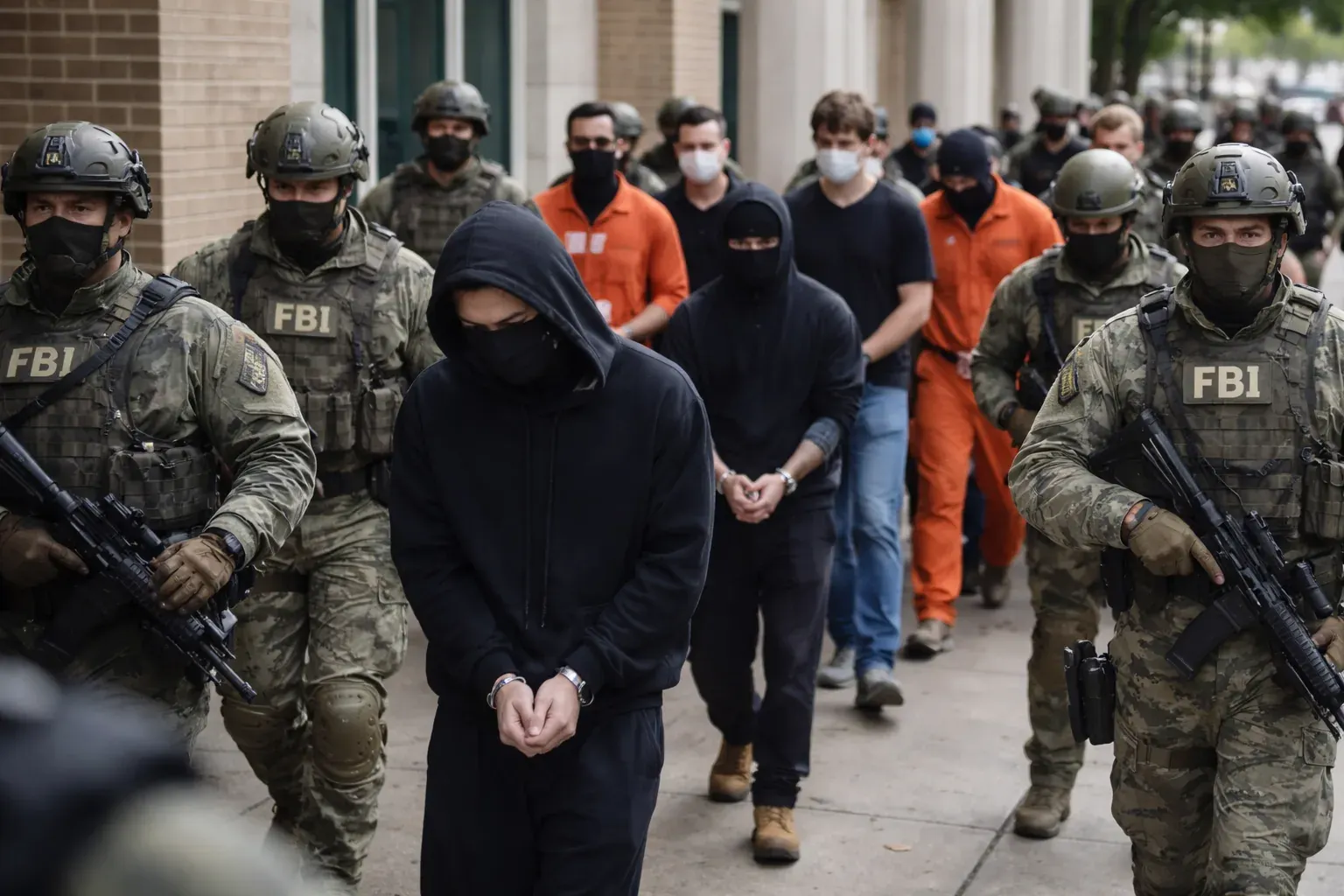
Eight people have been sentenced to a combined 450 years in prison for their roles in a violent assault on an ICE detention facility in Prairieland, Texas, a case the U.S. government is presenting as a major domestic-extremism prosecution. Federal prosecutors said the group attacked the site during the Fourth of July holiday using explosives, fireworks, and coordinated violence that included the attempted murder of a law-enforcement officer.
The longest sentence went to Benjamin Hanil Song, a former Marine reservist identified by prosecutors as the leader of the group. He received 100 years in prison after being convicted on charges tied to attempted murder and the broader attack. The Justice Department described the sentencing as a clear warning that assaults on federal facilities and officers will draw the harshest available penalties.
What's new in this update
The scale of the punishment is the main new development. Acting Attorney General Todd Blanche framed the sentences as an example of "uncompromising justice," emphasizing that federal officials believe the defendants were not engaged in a symbolic protest that spiraled out of control, but in a deliberate and dangerous attack that crossed into terrorism-related conduct.
That framing is politically significant because the case sits inside a wider debate over how the U.S. government defines and prosecutes domestic extremism. Prosecutors have referred to the defendants as members of a "North Texas Antifa Cell," while supporters and defense advocates reject that label and argue the case is being used to make a broader ideological statement.
Key details
The sentencing breakdown underscores how aggressively the government pursued the case. Song received 100 years. Maricela Rueda received 70 years. Cameron Arnold, Savanna Batten, Zachary Evetts, Bradford Morris, and Elizabeth Soto each received 50 years. Daniel Rolando Sanchez-Estrada received 30 years. Prosecutors said surveillance footage and other evidence showed defendants throwing explosive fireworks, damaging infrastructure, and escalating a confrontation that endangered both staff and law enforcement.
The government argues the case involved more than vandalism or disorderly protest. According to prosecutors, the group targeted a federal detention site with the intent to disrupt operations through force. That is why the charges and resulting sentences extended beyond rioting into much more serious counts involving attempted murder, explosives, and material support to terrorism.
Several legal and political questions follow from the case:
- Whether the domestic-terror framing will survive appellate scrutiny.
- Whether the sentences are proportionate relative to other politically motivated violence cases.
- Whether the prosecution establishes a broader precedent for treating far-left extremist conduct under terrorism-linked theories.
- Whether defense arguments about intent and excessive punishment gain traction on appeal.
Background and context
The Prairieland detention-facility case unfolded in a national climate already shaped by intense fights over immigration enforcement, protest tactics, and the meaning of political violence. ICE facilities have long been flashpoints for demonstrations, but cases involving weapons, explosives, and attempted lethal force move those confrontations into a far different legal category.
The case also reflects how federal authorities are increasingly willing to use terrorism-style language and charging strategies in domestic cases even where no formal foreign-terror link exists. That does not only affect sentencing. It affects how cases are narrated publicly, how juries understand the stakes, and how advocacy groups frame civil-liberties concerns.
What to watch next
A ninth defendant, Ines Soto, is still awaiting sentencing, and several others who pleaded guilty to material-support charges are also scheduled to face the court. Appeals are widely expected, particularly over sentence length, evidentiary framing, and the government's use of domestic-extremism terminology.
Why this matters
This case matters because it may become a benchmark for how the U.S. handles ideologically motivated violence against immigration infrastructure. The sentences are severe enough that they will likely shape future prosecutions, future protests, and future arguments about where activism ends and domestic terrorism begins.
Why it matters
These sentences represent one of the most severe legal applications of domestic terrorism designations against far-left activists in recent U.S. history.
Read next
Follow this story through the topic hub, more world coverage, and the latest updates.
Weekly briefing
Get the week's key developments in one concise email.
Get a fast catch-up on the biggest stories, the context behind them, and the links worth your time.
Cadence
Weekly, for a quick catch-up
Coverage
AI, business, world, security, sports
Format
Clear takeaways and useful context
Request the briefing
Leave your email to open a prepared request and get on the list for the weekly briefing.
About the byline
World correspondent
Leila Haddad covers world affairs, diplomacy, and humanitarian crises, with a focus on how fast-moving international developments affect public policy, conflict response, and cross-border institutions.
Sources and methodology