Australia Files Record AU$2 Billion Lawsuit Against 3M Over PFAS Contamination
The Australian government is seeking to recoup massive cleanup costs, alleging the manufacturing giant misrepresented the safety of its firefighting foam.
Primary source: BBC World News. Full source links, newsroom standards, and correction details are below.
Fast summary
Start here
- The Australian government is seeking AU$2 billion (US$1.4 billion) in damages from 3M.
- The lawsuit targets contamination caused by PFAS 'forever chemicals' at 28 defence bases.
- Officials allege 3M withheld information about environmental risks while claiming the foam was safe.
What happened
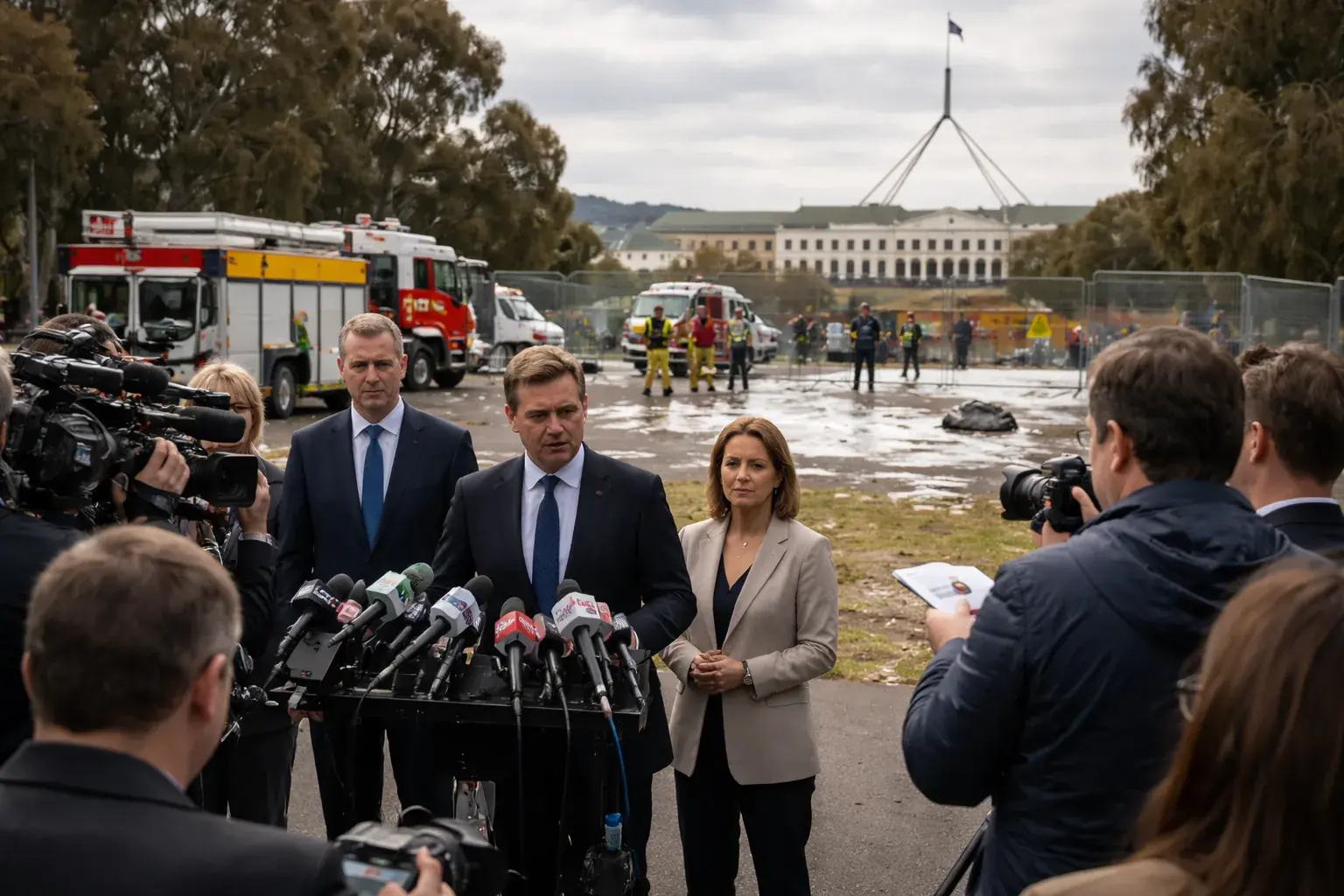
Australia's Attorney-General Michelle Rowland has initiated a landmark AU$2 billion legal claim against US manufacturing giant 3M. The lawsuit seeks to recover the substantial costs incurred by the government and taxpayers to manage and remediate toxic PFAS contamination at 28 different defence estate locations across the country.
What's new in this update
In announcing the legal action, the Australian government accused 3M of withholding and misrepresenting critical details regarding the environmental impact of its firefighting foam. Attorney-General Rowland stated that the company assured officials the product was safe despite allegedly knowing otherwise, contributing to more than AU$1 billion in mitigation costs spent by the Department of Defence to date.
Key details
PFAS, or per- and poly-fluoroalkyl substances, are synthetic chemicals used for their water-resistant and heat-resistant properties. Known as 'forever chemicals' because they do not naturally break down, research indicates they can reach dangerous concentrations in soil and water and linger in the human body. The Australian government claims 3M failed to disclose known environmental risks associated with its aqueous film-forming foam (AFFF).
Background and context
3M announced in 2022 that it would phase out the production and use of PFAS by the end of 2025 due to growing concerns over health risks, including cancer. In response to the Australian lawsuit, 3M stated it never manufactured PFAS in Australia and ceased selling the foam there 20 years ago. The company also pointed out that the Department of Defence continued using the product for two decades after 3M withdrew it from the Australian market.
What to watch next
3M has pledged to defend itself through the legal process. As the case moves forward, the court will weigh the government's allegations of misrepresentation against 3M's timeline of product withdrawal and the Department of Defence's continued use of existing supplies. The outcome could influence how other nations pursue remediation costs for similar environmental contamination.
Why this matters
This represents the largest legal claim ever brought by the Australian government and sets a significant precedent for holding multinational corporations accountable for long-term environmental remediation costs.
Reader context
This story belongs to Northstar Herald's International Relations coverage, with related entities including 3M, PFAS, Environmental Lawsuit, Firefighting Foam. The report is based on BBC World News source material.
Related coverage
Why it matters
This represents the largest legal claim ever brought by the Australian government and sets a significant precedent for holding multinational corporations accountable for long-term environmental remediation costs.
Read next
Follow this story through the topic hub, more world coverage, and the latest updates.
Weekly briefing
Get the week's key developments in one concise email.
Get a fast catch-up on the biggest stories, the context behind them, and the links worth your time.
Cadence
Weekly, for a quick catch-up
Coverage
AI, business, world, security, sports
Format
Clear takeaways and useful context
Request the briefing
Leave your email to open a prepared request and get on the list for the weekly briefing.
Author

The world desk follows geopolitics, humanitarian crises, diplomacy, and major international developments with an emphasis on fast updates and public-interest context.
Sources and methodology